Baby Swim Lessons Before Vacation: What Matters Most
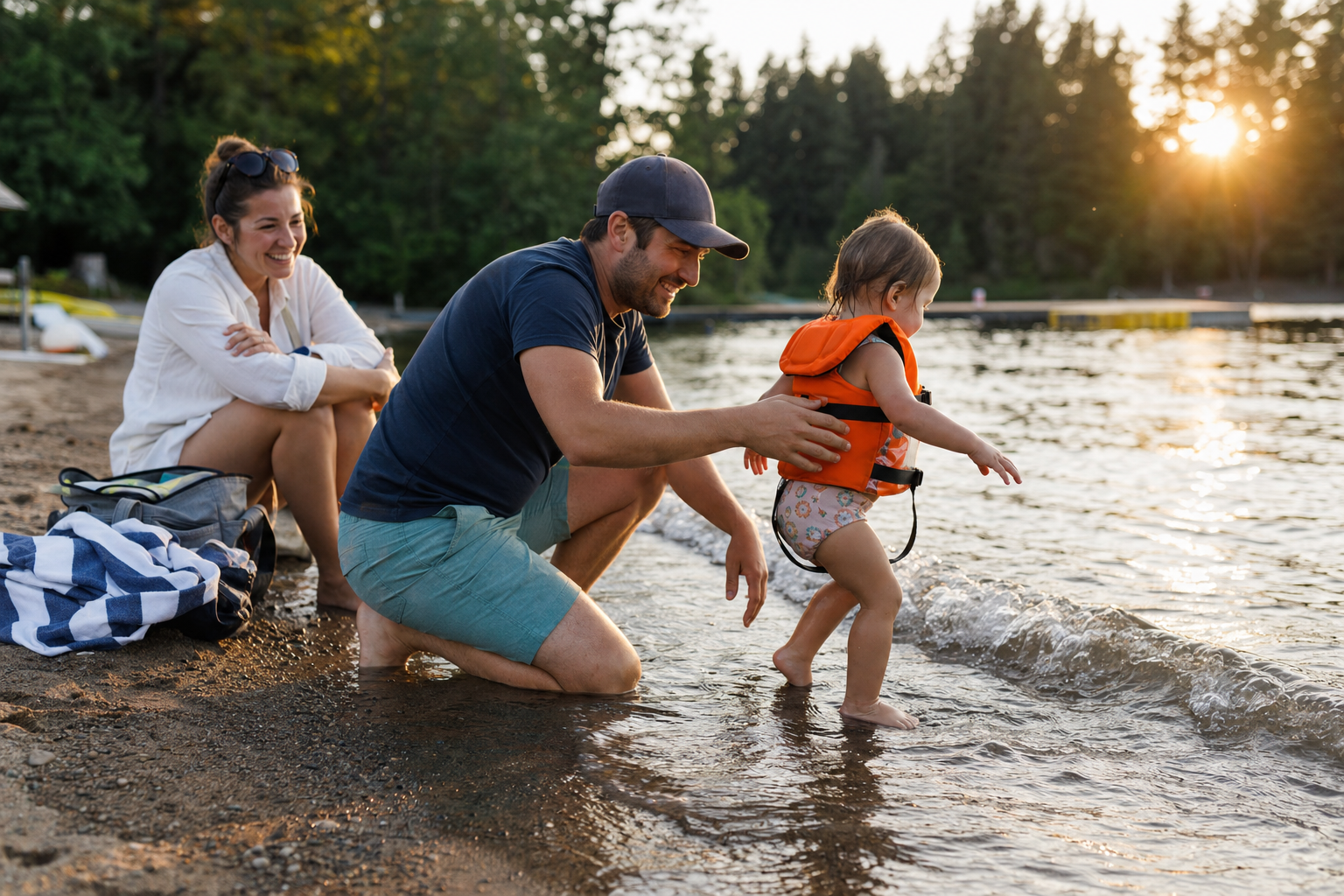
Want your little one to enjoy the pool, beach, lake or resort trip safely in a few weeks? Start with the top priorities for safety, not speed. Here’s a realistic plan for parents of babies aged 6–36 months geared toward baby swim lessons before vacation, water safety before beach trip, and toddler swim lessons before holiday—focusing on supervision, handling, life jackets, and entry rules.
What to Expect When Time’s Short
If you’ve only got two to four weeks before your holiday, a crash course won’t turn a 12-month-old into an independent swimmer. What it will do is help your child:
- feel more comfortable in water
- learn basic safety habits like blowing bubbles, supported floating or self-rescue glides
- let you practise good supervision rituals and handle situations more calmly
Children age 1-3 benefit from parent-child swim lessons. According to HealthyChildren.org, formal swim lessons can reduce drowning risk for this age group, but they do not turn babies into swimmers overnight. (healthychildren.org)
Parent Handling: How You Make A Difference
Parents play a major role—especially with toddlers and infants:
You should always stay within arm’s reach in or near the water. This kind of “touch supervision” lets you react immediately. Experts stress that no swim lesson replaces constant adult attention. (healthline.com)
Make lessons frequent and consistent if possible. If you usually go once a week but can do two sessions, the child will respond better, practicing breath control and floating without fear. Between classes, use warm baths or shallow splash areas to reinforce what they’re learning naturally.
Rules For Entry, Exits, And Behavior
Every trip to a pool or beach starts with rules. Before vacation, build habits around safe entry, the way toes touch water, how you descend steps or ladders together, and never jumping in headfirst from unfamiliar edges.
Work with your toddler to practise safe entries and exits: ensuring they don’t run on slick surfaces, learning to sit on pool edges first, and always having a grown-up help guide feet first into water. Teach that “no alone time” near water applies even if there’s a lifeguard.
Life Jackets & Floatation Devices: What Matters
When heading to open water or boating situations, a properly fitted life jacket is non-negotiable. The U.S. Coast Guard insists that every child under 13 must wear a certified life jacket when the boat is moving. (legalclarity.org)
Also, if you want a structured course of lessons that guides foundational skills, you might consider the 10-Week Plan from Swimy, which breaks lessons into manageable sessions emphasizing safety, fun games, water acclimatization and movement basics for babies and toddlers. (swimy.org)
Always ensure the jacket:
- is certified (USCG in the US, equivalent in UK/AU)
- fits snugly—not so loose that it slips over head or ears when you lift the shoulder straps
- has a crotch strap if designed for infants or very young toddlers
- has head/neck support for very young babies (redcross.org)
Other float toys—arm floaties, noodles, inflatable creatures—are fun, but treat them as accessories, not substitutes. HealthyChildren warns that they don’t count as safety devices. (healthychildren.org)
A Pre-Holiday 3-Week Plan
Here’s a realistic plan you can follow if you have about three weeks before your trip:
Week 1: Water comfort focus. Two short lessons (20-30 minutes) concentrating on face wetting, splashes, supported floating, and getting in/exiting water safely. Parent in water the whole time. Reinforce at home with watering play, warm bath routines.
Week 2: Introduce safety habits. Put on that life jacket in supervised calm settings even if you're just walking near water. Teach basic rules around entry and exit. Keep practising water comfort and supported floating or gliding.
Week 3: Visit natural water if possible—beach, lake—with full supervision and appropriate gear. Use the U.S. Coast Guard-approved life jacket. Make sure someone in the group knows CPR. Look at signs, follow local entry rules, currents, do not rely on perfect weather.
[[ctababy]]
Why Realistic Goals Are Key
Trying to teach swimming strokes or guarantee independence in just a few sessions can backfire. Not only is that unrealistic for ages 6-36 months, but it could make water feel scary instead of fun. Swim schools like Blue Dolphin highlight that early lessons should build water competency, confidence, and basic safety, not speed. (bluedolphinswimschool.com)
Formal swim lessons are recommended by the American Academy of Pediatrics starting around age 1; under that age, classes are mostly about water comfort and bonding. (coachslava.com)
Supervision: The Non-Negotiate Feature
Even vacation settings with lifeguards, calm water, and great gear cannot replace constant, focused supervision. Assign one adult to be the water watcher—no distractions, no screen time, just eyes on baby. That layer of protection is the most effective. (healthychildren.org)
And know what to do in emergencies. CPR training makes all the difference. If you have the tools or you’re staying in water-rich environments (beach, lake), make sure you and other caregivers are certified. (redcross.org)
Final Thoughts
You won’t convert a baby into a swimmer overnight, but in those few weeks before your holiday, you can build confidence, habits, and safeguards that make your trip safer and more joyful. Prioritize supervision, use the right life jacket, practise entry rules, and expect progress—but don’t expect miracles. Your toddler may not be swimming laps, but with intentional lessons and safe habits, they’ll be far better equipped for water. Have a great trip—and splash safely!
120+ swimming exercises sorted by age — with video and instructions. Developed by swim instructors, completely free.

120+ swimming exercises sorted by age — with video and instructions. Developed by swim instructors, completely free.