
Learn Freestyle Breathing
At least 10 meters of flutter kick with side breathing. One arm is stretched forward, while the other rests alongside the body. Throughout the exercise, side breathing is performed at least three times. Each side breath involves a shoulder rotation. This exercise helps develop proper freestyle breathing technique.

Preparatory exercises
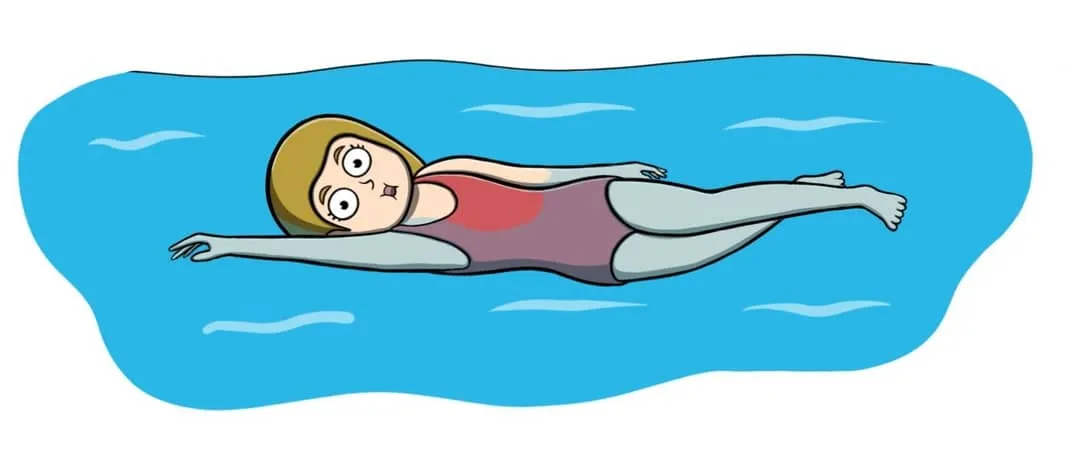
Side-lying Kick
Your child lies on their side in the water, parallel to the pool wall: one arm stretched forward, the other at the side, head resting on the stretched arm, mouth and nose above water. This trains the correct body position for freestyle breathing. Make sure the stretched hand stays at the water surface — many children unconsciously lower it.

Rotation with pull buoy
The child holds a pull buoy or kickboard in their hands, body fully extended, propulsion from flutter kicks. They rotate from the prone position onto the back and, after a few meters, back onto the stomach — over 10-15 meters with at least four rotations. This trains the shoulder rotation crucial for proper side breathing. A kickboard demands even stronger rotation, making the exercise more effective.

Flutter kick in side position
The child lies on their side, body as parallel to the pool wall as possible: one arm extended forward, the other resting alongside the body, head on the extended arm, mouth and nose above water. This teaches the correct body position for freestyle breathing. Make sure the extended hand stays at the water's surface — letting the forward arm drop is a common mistake.

Freestyle kick
The child swims 25 meters using the freestyle kick with arms resting along their sides, breathing forward as an exception. This exercise focuses on building strength and endurance for the freestyle kick. The kick is crucial for longer distances as it provides stability and rhythm to the swimming technique.

Hands down / only turn to the side
In this exercise, the body rotates 90 degrees in both directions, both from the prone and supine position. The hands remain at the sides of the body. In a further step, a complete rotation is performed while maintaining the lateral hand position. This makes it easier to correct the water position on the back and return to the starting position after the 90-degree turn. The change of direction during the body rotation promotes body control in the water.

Flutter kick with board
In this preparatory exercise, the turn is practiced with a swimming board. Alternatively, a pull buoy can also be used. The buoyancy of the swimming board enables the learner to return to a comfortable position in the water without any problems after a turn. The board prevents the face from remaining under water after the turn. However, turning onto the back requires a stronger body rotation to turn the board over. This exercise trains this more intensive rotation.

Fins
For significant difficulties with water feel, when the child struggles with the kick despite having straight legs and relaxed feet, I recommend practicing with fins. Fins help facilitate the correct foot position by providing a stronger response from the water. Start with a mat and a kickboard. Use short fins that are only slightly longer than the foot, as the movement with long fins is different and less suitable for this purpose.
Common mistakes

Breathing on the side without rotation.
Many children try to breathe by tilting their head sideways without rotating the body, often lifting the head and twisting unnaturally — a posture that can harm the spine over time. Side breathing requires shoulder rotation. If the preparatory exercises were completed successfully, the ability is there; keep emphasizing the shoulder rotation clearly and often.
.webp)
Breathing forward
Many children breathe forward out of habit from earlier exercises like the "motorboat" drill and don't grasp that side breathing is the key element here. Communicate this clearly and repeat it often. If the child simply can't perform it yet, return to the previously mentioned exercises.


