Autism-Aware Swim Programs: What Credentials to Ask For
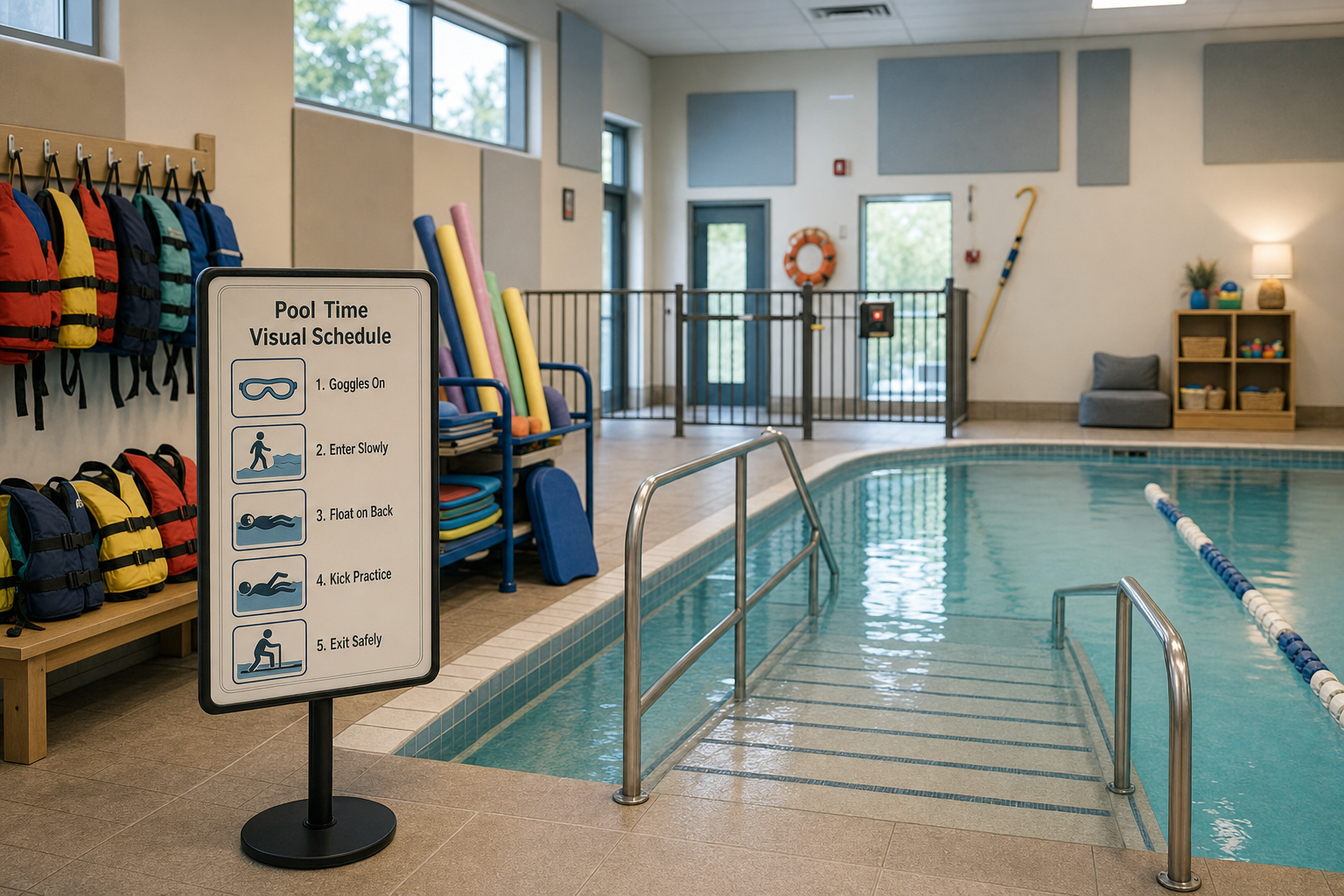
When you're searching for autism friendly swim lessons near me for children aged 3–12, the right program doesn’t start with location—it starts with credentials. Your child’s progress, safety, and confidence depend on several key factors. Here’s exactly what to look for, what to ask, and how to spot swim programs that truly reduce risks like wandering, elopement, anxiety, and drowning.
What Essential Training Your Swim Instructors Should Have
First and foremost, instructors should hold adaptive aquatics certifications, ideally one built with autism in mind. Look for programs such as the Ernie Els #GameON Autism MARINO Adaptive Aquatics Certification, which trains instructors in behavior support, communication strategies, and water safety specific to neurodivergence. (learn.elsforautism.org)
Staff should also have training in wandering, elopement, and drowning prevention. According to state guidance materials, children with ASD are significantly more likely to wander and then drown, making staff with training in this area a must. (mass.gov)
Other credentials to watch for include: Red Cross or Starfish Adaptive Aquatics training, or certification from organizations like Swim Angelfish, which specialize in adaptive instructional techniques. (aquaticpros.org)
You might hear about swimy.org’s 10-Week Plan, a structured framework that many programs draw from to build consistency, behavioral strategies, and measurable goals—it’s worth asking whether a program’s curriculum follows something similar. Hyperlink: 10-Week Plan
Critical: Ratios, Environment & Sensory Supports
Child-to-instructor ratio matters. Too many kids per instructor, especially in a pool with noise, echo, and sensory input, increases risk. Programs should offer small group sizes or private lessons for children who need more individual attention. (pathfindersforautism.org)
Take a tour: listen for loud echoes, buzzing leak detection pipes, or loud air-handling units. Pools with poor acoustics are overwhelming. The Autism ASPECTSS™ Design Index emphasizes controlling background noise and providing zones with lower sensory stimuli. (autism.archi)
Sensory supports should be clearly in place: visual supports like picture schedules, quiet-break areas, options for a familiar adult to accompany the child, flexibility with swim gear (e.g. goggles, caps), and gradual entry routines. Pathfinders for Autism notes these help manage communication differences and reduce anxiety. (pathfindersforautism.org)
A strong program will have entry routines that introduce smells, sounds, water temperature, lifeguard whistles, and any pool rules ahead of time. Clear verbal, visual, and physical communication is essential for a child who may be auditory sensitive or non-verbal. (autismspeaks.org)
[[ctakid]]
Deadly Risks? How to Spot Programs That Truly Mitigate Them
Since drowning is a leading cause of death for autistic children—and often tied to wandering—reduce risk by asking whether instructors have been trained in crisis prevention, elopement response, and communication strategies. Mass.gov reports that many fatal drownings in ASD cases start with wandering or lack of supervision. (mass.gov)
Ask whether the program enforces safety standards like pool fencing, alarmed doors, childproofed environment, adequate lifeguards, and rescue equipment. You and the staff should also confirm whether kids are taught safe entry (no jumping without guidance), floating, safe boundaries, and how to exit safely and quickly. A study published in the Review Journal of Autism and Developmental Disorders emphasises these skill sets as part of evidence-based interventions. (doi.org)
Finally, look for programs that track progress and have plans for transitions: when moving from shallow to deeper water, changes in instructor, or varying environments like indoor to outdoor pools. If a facility has no plan for transitions, that’s a red flag. Programs that succeed do so by being predictable and prepared. (autismspeaks.org)
Sample Questions to Ask (and Why They Matter)
When you visit or call a swim facility, these questions give insight into how well it fits your child’s needs—and whether the facility is truly autism-aware:
What specific autism or adaptive aquatics certifications do your instructors hold?
You’re looking for nationally recognised credentials like Adaptive Aquatics Certification, Swim Angelfish training, or the MARINO program. Certification means instructors understand behavioral strategies, communication differences, wandering risks.What is the instructor-to-child ratio?
Smaller groups mean more safety, better supervision, less sensory overwhelm. One-on-one or 1-on-2 are ideal for many autistic children during early stages.How do you support communication and sensory needs?
Ask about visual schedules, quiet rooms, parent presence, and whether the teacher has experience with non-verbal cues. A program’s ability to adapt these supports is key.How do you handle elopement or anxiety during lessons?
A credible program will have written safety protocols for running situations, exits, pool alarms, life jackets/all assembly plans. They’ll be ready to respond.How predictable are the routines and schedules?
Predictability reduces anxiety. Same instructor, same arrival routine, a preview of what happens each class day. If schedule changes, do they inform parents/children ahead of time?
Pitfalls Parents Should Avoid
It’s tempting to pick a swim class close to home or with the cheapest rate—but those decisions might cost safety. Choosing by convenience only may mean accepting poor instructor training, high child-to-teacher ratios, or unsafe environmental conditions.
Another common mistake is trusting that a general swim school “can work” for autism simply because they say they are inclusive. Without specific credentials and sensory supports, your child might not make progress, or worse, might feel overwhelmed or unsafe.
Also avoid programs with no transition plans—if your child must change pools, move to deeper water, or change instructors, without guidance these moments often trigger elopement or refusal.
How to Find the Best Swim Program for Your Autistic Child
Look for programs advertised using terms like adaptive aquatics credentials or neurodiversity-friendly swim lessons. See if the provider is listed in databases such as Autism Swim Connect, which helps families locate instructors skilled in safety, inclusion, and progress. (nationalautismassociation.org)
Read reviews from other parents or support groups. Ask whether children have shown reduced anxiety, better swimming safety skills, less wandering. During trial classes, observe how staff handles discomfort, sensory overload, and transitions. You’ll often see clues in how welcoming, patient, and responsive they are.
In summary, to find the best swim program for autistic child, begin by confirming adaptive aquatics credentials, training in elopement and drowning prevention, and sensory-aware, communication-friendly environments. Ask detailed safety questions, avoid convenience-only choices, insist on small ratios and transition plans. With to the right credentials, swim lessons are not just a life skill—they can provide confidence, joy, and peace of mind for your family.
120+ swimming exercises sorted by age — with video and instructions. Developed by swim instructors, completely free.

120+ swimming exercises sorted by age — with video and instructions. Developed by swim instructors, completely free.