Use a Baby Swim Comfort Score to Track Progress After Each Lesson
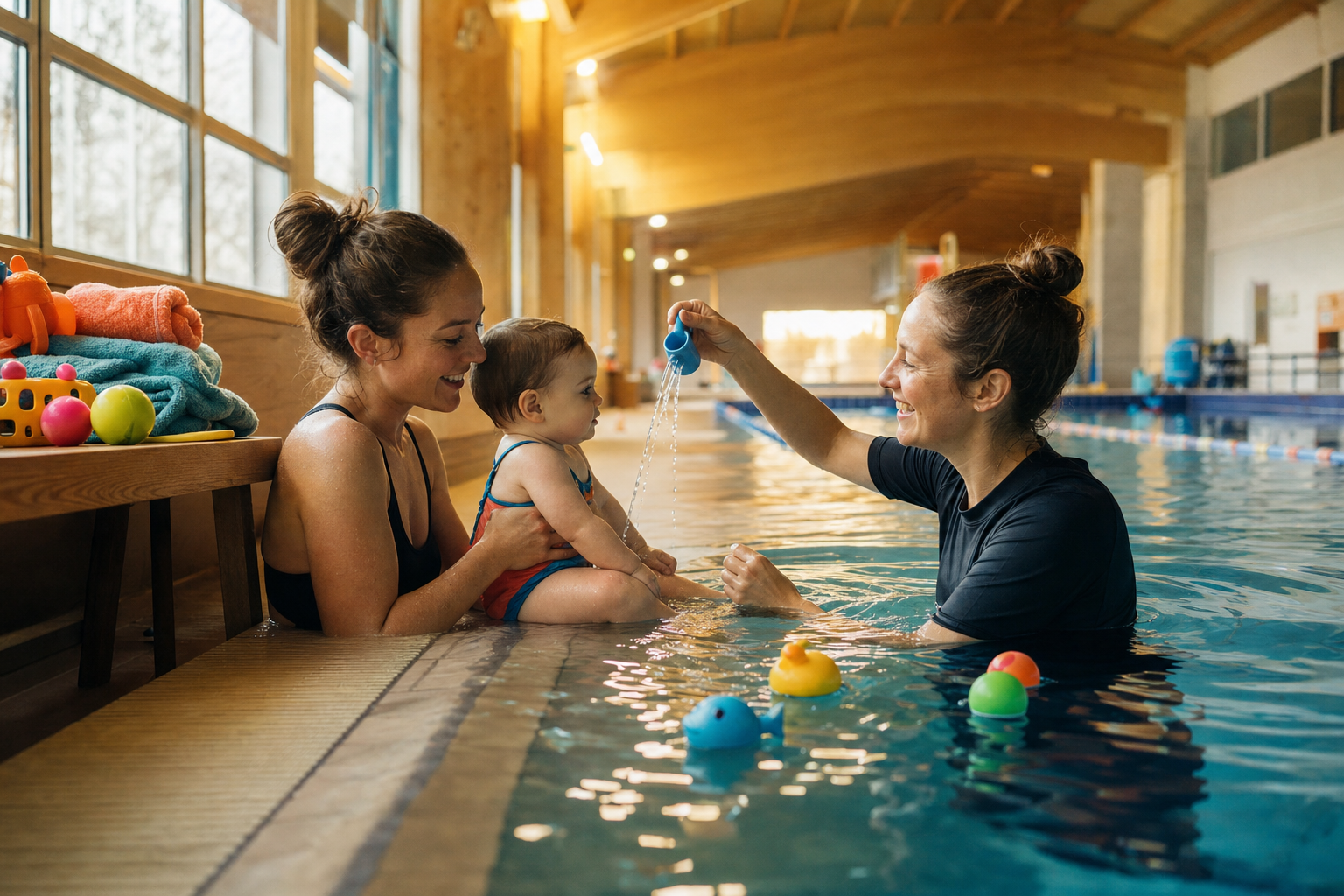
You don’t need your child to swim independently before you can feel confident about their baby swim progress. What really matters is how they are feeling in the water—lesson by lesson. Tracking comfort signals helps you spot real growth while keeping your baby safe, avoiding comparison or rushing toward badges, and recognizing that reflex floating isn’t the same as swimming. Here’s how to build and use a baby swim comfort score based on clear signals like mood, face-wet tolerance, warmth, recovery time, feeding, sleep, and next-step questions for the teacher.
What Is a Comfort Score—and Why It’s More Helpful Than Milestones
A comfort score looks at emotional and physical readiness each time your baby—aged between 4 and 36 months—takes part in a lesson. Instead of judging progress by whether they can float or swim alone, you rate how at ease they are before, during, and after class. This matters because kids under one, anxious babies, or toddlers returning after a break often need more gentle pacing than bold milestones allow.
The American Academy of Pediatrics recommends swim lessons begin after a child’s first birthday but also stresses readiness is about emotional maturity, physical and developmental abilities, and willingness for the water—not just age. Lessons with parents involved often help build safety habits and readiness like back floating.(healthychildren.org)
Seven Signals to Include in Your Comfort Score
Below are the key things you should notice after every class. Track them in a notebook or on your phone. Rate each one from 1 to 5 (1 = strongly negative or not ready, 5 = fully comfortable), then average them to make a simple comfort score.
Entry Mood
How does your baby seem before entering the pool? If they’re playful, calm, reaching for the teacher, or curious, that’s a strong 4 or 5. If they hide behind you, cling, or cry before even getting their feet wet, that’s a 1 or 2. If crying lowers after you enter the water, that’s a good improvement sign. The first few lessons often bring peaks of emotional discomfort—usually around lessons 3-5—before confidence builds.(swimkidsutah.com)
Face-Wet Tolerance
Is your child okay with water on their eyes, nose, and mouth? Tolerates gentle splashes during bath time? Let face-wet tolerance rise gradually. If sprinklers, cups, or even a toy tap over the face cause distress, score low. If your baby starts to blow bubbles, or get water on their face without panicking, you’re moving up. This is a foundational signal of swim readiness.(waterwisekids.com)
Warmth During & After Class
Monitor how warm they are right after swim time. Wrap immediately, dry thoroughly. Cold hands, shivering lips, or mottled skin are warning signs. Even if your pool is heated, wet babysuit and air chill can sneak in. Tummy and back being warm signals good comfort.(paperzz.com)
Recovery Time
How quickly does your baby bounce back after the lesson? A short nap or feeding break is normal. If baby remains unsettled, unusually fussy, or has difficulty calming even after being warm and dry, that signals discomfort. A faster recovery tells you lessons are not just tolerated—they’re becoming positive.(swimy.org)
You can pair this scorecard with something like the 10-Week Plan from swimy.org referencing regular exposure, gradual skill building, reflection, and home practice to reinforce comfort between lessons. That plan helps avoid rushing reflex floating or pushing kids into unsupported swimming before they’re ready. (See the “10-Week Plan” at https://www.swimy.org/10-week-plan.)
Feeding
Do they want their regular feed on time? Are they rejecting it? Loss of appetite or feeding too soon before class can trigger fussiness. Ensuring your baby is fed well ahead of a swim and offering a feed after class if good signals show willingness to eat are signs comfort is improving.(paperzz.com)
[[ctababy]]
Sleep
Swimming, like other physical activity, can increase fatigue in babies. If your little one naps soon afterwards and sleeps well through the night, that’s positive. If lessons disrupt sleep (lots of wake-ups, nightmares, unable to settle), evaluate your swim timing or lesson length.(swimkidsutah.com)
Teacher Communication & Next-Step Questions
Good instructors will share what they saw, what the baby tolerated, what needs gentler pacing. After lessons ask: Did they test face-wet exposure? Was the water temperature suitable? Was the baby held gently when needed? What skills are coming next, and how can we support them gently at home? These questions help you avoid the trap of chasing badges instead of tracking comfort.
How to Use the Comfort Score Wisely
Input these seven signals each lesson, average them. If you stay below a comfort score of around 3 for more than two lessons in a row, it’s time to slow down: focus on water play, simple exposure, shorter sessions. If scores hover at 4-5, you might gently introduce next skills. For toddlers shifting back after a break, don’t expect top scores immediately—respect gradual re-entry.
Also notice trends: is face-wet tolerance increasing? Is recovery time shrinking? Mood improving at entry? Those upward shifts matter more than any specific score cutoff.
What a Comfort Score Isn’t—and What to Avoid
Comfort signals are not safety skills. Even a child with a high comfort score still needs constant, watchful, touch supervision. Don’t mistake reflex floating or assisted back float in very young infants as independent swimming or survival ability. The AAP notes infants (under one) lack the neuromuscular control for propulsion, so reflex floating may not reduce drowning risk.(publications.aap.org)
Avoid comparing your child with others: every baby develops at their own pace. Reject chasing badges or pushing for unhelpful milestones. Progress in posture, tolerance, warm-up phases, recovery—all these softer signs—matter more than formal metrics early on.
For Anxious Babies, Babies Under One, and Returning Toddlers
If your baby is anxious, it helps to rate entry mood and face-wet tolerance especially carefully. Use bath time to practice gentle exposure. For babies under one, keep lessons short, always with parent in water, warm pools, no pressure for skill. For toddlers who are coming back after months off, expect backward movement in mood or tolerance—this is normal. Keep expectations gentle.
Safety Caveat You Must Always Remember
A high comfort score never equals a safety skill. Always provide constant adult supervision in or near water, use life jackets in open water, ensure pools are fenced, gates latching, alarms functional. Swim lessons help, but according to the AAP, lessons do not drown-proof a child at any age.(healthychildren.org)
Pulling It All Together: Sample Comfort Tracking for One Month
Imagine month one of swim lessons for a 14-month-old returning after a summer break. After lessons, you rate them: Entry Mood (2), Face-Wet Tolerance (1), Warmth (5), Recovery Time (4), Feeding (3), Sleep (4), Teacher Communication (4) → average score of about 3. If by week three, face-wet tolerance moves to 3, mood at entry becomes 3, recovery time 5, the overall score creeps toward 4. That’s real progress even if the child isn’t kick-swimming yet. Celebrate it, not just floating or badges.
Tracking comfort this way turns baby swim progress into something you can see day by day—not just at milestone moments. You’ll learn what pace works, stay in sync with your child’s readiness, and protect both confidence and safety. And always remember: comfort signals speak louder than strokes or ribbons—and safety lives in your watchful care, no matter where they are along their swim journey.
120+ swimming exercises sorted by age — with video and instructions. Developed by swim instructors, completely free.

120+ swimming exercises sorted by age — with video and instructions. Developed by swim instructors, completely free.