How to Protect Your Baby’s Tiny Feet from Scorching Pool Decks This Summer
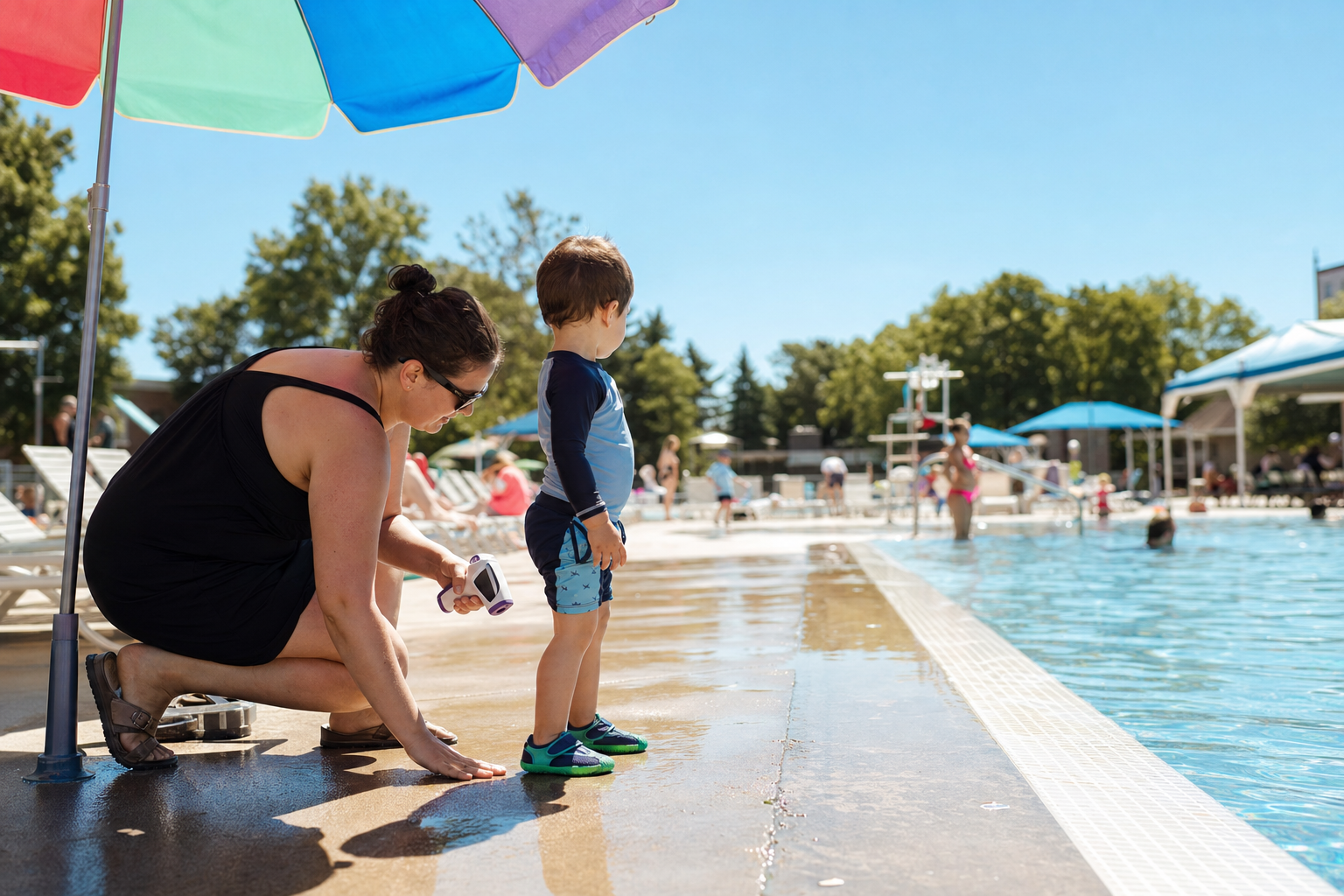
Toddlers between 6 to 36 months often crawl, stand, or toddle toward the pool deck—and those surfaces heat up fast. Start by testing the deck surface with your hand or a non-contact infrared thermometer. If it’s too hot for your hand, it’s dangerously hot for your baby’s feet. Concrete, dark tile, and composite wood can reach 50°C (122°F) in direct sunlight. Use your palm as a rule of thumb: if you can’t hold it for five seconds, your baby shouldn’t walk there barefoot.
Beyond checking temperature, always carry your baby in peak heat—especially during mid-day heat waves. Instead of assuming sunscreen will protect tiny feet (it won’t keep hot surfaces from burning them), opt for shade, cool paths, or preventing contact. A wide-brimmed hat might save their skin, but protecting their soles takes more: physical shade from umbrellas or midday cover is your best ally for "hot pool deck baby feet" safety.
Shade, Cover & Routes: Strategies for Early Walkers
Creating safe routes and shade cover can drastically reduce risk. Set up canopies or use trees, umbrellas or portable pool tents to cast shade over walkways and decks. Walk paths that stay shaded for as long as possible; even temporary shade from a beach umbrella can lower surface temperature significantly. Avoid high-risk times like between 10 a.m. and 3 p.m. when the sun is most intense.
Dress babies in lightweight, full-foot swim socks or shoes with traction on tiles or rough concrete. That protects against both heat and sharp edges. It also helps with “toddler feet pool deck” safety which combines slips and burns risks. Skipping proper footwear or using oversized flip-flops can actually increase trip risk—wet flip-flops are one of the worst weekend pool deck combos.
Footwear That Helps Without Slipping
When it comes to choosing the right shoes for early crawlers and new walkers, focus on non-slip bottoms, breathable material, secure fit, and quick-dry fabric. Baby water shoes with rubber soles prevent burns and slipping. For frequent visits to water parks or splash pads, go for designs that are closed-toe or hybrid styles so toes aren’t exposed to hot surfaces or rough textures. The Bump’s recent gear review shows how flexible water sneakers can offer both protection and comfort for “toddlers spending time near water or on unpredictable surfaces.” (thebump.com)
If you want a structured way to build water confidence at home, the 10-Week Plan guides you step by step.
Oversized footwear, wet flip-flops, or shoes without backs are problematic. They slide off, cause instability, and increase fall risk. Where possible, allow barefoot time in shallow, cool, shaded grass or smooth surfaces to help with foot strength—but only when those surfaces are safe and cool.
Simple Tools Every Parent Should Use
An infrared thermometer is a smart investment—it lets you test deck or tile temperature in seconds. These are the same tools health care workers use to read skin temperature. (fda.gov) Fill water shoes or socks with cold water and let them evaporate; moisture lowers surface heat and helps reduce burns, similar to moist towels or shade. Also keep water and hydrating snacks at hand—babies lose heat differently and dehydrate fast in heat waves. Both the U.S. FDA and the CDC emphasize keeping babies under 6 months out of direct sun; shades and clothing are safer than sunscreen in many cases. (fda.gov)
[[ctababy]]
Another useful idea: plan swim time around structured programs which combine safety with learning. The 10-Week Plan from swimy.org gives parents a framework for aquatics progress while staying safe in and out of the water; pairing that with proper footwear and shade routes makes summer safer for crawlers and new walkers. (swimy.org)
What Parents Often Miss (and Mistake That Can Burn More Than Skin)
One common mistake: applying sunscreen to feet and assuming they’re protected. That won’t stop hot surfaces from burning soles. Sunscreen only helps against UV rays. Another is letting toddlers roam barefoot around wet pool decks—both burns and slip risks go up dramatically when surfaces are wet and hot.
Running is also dangerous. Even with shoes, wet decks + early walkers often equal slips and falls. Oversized footwear or flip-flops without secure heel straps make falls far more likely. Prioritize shoes that stay on and give grip, but keep toddlers in your arms or use carriers when walking under bright sun or across decks where you can’t verify safety.
When You’re Out & About: Pool Parties, Water Parks, Holidays
Before heading out, pack more than sunscreen and towels. Include:
- Water shoes sized properly (not too big or small).
- Shade items: umbrellas, pop-up tents, hats.
- A thermometer to check surfaces.
- Extra sets of dry shoes or socks.
When visiting public pool decks or water parks, walk carefully. Encourage “walk, don’t run” rules early. Supervise toddlers closely—low-level falls can bruise or burn. Even shade structures may only cover small areas, so move frequently, carry your child, or let them rest in shaded lounge chairs.
Final Thoughts on “Baby Pool Safety Summer” Basics
Protecting toddler feet from hot pool decks means balancing three things: shade, proper footwear, and avoiding risky surfaces. Use shade routes, test surfaces with your hand or thermometer, and choose water shoes that fit securely and give grip. Avoid wet flip-flops or running in oversized footwear. Sunscreen can protect skin from UV, but not from hot concrete.
By staying alert to deck temperatures, planning routes, and picking shoes carefully, parents can spend more joyful, pain-free time by the water and worry less about burns or falls. Make summer fun—and safe—for your little explorer’s tiny feet.
120+ swimming exercises sorted by age — with video and instructions. Developed by swim instructors, completely free.

120+ swimming exercises sorted by age — with video and instructions. Developed by swim instructors, completely free.