Speak Up Poolside: Scripts for Common Swim Safety Concerns
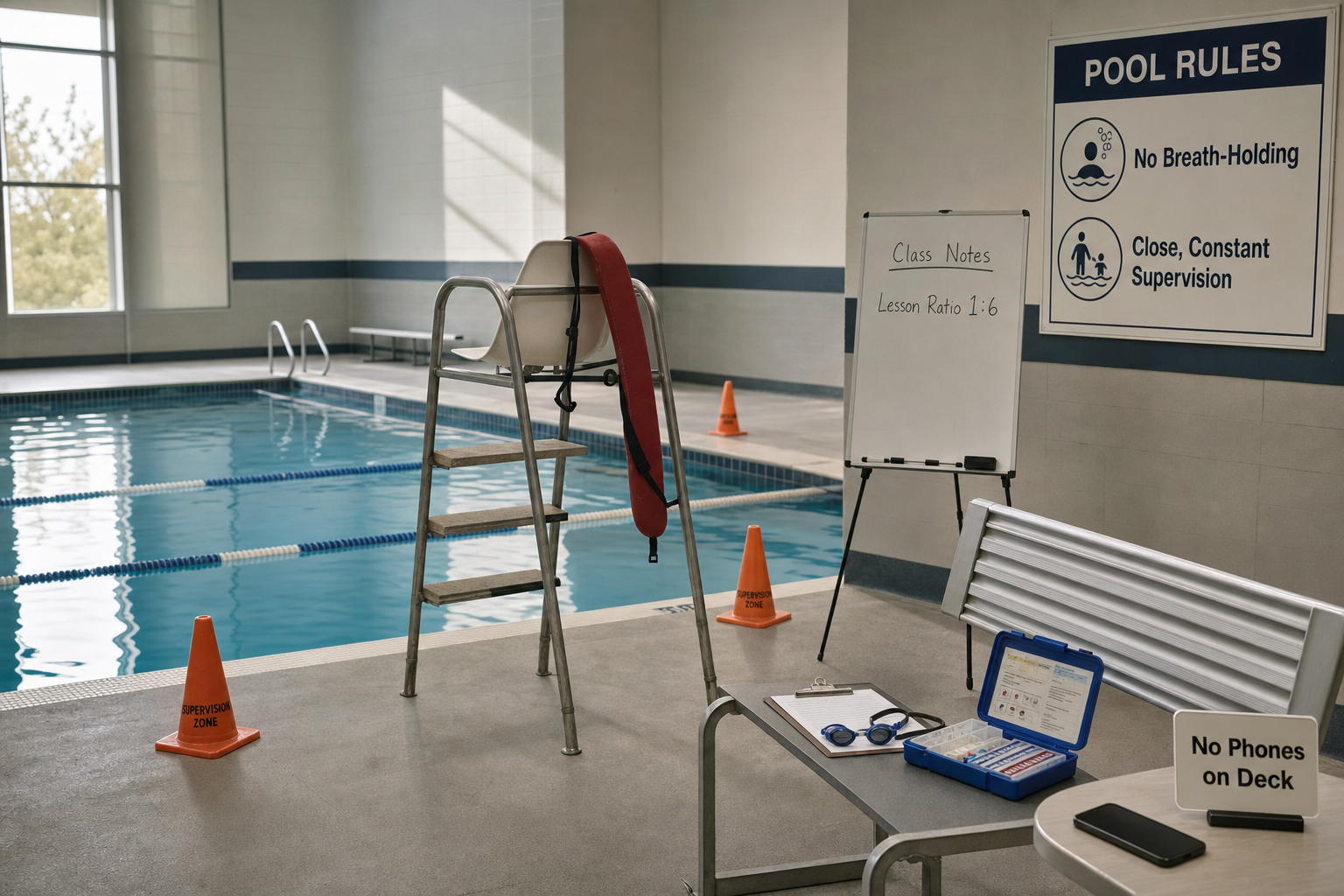
You’re at swim school and notice something that worries you—maybe the class looks overcrowded, supervision feels divided, kids are complaining about itchy eyes, or someone’s challenging breath-holding games. It’s normal to feel unsure about speaking up. Here are respectful, ready-to-use scripts for heading into tricky conversations about swim lesson ratios, supervision, chemical odors, and dangerous games—with safety first and relationships intact.
When You’re Concerned About Swim Lesson Ratios
You want to make sure there are enough adults around to keep your 3- to 12-year-old safe. The keyword here is “swim lesson ratios,” which refers to the number of students per instructor. Research and best practice (for example, USA Swimming Foundation and American Red Cross) generally recommend no more than about six students to one instructor for beginners, especially ages 3-6. More advanced classes may stretch to 8-10 when swimmers are competent. (watersafetyusa.org)
Script:
“Hi Coach / Director, thanks for your ongoing work with the kids. I noticed today there are quite a few students in my child’s class—can you tell me what the student-to-instructor ratio is for this age/level? I’ve heard smaller ratios help with safety and progress. Is there any possibility of reducing the number during peak times?”
When You’d Like Clearer Supervision Zones
Maybe the pool deck feels busy, kids drift off into blind spots, or the deck phone use distracts lifeguards. The AAP and CDC highlight the need for “close, constant, attentive” supervision—free of distractions like phones. (cdc.gov)
Script:
“Hello, I appreciate how busy things get around poolside. I was wondering if the supervision zones could be more clearly marked or organized. For example, could we have designated spots for instructors or assistants so every child is visible? Also, could there be guidelines about phone use on deck—I worry it might reduce attention to swimmers’ safety.”
Reporting Chemical Odors or Eye-Sting
If you want a structured way to help your child progress at home, the 10-Week Plan guides you step by step.
If the pool water smells sharp, eyes are burning, or skin feels irritated: these might be signs of chloramines or poor chemical balance. The CDC’s guidance on healthy swimming says you should report these issues immediately because chloramines form when sweat, urine, and dirt combine with chlorine and can irritate eyes and airways. (cdc.gov)
[[ctakid]]
Script:
“Hi, I need to bring something to your attention: there’s a strong chemical smell and my child’s eyes are stinging. Could someone check water chemistry or ventilation? I’m not looking to criticize, just want to make sure everyone stays comfortable and safe.”
When a Game Encourages Long Breath-Holds
Sometimes instructors or kids play underwater tag or contests to see who can stay submerged longest. CDC explicitly warns against breath-holding games due to risks like hypoxic or shallow-water blackout. (cdc.gov)
Script:
“Hey Coach, can we pause this underwater holding contest for a minute? I’ve learned that games involving long breath holds can be risky for kids—even strong swimmers. Could we switch to something like who reaches the wall first or races by stroke? It might be safer and still fun.”
Backed by Guidance and Knowing What to Look For
You’re not overreacting to “pool school” issues—these concerns align with CDC and AAP guidelines. The AAP’s revised policy (2026) urges close, capable supervision, avoiding distractions, and ensuring every swim lesson covers safety habits as well as swim skills. (publications.aap.org) The CDC’s summer swim safety guidance reminds us that even after lessons, kids still need “close and constant supervision”. (cdc.gov)
When choosing a swim program, look for instructors who follow standards, offer regular, measurable progress, and organize lessons around good ratios. There’s even a resource like the 10-Week Plan from swimy.org that helps parents track progress week by week and ask relevant questions. While not all programs list their ratios, credible centers do—and many publish their policies.
Putting It All Together Quietly
At the end of a swim lesson or while chatting with front-desk or program director is often the best time. Keep your tone friendly, curious, and collaborative. Frame your concern as a question, not a complaint. Often, swim schools will appreciate your awareness, because high safety standards help everyone.
A final thought: voicing concerns calmly can improve safety for your child and others. Experts agree that multiple overlapping safety layers—quality swim lessons, vigilant supervision, proper pool chemistry, and rules against dangerous games—working together save lives. Every time you speak up poolside, you help reinforce those layers.
Be confident. Safety matters more than awkwardness—for the kids’ sakes.
120+ swimming exercises sorted by age — with video and instructions. Developed by swim instructors, completely free.

120+ swimming exercises sorted by age — with video and instructions. Developed by swim instructors, completely free.