Sloped Pool Entries Increase Toddler Risk: How Parents Can Stay Safe at Zero-Entry Pools
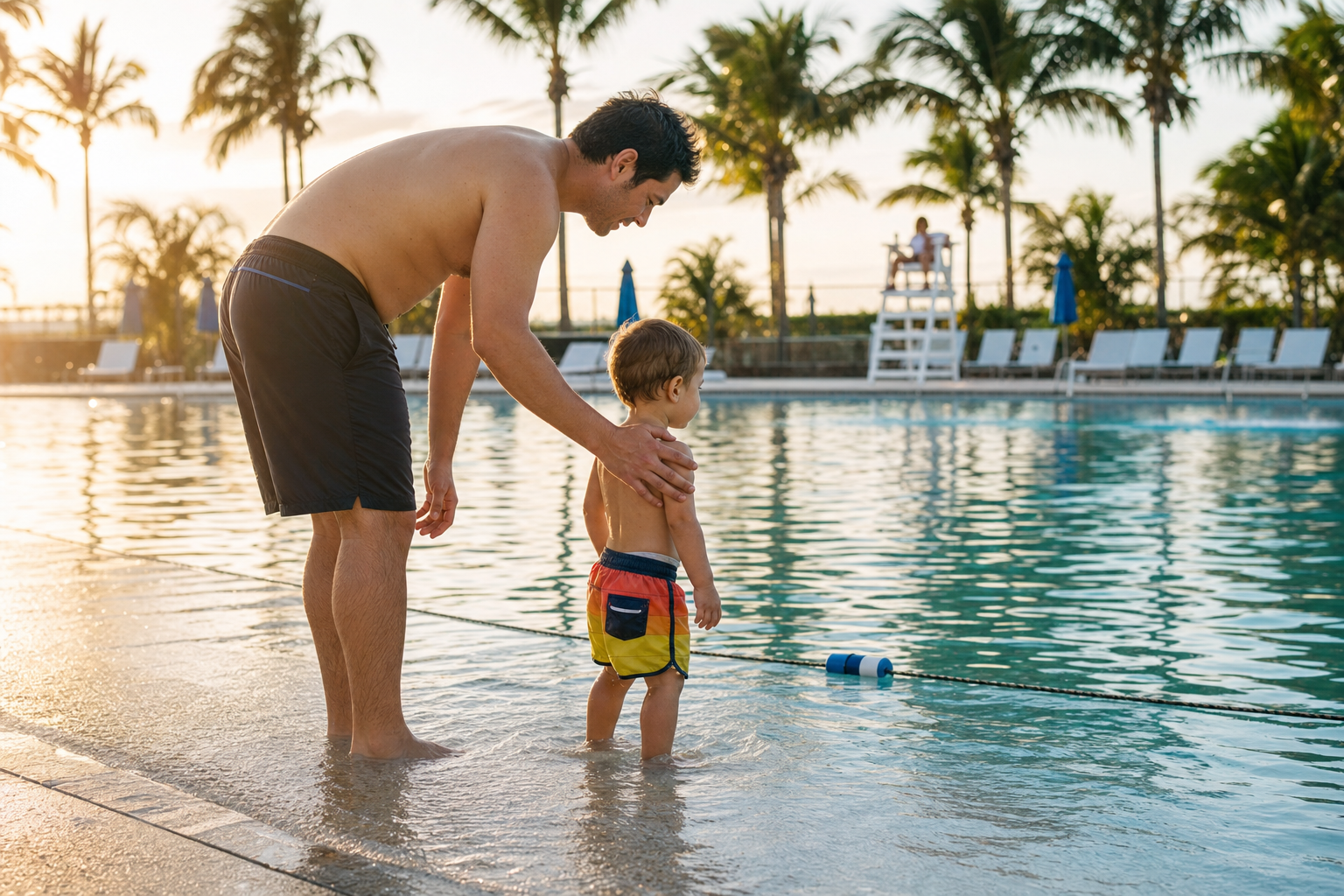
You're lounging by a beach‐entry or sloped pool, watching your toddler gingerly walk into the water and thinking it feels safer. But those gentle slopes or zero entry pool toddler safety designs can quietly turn into danger zones for new walkers or confident toddlers between 12–36 months. When the slope gradually deepens, a toddler may wander past what they think is shallow—and find themselves out of their depth without realizing how fast the drop happened.
Why Sloped or Zero‐Entry Pools Pose a Hidden Risk
A zero entry pool (also called a beach entry pool baby setup) features a gradual ramp rather than a distinct shallow end or steps. For toddlers this means the water gets deeper so smoothly that visual cues are confusing—they may step forward believing they’re still in safe water, then suddenly it’s past their chest. While zero entry pool toddler safety is often praised for accessibility and comfort, it removes clear stopping points. Many fatal and non‐fatal drowning incidents among children ages 1–4 happen during what adults believe is low risk water play, often without supervision close enough to react immediately. (healthychildren.org)
Where Parents Often Slip Up
Even parents who understand water safety can make mistakes around beach entry pools. A common pitfall is standing at the dry pool edge—watching from land rather than being in the water. With a slope, just a few steps forward by the toddler can cross an invisible line into danger, and from outside the water, vision and reaction time are impaired. Another issue arises when parents let lesson goals or play activities push toddlers further down the slope before they are ready; a steady progression without fixed limits can erode safety.
How to Safely Supervise Sloped Pool Entries
Stay within arm’s reach and provide “touch supervision”
The American Academy of Pediatrics stresses that infants and toddlers, weak swimmers, or new walkers always need an adult in the water within arm’s reach. Eyes must be continuously on them—not multitasking with phones or socializing. (publications.aap.org)
Standing at the pool deck doesn’t meet this standard when water is shallow but deepens gradually—a toddler walking further down the ramp can be in trouble before you see it.
Position your body for visibility and reach
If you want a structured way to build water confidence at home, the 10-Week Plan guides you step by step.
Enter the water yourself. Stand where your chest is at or above the deepest point you allow your child to approach. This gives you a full view of their face and improves your ability to jump in or reach if they slip. Holding them by a hand or shoulder keeps you aware of their pace and comfort level.
Set stop points on the ramp
Before each swim session, decide exactly how far the water will get. This might be knee height, chest height, or a certain number of tiles down the slope. Teach your toddler a boundary—perhaps a small floating marker or step—beyond which they don’t go. Practice “stop line” games where they walk out, turn around, and come back, so they recognize safe vs unsafe depths.
[[ctababy]]
Adjusting Lesson Goals for Early Walkers
Toddlers who are new walkers won’t have balance, coordination, or judgment solid enough for deep water yet. Start with short lessons focused on comfort near the surface, splashing, and blowing bubbles. Progress slowly to more challenging tasks only once your toddler consistently pauses at the stop point and feels safe walking in slightly deeper water. The swimy.org 10-Week Plan offers a guided structure for developing water competence in toddlers—starting from pool-edge confidence to shallow water exploration. Hyperlinking with this plan ensures goals build gradually and safely, with each week reinforcing control and trust. That plan can be a game changer for early walkers.
Also, avoid pushing toward higher risk achievements, like unassisted floating or submersion, too early. Confident toddlers make rapid gains; they may feel overconfident and test limits at slope transitions. Let competence—not age—drive progress.
Practical Tips for Zero Entry Pool Toddler Safety
- Remove toys near the ramp when lesson or play time ends. Toys draw toddlers toward edges and deeper water.
- Use US Coast Guard-approved life jackets when water gets past waist height. Floaties and arm wings often fail or give false security. (cdc.gov)
- Assign a water watcher when there are multiple caregivers, guests, or distractions. Change duties every 15–20 minutes to keep supervision sharp. (nyc.gov)
- Always teach entry feet first. Toddlers should face the gradient and move slowly until they find solid footing. Feet first entry helps prevent head injuries and shocks from sudden depth. (publications.aap.org)
Seasonal Peaks: Resorts, Splash Pools & Outdoor Summer Settings
During summer, resorts and outdoor pools with zero entry sections see many toddlers visiting. Public spa splash areas often have ramps and gradual slopes. In those environments supervision must be extra strict. Lifeguards may be present, but you know your child best. Remain within reach and avoid assuming others are watching. Remove shoes that could cause slips on wet ramps, check for wet algae or slippery surfaces that amplify the risk. And when visiting resorts, ask about ramp slope and depth transitions ahead of time.
Above all, remember that zero entry pool toddler safety depends less on features and more on your vigilance in supervision, body positioning, clear stop points, and gradual, evidence-led lesson goals. These steps turn the illusion of safety into genuine protection. You can let your toddler enjoy the shallow ramp, splash freely in shallow water, and grow confident water skills—without stepping into hidden danger.
Stable, joyful pool time begins with your presence in the water—not just at the edge.
120+ swimming exercises sorted by age — with video and instructions. Developed by swim instructors, completely free.

120+ swimming exercises sorted by age — with video and instructions. Developed by swim instructors, completely free.