Mudflats & Estuaries: Don’t Get Stuck — Family Safety Plan
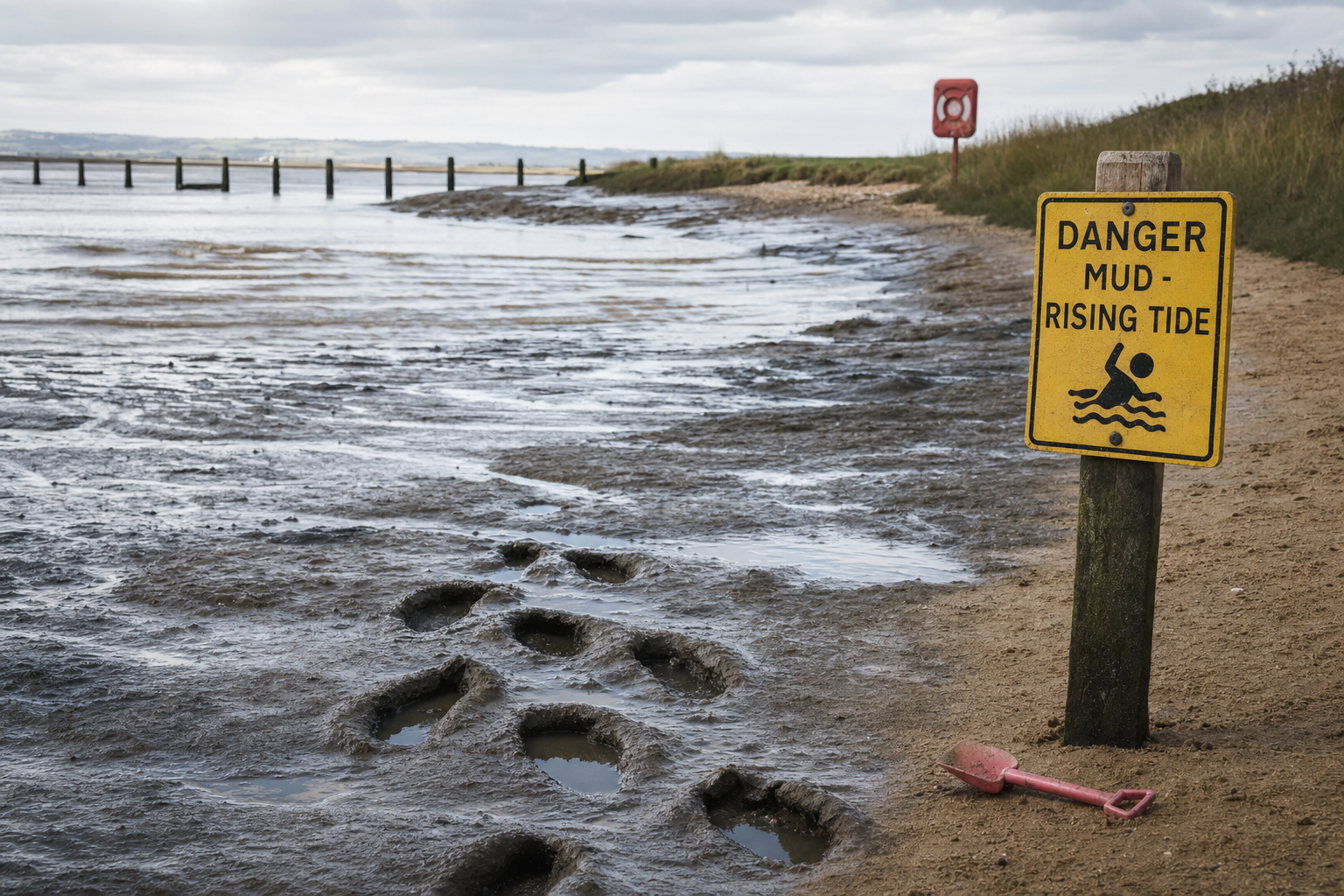
Soft estuary mud and mudflats can seem harmless—especially to kids who think it’s just like squishy sand. But it acts more like a trap. Feet sink, water rushes in, and safe routes disappear in minutes. If a child—or pet—wanders into a mud zone, one wrong step can lead to danger. Parents need to understand why it’s risky and how to plan ahead for mudflat safety children, quicksand beach UK locations, and estuary tide safety.
Why Estuary Mud is Dangerous
Kids might not realize that soft mud binds tightly around ankles and calves. When mud covers their foot and they try to pull it out, they often make things worse by creating a strong suction. That sticky grip, combined with a rising tide, can leave them stranded. RNLI and HM Coastguard warn that mud or quicksand often looks like wet sand. Mud zones are a real emergency risk when tides come in fast and exit routes disappear.(hmcoastguard.uk)
In a 2020 incident on the River Stour near Copperas Bay, four children got stuck in mud just before the tide advanced. Two escaped on their own, but two were airlifted to safety. The Coastguard advises anyone stuck in mud to stay calm, spread weight evenly, and avoid moving too much. And above all, call 999 and ask for the Coastguard—trying to rescue someone yourself often makes things worse.(hmcoastguard.uk)
What Parents and Kids Must Do Before You Head Out
Supervise closely ages 5–12. Teach children to stay on firm ground, stick to signed paths, and never chase pets over mudflats. Explore these rules as seriously as teaching them to swim.
- Always read tide tables before leaving home. Knowing high and low tide times informs when mudflats or estuary channels will flood. HM Coastguard’s Coast Clever campaign warns that incoming tides can sneak in behind you and cut off exit routes fast.(hmcoastguard.uk)
- Stick to designated and signed paths. Local warnings are not just suggestions; they are often based on recent accidents and issues with mud. Fire services across the UK emphasise following paths near water and mud in case someone gets stuck unexpectedly.(dwfire.org.uk)
- Avoid exploring or playing on mud at mid-tide. Toward rising tide, mud appears more dangerous just when mudflats look calm. That leads people to venture out farther, only for the sea to block their way back. The “cut-off by the tide” danger is one of the most common reasons HM Coastguard is called to incidents.(hmcoastguard.uk)
If you want a structured way to help your child progress at home, the 10-Week Plan guides you step by step.
Safe Behavior When You're There
Teach kids that even when mud looks solid, it’s not always reliable. They must understand why “just wading out” is risky. Quicksand beach UK locations exist where saturated mud behaves like quicksand, gripping legs tightly and trapping people before they realize.(reddit.com)
If someone slips or starts to sink in mud: stay calm. Don’t struggle. Lean back to spread weight and try to crawl toward firm ground without abrupt movements. Shouting for help is better than trying to pull yourself out alone. It’s also vital for parents to stop others from attempting rescue without help. Trained rescue teams use special equipment like inflatable platforms and emergency sleds—items not found in most family beach bags.(hmcoastguard.org.uk)
This kind of training is sometimes included in water safety work through organisations like RNLI, which offer education and free sessions. For example, RNLI offers Swim Safe lessons and you may also consider building confidence with programmes like the 10-Week Plan, which helps children improve swimming and water safety skills.(rnli.org)
[[ctakid]]
If You Find Yourself or Someone Stuck
Do not try to rescue someone yourself. Getting stuck in mud exposes rescuers to the same risks. Call 999 (UK) or the equivalent emergency service and ask explicitly for the Coastguard if near the coast. With soft estuary mud or quicksand beach UK spots, response teams are trained to use specialist gear, methods, and safety lines.(hse.gov.uk)
Use your phone if you can, stay still, lean back, spread your weight, discourage others from coming into the mud too. If breathing becomes difficult or water reaches head height, shout for help. Keep a mobile device accessible.(hse.gov.uk)
Remember These Key Rules Every Beach/Estuary Visit
Always, always keep children within arm’s reach, ages 5-12 especially. Always stick to lifeguarded beaches when swimming; entrees are safer when lifeguards are watching and where flags mark safe areas. Learn what red and yellow flags mean, and respect local signage—black and white flags, orange windsocks, and warnings against inflatables or sudden plunges.(rnli.org)
Never attempt self-rescue across mud or water without safety equipment and training. Pets can make things worse: dogs running ahead of kids may drag them into mud, so always keep pets on a lead.(dwfire.org.uk)
Why Estuary Tide Safety Matters
The height and speed of tides vary between locations. Rising tides along estuaries can flood normally-crossable flats and channels within minutes. A path you casually use at low tide can vanish. Coastguard campaigns repeatedly stress checking tide tables before you go.(hmcoastguard.uk)
When tides come in, rescue routes might disappear too. YOU might become trapped if you don't anticipate the time needed to return safely. Estuary tide safety is more than watching water—it’s about understanding the coast’s layout, how far mudflats extend, where channels deepen, and what signs and flags mean.(assets.publishing.service.gov.uk)
Every trip to the beach or estuary should start by checking tide tables, making sure you and your kids stay on firm ground, and having a plan if things go wrong. Mudflats might look like fun places to splash around but they can turn dangerous in a flash. Stick to paths, teach kids what to do, and always call for help early if someone gets stuck. Your calm actions can make all the difference.
120+ swimming exercises sorted by age — with video and instructions. Developed by swim instructors, completely free.

120+ swimming exercises sorted by age — with video and instructions. Developed by swim instructors, completely free.