CPR for Drowning: What Parents Must Do First (Ages 3–12)
Seconds matter. If your child (age 3-12) has been submerged and is now unresponsive or struggling to breathe, your first actions can mean the difference between full recovery and serious harm. This guide cuts straight to what you must do first—and what gear and timing really count.
What to Do Immediately When Drowning Is Suspected
If you see a child go under or find them submerged, start by getting them out of the water safely and quickly. Once on firm ground, it’s time to act. First, check for responsiveness: call their name, gently tap their shoulders. If they’re unresponsive and not breathing—or only gasping—this is an emergency. Call 911 or your local emergency number right away unless someone nearby can do it while you begin lifesaving care.
Next, open the airway using the head-tilt, chin-lift maneuver unless you suspect spinal injury. Look, listen, and feel for breathing for no more than 10 seconds. If there’s no normal breathing, begin CPR with rescue breaths first. In drowning situations, rescue breaths are essential because the child likely has low oxygen—not a primary heart issue. The American Red Cross makes this clear: after checking for cardiac arrest in a drowning, start with two rescue breaths before chest compressions.(guidelines.redcross.org)
Why Rescue Breaths First, Not Compressions-Only
When a child drowns, lack of oxygen (hypoxia) causes respiratory arrest which can rapidly lead to cardiac arrest. Rescue breaths address this at its root. Studies clearly show that CPR including rescue breaths improves survival and neurological outcomes following drowning better than compressions-only CPR.
Compression-only CPR is an option only if you're unable or unwilling to give rescue breaths—for example, if you're untrained or uncomfortable. It’s better than doing nothing, but it’s not the preferred method in drowning.(guidelines.redcross.org)
The Step-by-Step Sequence for Untrained or Trained Parents
Here’s what you do, whether you’ve had CPR training or not:
Step 1: Get the child out of the water and onto a firm, flat surface guard your safety first.
Step 2: Check responsiveness quickly. If unresponsive and not breathing normally, call for help. If someone else can do that, have them call while you begin rescue.
Step 3: Open airway with head-tilt, chin-lift.
If you want a structured way to help your child progress at home, the 10-Week Plan guides you step by step.
Step 4: Give two rescue breaths. Each breath should take about one second and make the chest visibly rise.
Step 5: Start chest compressions. Use the heel of one or both hands (depending on size) in the center of the chest. Push about 2 inches deep at a rate of 100-120 compressions per minute.
Step 6: Continue cycles of 30 compressions followed by 2 rescue breaths. After about two minutes—if alone—give another call to EMS if you haven’t yet. Keep going until the child moves, begins breathing normally, or professional help arrives.(redcross.org)
[[ctakid]]
If there are two trained people, compression-to-ventilation ratio can be 15:2.(guidelines.redcross.org)
When Exactly to Call for Help
If you are alone and find a child who has collapsed in water or is not breathing, call 911 immediately before starting CPR only if you saw the collapse and are confident help will arrive quickly. Otherwise, start rescue breaths and compressions first and call as soon as you can safely stop.
If someone else is with you, ask them to call while you begin CPR. Always ensure EMS is on the way—even if the child appears to improve after rescue breaths alone. Monitoring after a near-drowning is critical.
Pocket Mask and Low-Cost Poolside Gear That Helps Buy Time
Practicing rescue breaths with a pocket mask ahead of time can make a life-saving difference. Experts say a pocket mask or small face shield allows you to give rescue breaths more safely and effectively than mouth-to-mouth—even if you're trained.(guidelines.redcross.org)
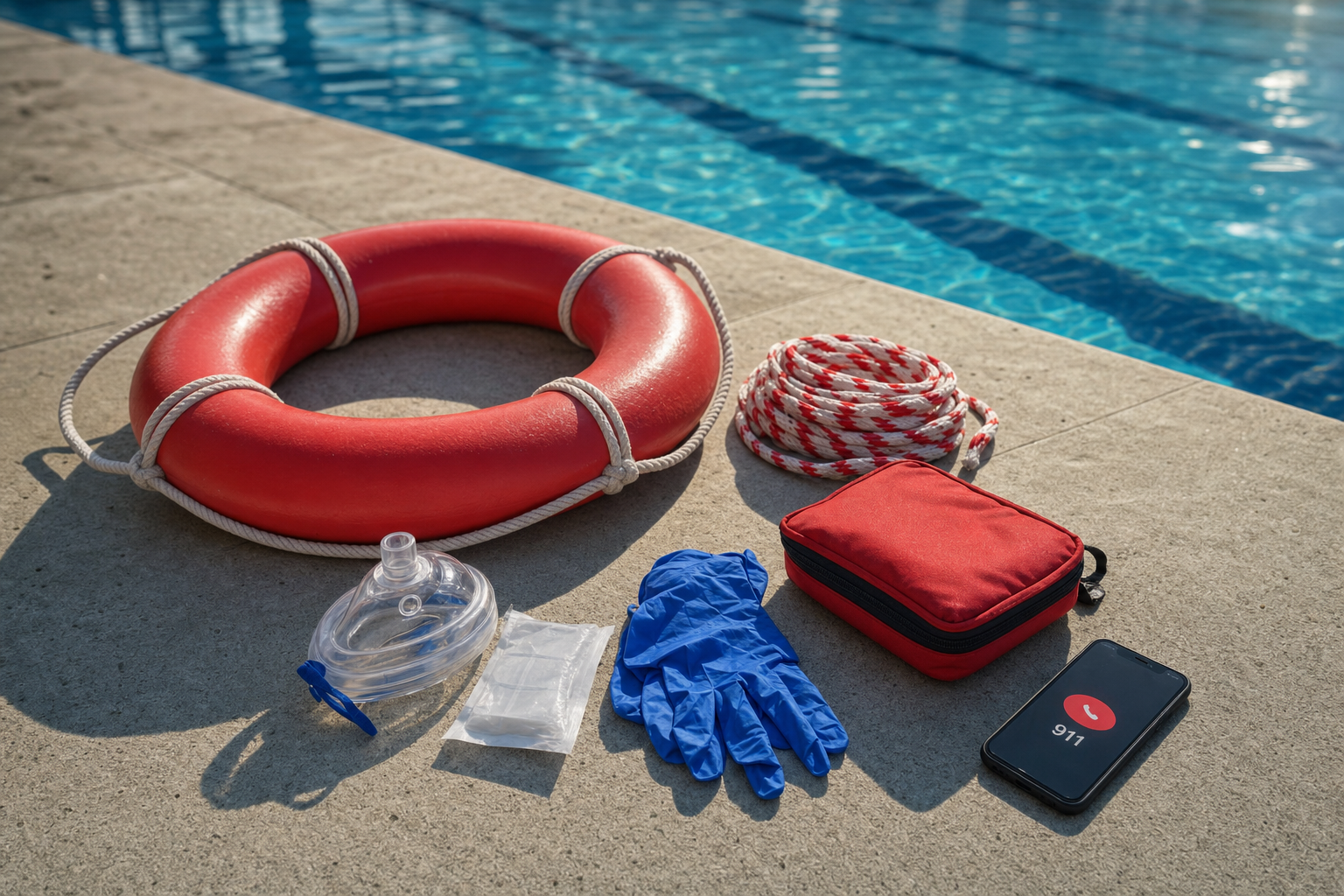
Keep these items poolside: a well-fitting pocket mask, face shield, basic first-aid kit, a phone for emergency calls, and life ring or float. The pocket mask should have a one-way valve and fit covering nose and mouth. Practice using it in first-aid or CPR training courses so it’s familiar in an emergency.
You might also want to schedule CPR training that includes both compressions and rescue breathing. Some swim schools or safety groups offer programs, including specific plans like the 10-Week Plan at swimy.org for building swim safety habits, which can prepare families before summer hits.
What to Practice Before You Need It
Training matters. Take a certified CPR class that covers children, not infants, as the techniques differ. Practice your rescue breather skills using a pocket mask, face shield, or bag-mask device. Go through simulated situations: spotting signs of drowning, removing the child safely, calling for help, starting rescue breaths and compressions without hesitation. Confidence builds so you act fast.
Never wait for EMS before starting CPR on a drowning child. EMS takes time to get there; seconds are ticking. Your rescue breaths and compressions bought straight away can protect the brain and organs.
Keep Awareness Year-Round, Not Just in Summer
Parents of school-age children often relax safety once summer ends, but drownings happen any time there’s water: bathtubs, vacations, indoor pool centers. Refresh your CPR knowledge yearly. Keep your poolside gear accessible and in good shape—check mask seals, replace worn items—before pools reopen.
Every parent hopes never to use this knowledge, but being ready can make all the difference. Having done the work—learned the correct sequence, practiced rescue breaths with a pocket mask, kept poolside tools at hand—you might save a life. And those seconds you act in, without delay, are the ones that give your child the best chance until professional help arrives.
120+ swimming exercises sorted by age — with video and instructions. Developed by swim instructors, completely free.

120+ swimming exercises sorted by age — with video and instructions. Developed by swim instructors, completely free.