Parent-Baby Swim Class Ratios Explained: How Many Babies Are Safe in an Infant Swim Class
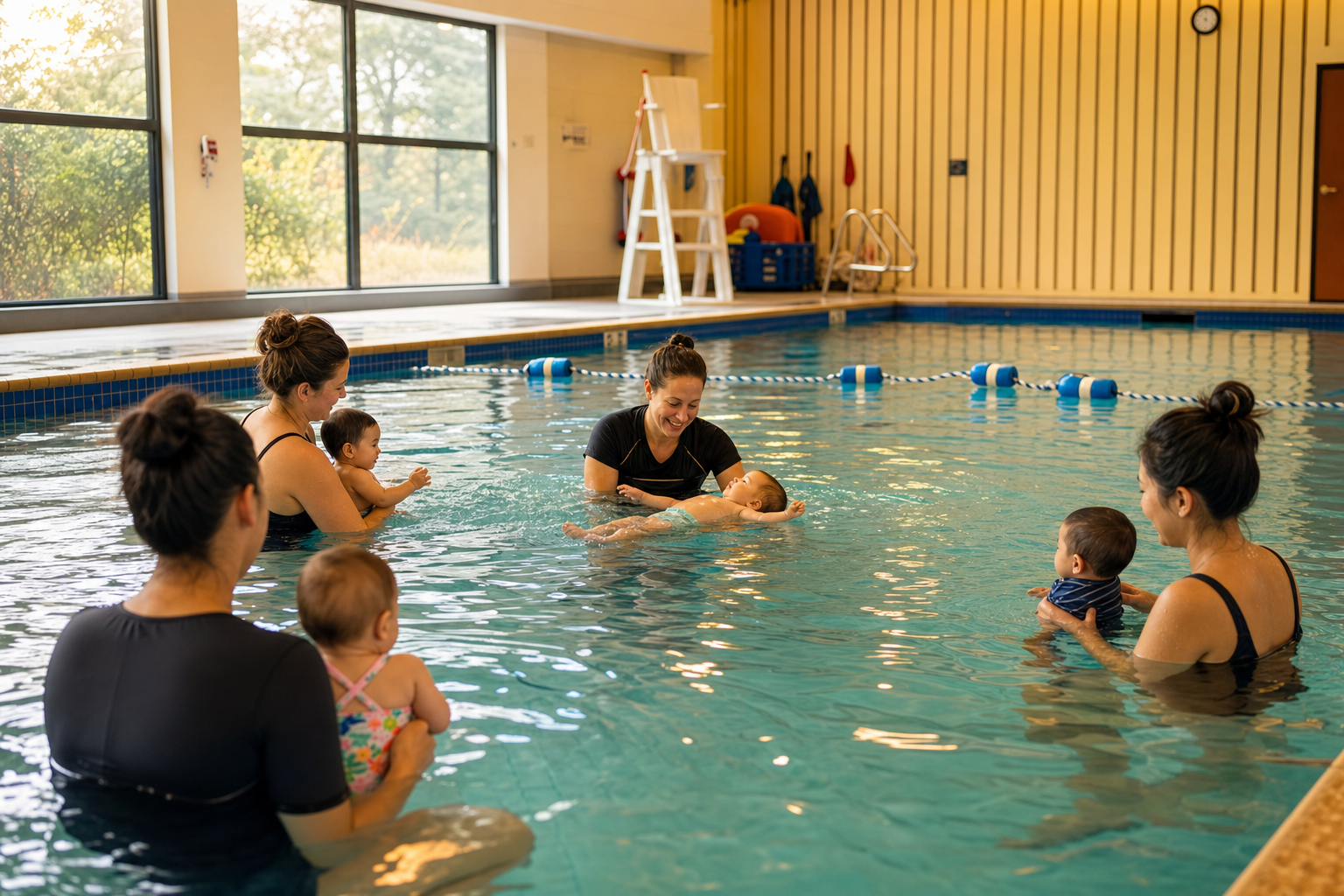
When choosing a parent and baby swim lesson for infants and toddlers (ages 4 to 36 months), the most asked questions are: How many babies should there be per instructor? How much space do we need? Can it stay calm, and is it safe? This guide gives clear answers—ratios, pool setup, sound control, waiting time—and shows why class size deeply matters for safety and learning.
Ideal Instructor-to-Family Ratios
A good parent and baby swim class ratio means one teacher or instructor for every four to six babies (plus their caregivers) when kids are 6–36 months. Groups that small let each baby have enough time to respond, explore, and get real feedback. For babies under 12 months, safe ratios are even tighter—sometimes 4:1 or 6:1 including parents. One program offering these safe group sizes is AVAC Swim School, whose Parent Tot classes run 6:1 for babies 6 to 36 months. (swimy.org)
Waterworks Aquatics sets ratios like 6:1 for Parent & Me beginners and intermediate levels for ages from 3 months to 36 months. They also offer a 3:1 level to help with more intense individual touch and skill work. (waterworksswim.com)
Avoid classes that push past 6 babies per instructor when babies are very young. Anything over 8:1 risks safety and means your child gets barely a minute of dedicated attention in a 30-minute session. (waterwisekids.com)
Pool Space—Water Temp, Depth, and Layout
A calm, safe lesson depends heavily on pool environment. For parent-baby classes, pools should be around 87-94°F (31-34°C), warm enough that babies don’t shiver and parents stay comfortable supporting them. Depth should let adults stand comfortably—around 1.0 to 1.2 meters often works well. If depth is much more, even holding a baby becomes harder. STA and SPATA standards for swim schools stress that depth needs match ages and ensure instructors and adults can safely assist. (sta.co.uk)
Layout includes enough deck space so caregivers aren’t crowded. If everyone is packed in, easy access to exits and edges is impaired; calmness drops. Also, the size of the pool surface area affects safety—crowded pools make it harder for instructors to maintain visual contact with every baby. Risk assessments for pools should include safe bathers area per number of people. (sta.co.uk)
Noise, Waiting Time, and Emotional Comfort
Babies have short attention spans. Big classes tend to get noisy fast—splashing, crying, other toddlers calling out. With many babies, every caregiver competes for space and structure. Small classes are quieter, more predictable, and make transitions easier.
If you want a structured way to build water confidence at home, the 10-Week Plan guides you step by step.
Wait time matters. If babies spend too much of class time waiting their turn, standing on the steps, or watching others instead of moving, they get bored, cold, or frustrated. With a ratio of 4-6, waiting drops. In semi-private settings (2-3 babies), waiting nearly disappears. (shapland.com.au)
Emotional safety—baby feeling secure—depends on you (caregiver) being within arm’s reach at all times, especially for under-1-year-olds. Lessons should never assume baby can act independently. This type of "touch supervision" is central to safety guidance. Also always remember swim lessons are just one layer of drowning prevention. Close adult supervision remains essential even after regular lessons. (cdc.gov)
[[ctababy]]
Why Class Size Affects Both Safety and Learning
When class size is too large, instructors can’t see every child’s cues. Maybe a baby is cold, scared, needs more time to float or gafs face. These things get missed if an instructor’s attention is split among too many.
For learning, repetition is essential. Babies learn steady through small movements, gentle submersions, assisted floating. One study-style plan called the 10-Week Plan from swimy.org shows how caregivers and instructors together can do gradual familiarisation through supported floating and breathing, before any underwater transitions. It works best when there are few babies in class. (swimy.org)
From Waterworks Aquatics examples or British Swim School in Austin, you’ll see that small classes with warm water, structured steps, and caregiver involvement lead to better comfort, quicker trust, and more skill progression. British Swim School’s Tadpole level starts as early as three months, with you in the water holding your baby while instructors guide movement, songs, and supported floating. Larger or noisier classes lose some of that magic and safety. (britishswimschool.com)
Safety Caveats and What to Ask Before Enrolling
Even in small classes, certain safety rules should never be optional. Ask if your caregiver must be in water with your baby (most classes require it under 1-year or for certain levels). Ask about submersion cues—are they voluntary, brief, controlled? How many per lesson? Too many forced submersions can stress a baby emotionally and physically. (swimy.org)
Also ask about instructor credentials, pool temperature, how they handle waiting time, deck area layout, and noise levels. These factors can matter even more than price.
And always remember: swim lessons reduce risk, but don’t eliminate it. According to the U.S. Centers for Disease Control and Prevention, even children who complete swim lessons still need close and constant supervision in and around water. Lessons are one safety layer, not the whole fortress. (cdc.gov)
Bringing It All Together
A good parent-and-baby swim lesson for ages 4-36 months should be small, calm, supportive, and methodical. A ratio of 4-6 babies per instructor (plus caregivers) is ideal for toddlers; for infants under 12 months, even tighter ratios matter. Warm water, comfortable depth, minimal waiting, clear routines, and caregiver involvement make learning not just effective, but joyful. The skills—trust, face-wetting, floating, breath control—grow from consistency in a safe, caring environment.
If you’re comparing classes, pick the one where you leave feeling confident, not stressed. Your baby will learn more when they feel seen and safe. And remember: whether it’s lessons, fences, life jackets, or CPR, each layer of protection helps build toward water confidence—and keeps your tiny swimmer safer every time.
120+ swimming exercises sorted by age — with video and instructions. Developed by swim instructors, completely free.

120+ swimming exercises sorted by age — with video and instructions. Developed by swim instructors, completely free.