How to Check Hotel and Airbnb Pool Safety Before You Unpack (with a Baby or Toddler)
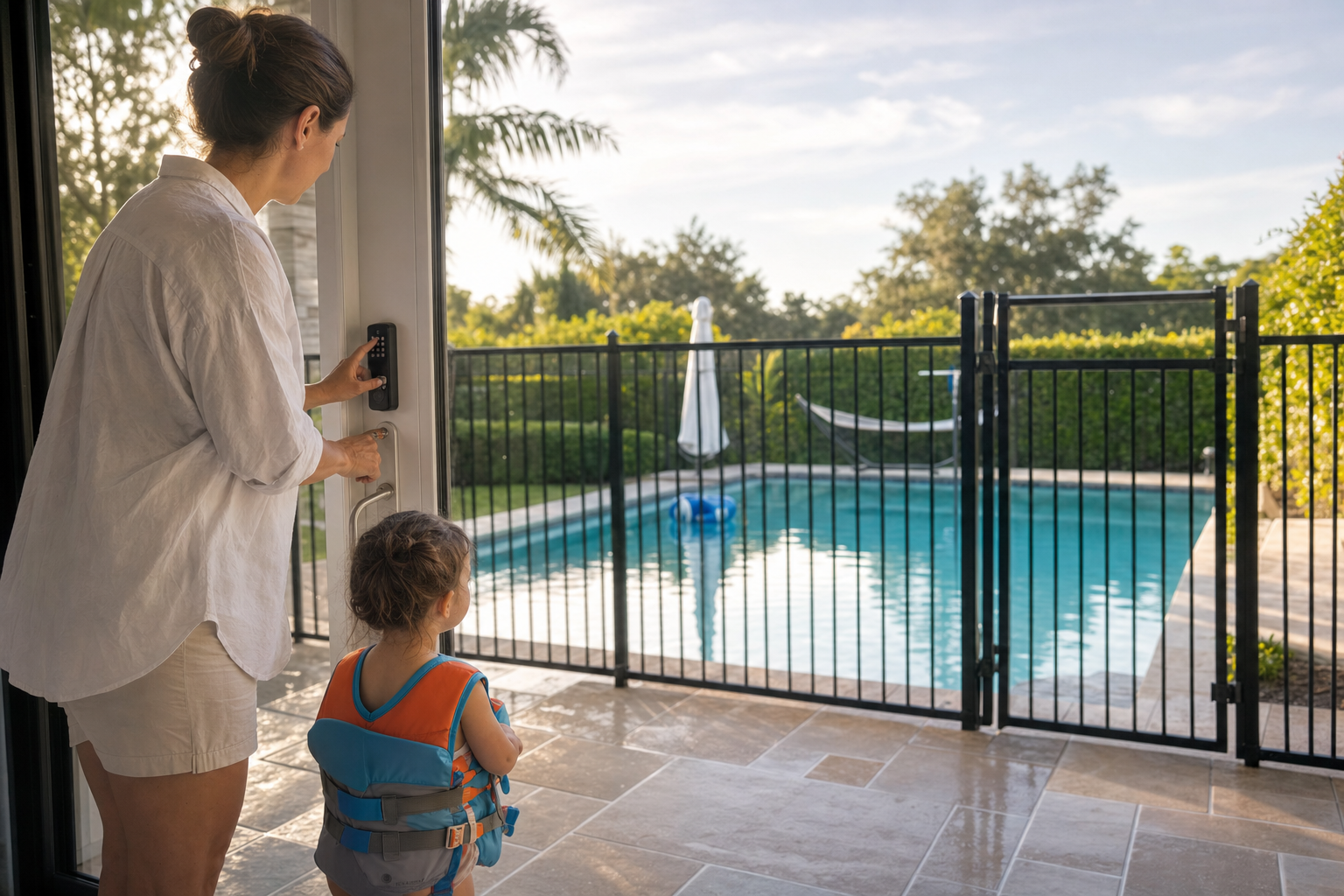
When you walk into your hotel room or Airbnb with your baby or toddler (age 0-36 months), these first few checks can save lives. Don’t assume things are safe. Here’s what to look for before settling in so you can travel without water worries.
What to Inspect Immediately: Gates, Doors, Alarms, and Barriers
The moment you unlock the door to your lodging, inspect how it leads to the pool. Is there a gate or door between the room and water? If so, does it self-close and self-latch securely? What about patio or balcony doors—are they locked or alarmed? According to the CDC, having a four-sided isolation fence that fully encloses the pool and separates it from living areas reduces drowning risk dramatically for young children.(cdc.gov)
Alarms that sound when doors or windows leading to the pool are opened are very helpful. Also check for audible door or pool alarms, though no alarm replaces supervision. Always test those devices yourself—sometimes batteries are missing or delays are long, which renders them less useful.
Watch Out for Drains, Suction, and Depth Changes
Placed under water are drain covers—check if they are compliant, intact, and safe. U.S. law (Virginia Graeme Baker Pool and Spa Safety Act) mandates that public pools use anti-entrapment drain covers compliant with ANSI/ASME standards.(phta.org) Broken or missing drain covers pose serious hazard of entrapment or even drowning.
Scan the bottom and sides of the pool for sudden depth changes. Just because a pool looks shallow doesn’t mean it is. Infant and toddler feet must touch somewhere they feel safe. If you see steep drop-offs or unclear depth markers, steer clear unless a trained lifeguard is present and within arm’s reach.
Supervision Zones and Lifeguard Assumptions
Never assume there’s a lifeguard—many pools in smaller resorts or Airbnbs don’t have staff watching all day. For children under 36 months, the supervising adult must be in the water or within arm’s reach the entire time. Distractions like phones, conversations, or older siblings watching are typical pitfalls but they aren’t substitutes for active supervision. CDC data highlights that drowning in children ages 1-4 is silent and happens in seconds.(cdc.gov)
If you want a structured way to build water confidence at home, the 10-Week Plan guides you step by step.
Also set up “supervision zones” around the pool. Decide ahead who is on “watch duty.” Rotate responsibilities so someone is always focused on the child near water—not sipping coffee or updating social media.
Managing Toys, Floaties, and Routines
Toys strewn near pool edges act like magnets for curious toddlers; remove all floats, balls, buckets from steps or near the water’s edge. Such items attract chance falls. Floaties or water wings feel safe but slip off, giving false security—always use U.S. Coast Guard approved life vests instead.(cdc.gov)
When possible, start swim or water safety lessons for babies and toddlers. Some learn to kick and float between 12-42 months. But stop believing that infant swim lessons alone will prevent drowning; they help, but adult vigilance, safe drains, barriers, alarms, and routine matter more.(ncbi.nlm.nih.gov)
Around the middle of your stay—or better yet before you travel—consider having or following something like a 10-Week Plan from swimy.org which gradually builds water skills, safe behaviors, and familiarizes babies and toddlers with water routines. In new or resort environments, having that core routine ready gives children much stronger foundations.
[[ctababy]]
Seasonal Peaks: Spring Break, Summer Trips, Winter Resorts
During peak travel times expect crowded pools, staff stretched thin, and increased risk. Spring break can mean loud parties, unsupervised night swims, and broken gates. Summer travel might mean in-ground pools open 24/7 but with dim lighting at dusk. Winter resorts may have heated pools or hot tubs hidden behind doors you didn’t expect.
In resort hotels, take a walkthrough at arrival: examine pool area lighting, handrails, slippery surfaces, and whether pool depth is clearly marked. In Airbnbs, view photos of the backyard or pool layout before booking; then ask the host specifically about fences, alarms on doors to the pool, drain safety, and shut-off times.
Practical Safety Checklist Before You Unpack
When you’re at the front door or inside your rental, here’s a rapid mental checklist: gates good? doors locked or alarmed? drain covers compliant and in place? depth changes visible? supervision plan ready? diaries or habits that alert you (toys, floaties) under control? Remember: these checks matter more than generic pool rules the place may have posted.
Also, ensure someone in your travel party knows basic CPR. Emergency response often starts seconds after a fall, so if you can perform rescue breathing or chest compressions, that may save a life. CDC prevention guidance stresses that learning CPR is part of keeping children safe around water.(cdc.gov)
Final Word: Don’t Delay Checking Safety
Never postpone inspecting the door alarms or removing toys until later; do it now. Use trusted sources like CDC for drowning prevention and Pool & Hot Tub Alliance for drain safety rules.(cdc.gov) Acting early turns unknown hazards into manageable risks. A safer routine in new places gives toddlers steady rhythms, and parents peace of mind. When you travel with your baby, checking gates, locks, drains, depth, and supervision before you even unpack becomes part of your family’s water safety tradition.
120+ swimming exercises sorted by age — with video and instructions. Developed by swim instructors, completely free.

120+ swimming exercises sorted by age — with video and instructions. Developed by swim instructors, completely free.