Should I Get in the Water? Swim Lesson Support for Ages 3–5
You might be wondering: should I physically join my 3-5-year-old in swim lessons? Or will staying on the side help them learn better—and build a stronger bond with their swim coach? Let’s cut to what matters most for you and your child this spring.
When Parent-In-Water Helps: Anxiety, Beginners, and Safety First
If your child is new to the water, deeply nervous, or struggles with separation anxiety, being in the pool with them during class can be a game changer. It offers emotional security, helping them feel safe while they learn basic skills like floating, blowing bubbles, or kicking. According to the American Academy of Pediatrics, swim classes with parent involvement are especially useful for toddlers and preschoolers because they introduce water safety habits and build swim readiness skills together. (healthychildren.org)
When your child isn’t ready yet to follow instructions from someone other than you in the water, your presence prevents stress, panic, or shutting down. It also reduces the risk of rescuing too soon—a common mistake where a parent jumps in at the first sign of tears, which can actually strengthen fear rather than help overcome it.
If you do get in the water, stay close enough to offer comfort, but let the coach lead. Hold still if they are practicing species like floating or kicking, but avoid giving your own coaching cues. Instead, cheer them on when they try something new—even small efforts count.
When Parent-In-Water Hinders Coach-Child Rapport
There comes a point where staying in the pool starts undermining the coach’s ability to guide your child. When your child is ready to follow simple group instructions, floating for short periods, or putting face in water under support, staying out of the water can help the coach build trust and rapport—with clear words and consistent routines.
If you provide too much help—stepping in, pulling your child, or offering advice from the water—you may confuse your child about who to listen to. Coaches often report that parents coaching from the sideline or stepping in to “rescue” interrupts the flow, reduces the child’s confidence in the coach, and can slow skill progress.
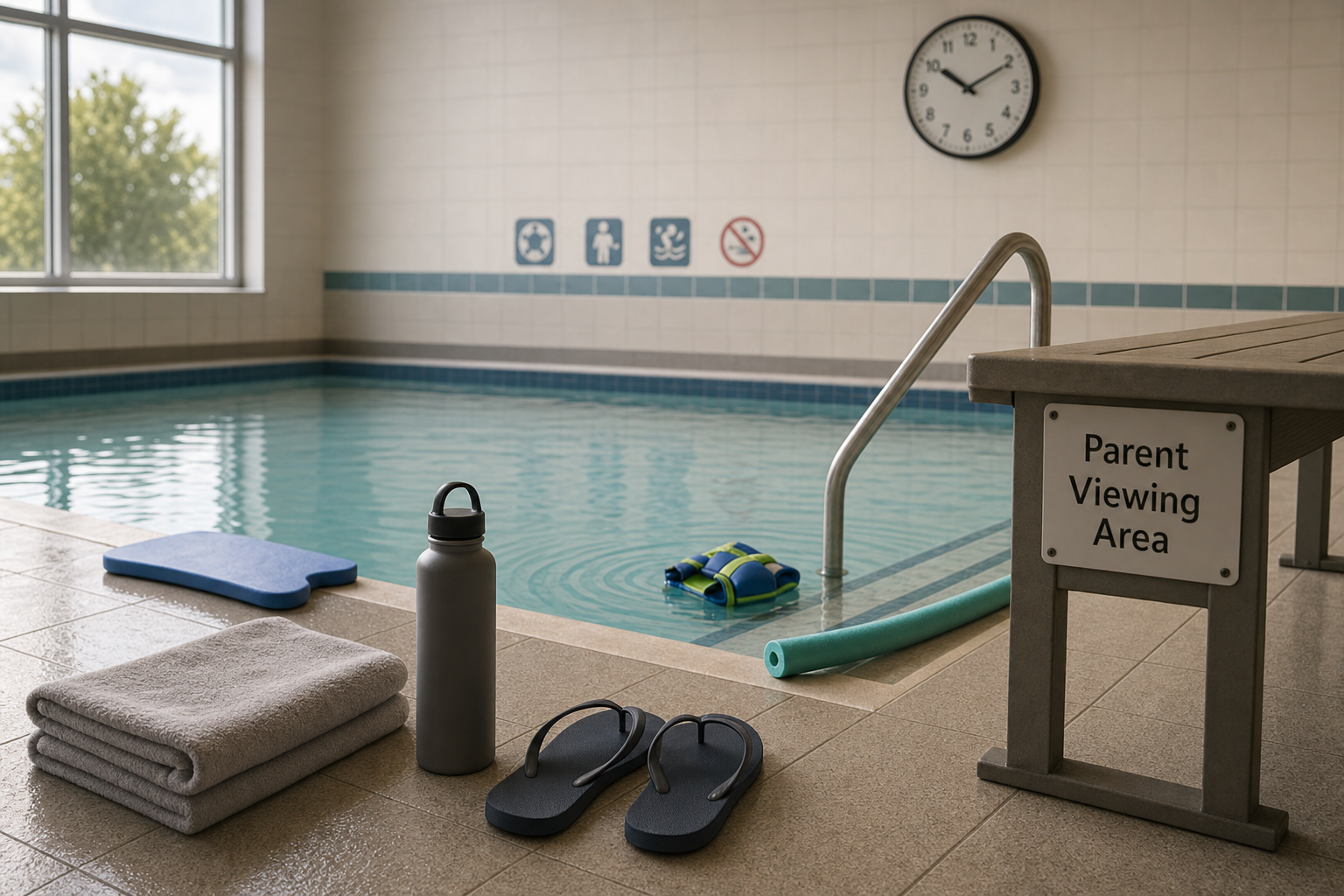
Also, stay visible but not too distracting. Many swim schools require parents to watch from a viewing area. For example, Gold Swim School asks parents to observe from the deck and specifically discourages non-instructive coaching from the sideline. (goldswimschool.com)
How to Step Back Without Disappearing
Check that instructors are trained in separation-anxiety techniques, that classes are small enough for individual attention, and that feedback is given regularly. Schools that offer a clear, progressive curriculum with measurable skills week over week—like the 10-Week Plan at swimy.org—are helpful so you can see if your child is improving and understand when to withdraw support. (Here’s that 10-Week Plan for your reference: https://www.swimy.org/10-week-plan.)
You’re not gone just because you’re no longer in the water. What your child needs at this age is consistency, short rituals, and emotional reliability. Use brief goodbyes—say something simple: “I’ll be right here, cheering you on.” Make the goodbye ritual something you do every time: wave, hug, say a phrase they like, then leave the water or pool deck and return immediately after class. These patterns build trust.
[[ctakid]]
For separation anxiety, HealthyChildren.org offers strategies like quick goodbyes, consistency in drop-offs, and being specific about return times (“after music, before snack”) rather than vague promises. These practices help preschoolers feel safe even when you're not in the water with them. (healthychildren.org)
Questions to Ask the Swim School Before You Sign Up
To make sure the lessons suit your child and your family, ask the school these questions: “Do parents stay in the water for 3-5 age group?” “When do children move from parent-led or parent-in-water classes into independent lessons?” Also find out whether they have policies about parents coaching from the sideline or stepping in unscheduled. You want a program that provides guidance for these situations.
Avoid These Common Pitfalls
One of the biggest mistakes parents make is rescuing too fast. If a child cries or doesn’t want to try something, jumping in immediately can send the message that it’s unsafe outside your arms. It’s better to pause, let the coach take over, or allow the child to watch peers or take one small step forward themselves.
Another pitfall is coaching from the sideline. Offering mixed signals ("Kick your legs!" while coach says "Glide!") can confuse your child. The instructor’s authority and style deserve space to develop.
Also, avoid lingering at drop-off. Goodbyes, even tearful ones, are stronger—and shorter—when they happen quickly. Stick to your ritual, and don’t return until class ends. Each time you return early, you reset progress.
Practical Steps for This Spring’s Swim Signup
If you’re registering for spring swim lessons for your 3-year-old, start with these tips: pick a class labeled “Preschool Level 1 or Beginner” so they expect kids with low water comfort; ask about parent-in-water options; check the class size; and know the school’s feedback process.
Plan to give your child a few lessons to adjust—it often takes 3-5 weeks for children aged 3-5 to begin feeling comfortable in a new class. Meanwhile, practice at home: splash, blow bubbles, float together in safe shallow water so they feel confident before class.
Remember, you want to support your child without taking over. Your goal is to help them move toward trusting their coach, swimming a little independently, and feeling proud. When done right, stepping back doesn’t mean disappearing—it means empowering.
When you weigh the benefits and risks of parent-in-water vs staying on the sidelines, your child’s current comfort, small wins, and the school’s policy should guide you. With the right approach, you’ll see your 3- to 5-year-old grow stronger, braver, and more confident in the water this spring.
120+ swimming exercises sorted by age — with video and instructions. Developed by swim instructors, completely free.

120+ swimming exercises sorted by age — with video and instructions. Developed by swim instructors, completely free.