Storm Drains and Outfalls: Teach Kids to Steer Clear
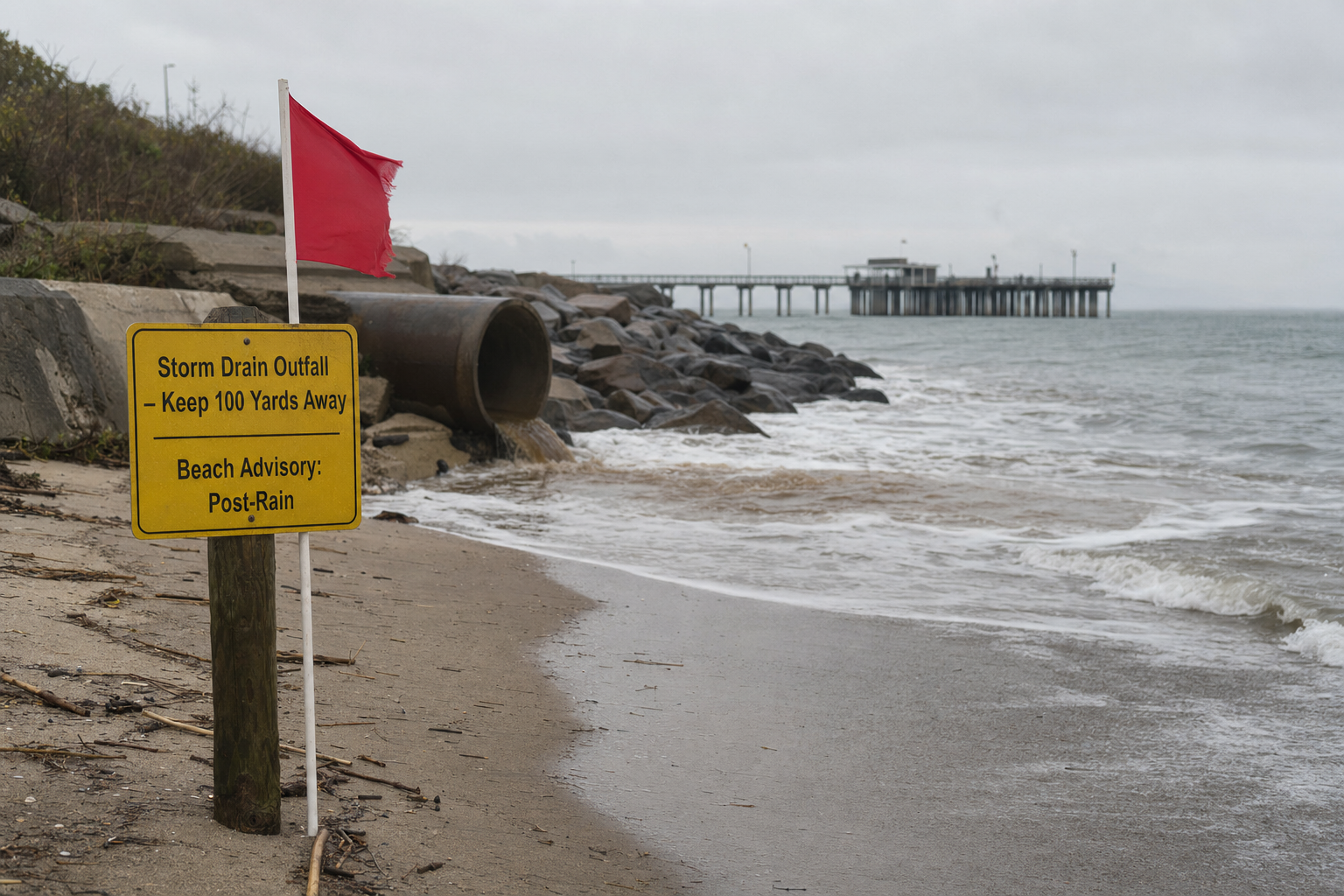
When children swim near pipes, jetties or river mouths—especially after a rainstorm—hidden dangers are more powerful than you might think. Fast currents near structures, debris washed down by rainfall, germs lurking in runoff … these risks are real. They can hit harder when water looks clear, fooling kids (and grown-ups) into a false sense of safety. Let’s start with what parents need to know right now.
Why “Clear Water” Can Be a Trap
Even if waves are gentle, storm drain beach danger kids is no joke. Rain pulls oil, animal waste, fertilizer and other pollutants into storm drains, and those pipes often lead straight to the ocean or river. Researchers explain that stormwater runoff and untreated overflow systems carry “microorganisms called pathogens” which may be invisible but harmful.(epa.gov) After heavy rain, water may look clean on top while hiding bacteria like E. coli or harmful chemicals just beneath the surface.(publichealth.lacounty.gov)
Currents accelerate near outfalls and drainage pipes. Structure-shaped currents can form near piers, jetties or entries where storm drains empty—these are unpredictable and dangerous, especially for children aged 3-12. Even calm surfaces can hide rip currents funneled by these structures.(en.wikipedia.org)
When to Stay Out: Timing Matters
After rain, beach advisory and beach closure systems are key. In places like Los Angeles County, authorities warn swimmers to avoid ocean waters for 72 hours after significant rain, especially near storm drains and runoff outlets.(publichealth.lacounty.gov) San Diego County posts general advisories after only 0.2 inches of rain, urging people to steer clear of beaches for up to 72 hours.(sandiegocounty.gov) Some public health departments say to avoid ocean water during the rain and for at least three days afterward.(slocounty.ca.gov) That timing allows bacteria and pathogens carried in runoff to dissipate or settle, making water safer again.
Where Kids Are at Most Risk
Swimming near pipes and structures is especially dangerous. Storm drains, pier pilings, jetties, river mouths: these are “hot spots” for strong currents, debris, and germs. Heavy rain flushes urban grime—motor oil, pet waste, decaying plant matter—from roads and gardens straight into drains.(epa.gov) Pipes may be discharging stormwater or even untreated sewage in extreme cases, raising risk.(epa.gov) Kids often like to explore near pipes or rocks—these are the places where unseen flow can pull them off balance or into rough water.
If you want a structured way to help your child progress at home, the 10-Week Plan guides you step by step.
Simple Rules Families Can Use
Parents teaching children safe habits helps build confidence and safety awareness. Here are three core rules:
[[ctakid]]
Teach a buffer-zone rule: keep at least 100 yards (or about 100 meters) away from any storm drain outfall, pipe, jetty or river mouth when swimming. Many health departments advise exactly that distance to avoid bacteria and rapid current effects.(publichealth.lacounty.gov) Always pick places with lifeguards and where there are no visible pipes. A lifeguarded spot not only offers rescue help but often means water quality monitoring and safety notices.(healthychildren.org) Check advisories before visiting: local authorities usually issue rain advisories, water quality alerts or beach closures. If water is murky, smells strange, or has a warning sign posted—don’t let kids in.(oceanservice.noaa.gov)
Many parents find structured programs helpful. For schools or community swim-lessons, something like the 10-Week Plan of swimy.org offers activities that build water sense, judgment and respect—even if that plan is not directly about storms, the mindset helps kids stay alert around structure risk and post-rain hazards. (Promise: one mention only.)
What Parents Should Do Before, During, After Rain
Before heading out, check your city or county website, or even an app, for “beach water quality” or “after rain beach advisory”. NOAA and the U.S. EPA also provide updates on water quality.(oceanservice.noaa.gov) On rainy or stormy days, avoid beaches near storm drains or river mouths entirely. Choose open-beach areas far from structures with good circulation.
During swim time, keep kids swimming in open water zones with lifeguards. Avoid letting them play or wade near pipes or under piers, even if it looks safe. Currents near jetties often channel force into small areas. After rain, wait 24-72 hours before returning, depending on local guidance. You may have picked the safest spot, but bacteria levels and debris often linger.(publichealth.lacounty.gov)
What to Watch for: Signs It’s Not Safe
If water is brown, muddy, or smells odd—very bad signs. Clear water is not always safe, but cloudy water almost always is risky after heavy rain.(cdc.gov) Open wounds, rashes or sickness symptoms (like stomach upset) following water contact mean a doctor visit might be needed. Advisory signs or warning flags posted by health departments or lifeguards exist for a reason—ignore them at your own risk.
Final Thoughts: Smarter Swimming for Happier Kids
Teaching your child to “look before you leap” near the water is more than just good manners—it could be safety that matters. Keeping away from storm drains, pipes, jetties and obeying buffer-zones protects children from what’s out of sight. Following rain advisory rules, choosing lifeguarded beaches, and picking open-water swim zones help you make safer beach plans. Sometimes best memories come from being smart about where and when you swim.
120+ swimming exercises sorted by age — with video and instructions. Developed by swim instructors, completely free.

120+ swimming exercises sorted by age — with video and instructions. Developed by swim instructors, completely free.