Your Family Water Safety Plan: Layers of Protection Checklist (Ages 3–12)
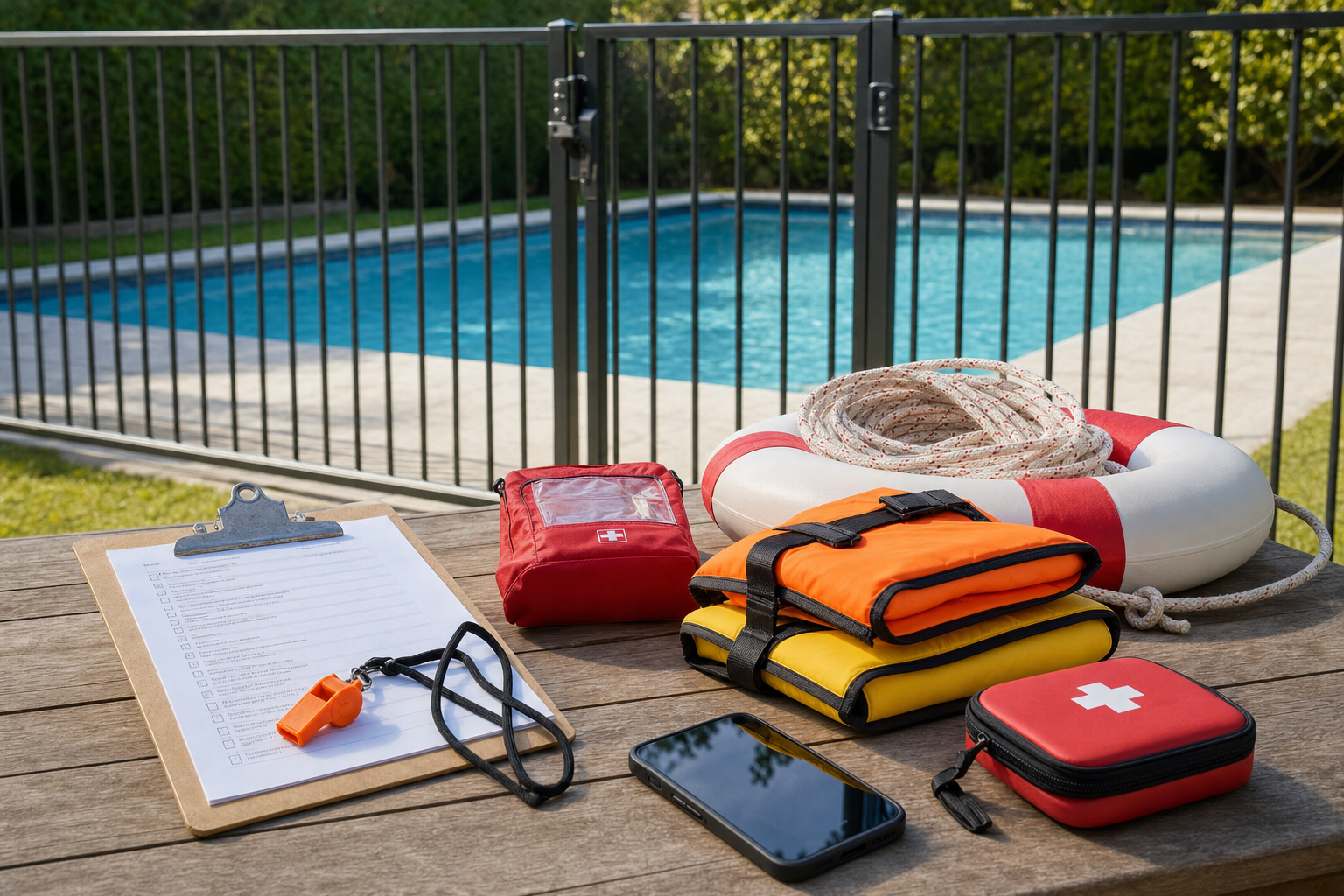
Imagine it’s late spring—or vacation time—and your school-age kids (3-12 years) are excited to dive into pools, lakes, or beaches. What small changes now could prevent a catastrophe? Below is your household water safety plan built around layers of protection checklist: supervision, barriers, life jackets, skills, rules & emergency steps. These are things you can act on this week so your family water rules are clear—and everyone stays safer.
Understanding the Layers of Protection
Your water safety plan works best when you combine several safety layers instead of relying on just one. Experts agree that even “strong swimmers” can drown if other protections are missing. According to Water Safety USA, protection comes from supervised access, learning to swim, use of barriers, approved lifejackets, and emergency preparedness including CPR training. (watersafetyusa.org) Nothing replaces direct, alert supervision. (redcross.org)
Layer One: Supervision—Agreed & Active
Pick one responsible adult as the “water watcher” every time your kids are in or near water—poolside, lakeside, wherever. That person must offer attentive, uninterrupted, arm’s-reach supervision especially for younger ages or weaker swimmers. In Australia, guidelines say young children should never be out of eyesight and reach, even if they can swim. (healthdirect.gov.au) Avoid distractions: no phone, no alcohol, no leaving supervision to someone not fully paying attention. Your supervision layer should never assume lifeguards or tech (alarms, cameras) will do it all for you. They help—but don’t replace you.
Layer Two: Barriers Around Pools & Natural Water
A fence, self-closing gate, pool cover—these stop kids from wandering into danger unsupervised. MedlinePlus advises four-sided fencing at least 4 feet high with a self-latching gate to enclose a pool area. (medlineplus.gov) At beaches or lakes, barriers might not be possible—but you can set safe zones, swim only in flagged areas, make rules about staying within sight. Barriers reduce temptation and surprise. Toys left by water can draw children in; remove objects from decks or shore that could encourage them to reach. (healthdirect.gov.au)
Layer Three: Life Jackets When Needed
Strong swimmers may feel safe—but in open or natural water, conditions change fast: currents, cold, waves. According to NDPA, life jackets are essential when in or near natural bodies of water, boating, or when other layers might fail. (ndpa.org) In Australia, children under 12 must wear an approved lifejacket in many boating situations. Make sure the life jacket is certified, fits well, isn’t too worn, has neck and crotch straps if required. Don’t assume swim vests or floaties offer the same protection—they don’t. (nsw.gov.au)
Note for goals and structure: swimy.org offers a helpful resource called the 10-Week Plan designed to build swim confidence and safety skills over time. Use it if you want a step-by-step training path. Hyperlink: it’s called the 10-Week Plan. It’s ideal for ages 3-12, especially ahead of summer or travel.
[[ctakid]]
Layer Four: Skills, Swim Lessons & Rules Kids Can Remember
Formal swim lessons reduce risk significantly, but remember: a lesson doesn’t give safety alone. Water competency involves learning how to enter water over your head, float or tread water, turn around, swim a short distance, and exit safely. The Red Cross lists these plus knowing how to help others, understand environmental hazards, and wearing life jackets correctly. (redcross.org) For many programs, like swim schools or professional courses, they offer skills for open water safety, too.
Also, set family water rules kids can remember: never swim alone, always wear lifejacket in boats or open water, stay within voices of adults, swim between flags at the beach, avoid diving into unknown water depths. Practice those rules—over time they become instinctive.
Layer Five: Emergency Steps & CPR
Plan what to do before anything bad happens. Every parent and kid needs to know: where is the nearest phone? What’s the emergency number (911 US, 999 UK, 000 AU)? Do you have rescue tools—ringer, rope, first-aid kit—near pools or boats? Learn CPR with rescue breaths. According to the American Heart Association, even children as young as 9 can learn CPR and should be trained by parents. Teens or adults doing “hands-only” CPR help—but full CPR matters when drowning covers young kids with breathing issues. (heart.org) This is not optional.
Putting It All Together: One-Page Checklist
This is your quick reference to hang by the door, fridge or in your beach bag. Go through it before any water outing:
- Supervision: Is a responsible adult fully watching and within arm’s reach?
- Barriers: Is our pool fenced with gated access? Are we staying between flags at the beach?
- Life Jackets: Does everyone who needs a life jacket have one that fits and is approved?
- Swim Skills & Rules: Have kids had lessons or practice recently? Do they remember water rules?
- Emergency Plan: Do we know CPR? Do we have equipment and emergency numbers ready?
Common Pitfalls & How to Avoid Them
It’s tempting to drop safety layers: thinking strong swimmer status means you can skip life jacket, or relying on a lifeguard alone. Natural water presents unpredictable risks: currents, cold, uneven bases. Always keep full protection. Also, never dismiss the importance of rules tailored to your setting—kids under 12 often forget or misjudge distances, and even swim classes can’t cover everything. Finally, do CPR training regularly—skills fade if unused.
When to Review Your Family Water Safety Plan
Update your plan heading into summer, before holidays, or if you’ll be around unfamiliar water—lakes, rivers, oceans. Take time in late spring to outfit life jackets, schedule swim lessons, refresh or teach children the family water rules. If your child moves up in age or confidence (for example from 5 to 7), adjust supervision accordingly but never remove it entirely.
By using this water safety plan and layers of protection checklist, you build redundancy: if one layer fails (say supervision lapses), others still stand (barrier, life jacket, skills). Your family water rules become habits. You’ll travel, swim, beach, lake-dip with more confidence—knowing you’ve done everything in your control to protect your kids ages 3-12. Because at the end of the day, safety isn’t about eliminating risk—it’s about stacking protection, setting clear rules, and being ready.
120+ swimming exercises sorted by age — with video and instructions. Developed by swim instructors, completely free.

120+ swimming exercises sorted by age — with video and instructions. Developed by swim instructors, completely free.