5 Mini-Drills Between Lessons to Boost Kids' Swimming Skills at Home
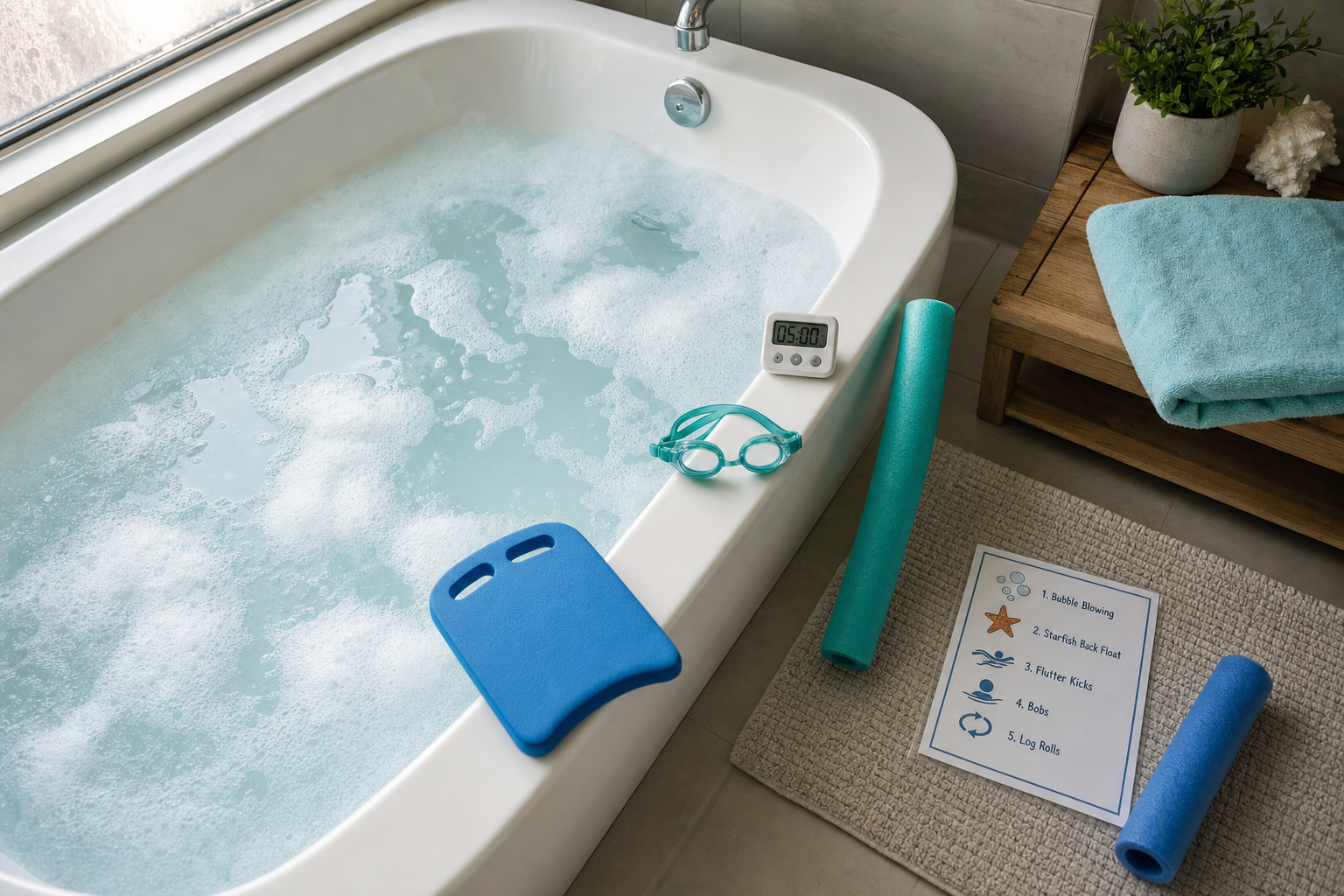
Want your child to improve their swimming skills fast—even between lessons—and enjoy every minute? Swim practice at home with short, play-based tasks right in the bathtub, yard, or living room can make a real difference. These drills focus on breathing, floating, and streamlined kicks. They suit ages 3-8 and are perfect for lesson gaps or holidays. Follow time-boxed, safety-first instructions and enjoy the process.
1. Bubble Nose Blower (5 minutes, 3-4× per week)
Start in the bathtub or a shallow pool. You and your child sit facing each other with water shallow enough to reach their chest. First show them how to blow bubbles—mouth in first, then nose. Use your hand or a small splash to make the face wet, then exhale through the nose while their face is under water. Ask them to imitate a motorboat, a song, or pretend they are trying to fog up a mirror. This builds breath control (key for swim practice at home) and helps avoid the habit of holding breath. According to WaterWiseKids, exhaling through the nose underwater is one of the earliest essential skills kids need to master.(waterwisekids.com)
2. Gentle Back Floating Starfish (About 3 minutes, twice a week)
Once your child is comfortable blowing bubbles and putting face in water, try back floating. In shallow water, hold their hands gently and lay them as flat as possible on their back. Arms and legs at a “starfish” spread, head tilted back with ears submerged. Encourage slow, calm breathing so they relax, because tension makes floating harder. Most people can learn basic back float positions in two to five sessions.(swimoutlet.com)
Always stay within arm’s reach. Let the arms and legs drift out, and offer support at hips and shoulders only if needed.
3. Dry-Land Streamlined Kicks (5 minutes, 3× weekly)
No pool? No problem. Lay your child on their stomach on the floor or a mat and practice straight-leg flutter kicks. Legs stay long, toes pointed, movement generated from hips—not knees. Do these kicks facing each other so you can show correct form, or even mirror each other. This drill reinforces streamlining and helps kids feel how their torso, hips and legs should align in the water. Ocaquatics explains that straight-leg kick practice at home is a high-yield drill to speed up progress between swimming lessons.
If you want a structured way to help your child progress at home, the 10-Week Plan guides you step by step.
4. Bobbing and Breath-Control Play in Chest-Deep Water (5 minutes, 2× weekly)
This one’s great for pool days. Stand in waist-to-chest-deep water, hold your child close, or let them hold the side of the pool. Practice “bobs”: exhale first, sink so that the face goes underwater, then rise up and inhale. This teaches safe face-submersion, rhythmic breathing, and trust in breathing out underwater. Crucially, don’t make it a contest or push past comfort. A flexible, calm pace wins. Playful prompts like “count bubbles before you come up” help.(playkettering.org)
[[ctakid]]
5. Log Rolls and Transition Floats (3 minutes, 2× per week)
Mix floating and rolling to build core strength, coordination, and safe recovery skills (front float to back float). On dry land or in shallow water if possible: from back float to tummy float and back again. Cue shoulders and waist to lead the roll—not pushing with the head. On land, roll slowly and focus on breathing before and during the roll (“inhale-roll-exhale”). In water, repeat similarly but hand support as required. This helps kids switch float types confidently during lessons and reinforces body awareness.(interactiveacademy.org)
Safety First: How to Cue, Spot, and Stop Safely
Always supervise. Never leave kids alone in the bath, pool, or near water, even if they seem confident. Keep them within arm’s reach in the water.(better.org.uk)
Set time boxes so drills stay short: 3-5 minutes per drill, total at most 15 minutes per home swim-practice session is plenty. Breaks matter.
Avoid breath-holding contests or hyperventilating before submerging—the risk of shallow water blackout is real, even for strong swimmers.(ue.org)
Use sensory-friendly options: warm water, soft lighting in bathroom, familiar sounds, toys that don’t squirt water, gentle voice cues to reduce anxiety.
Why These Between-Lesson Drills Help
When children practise swimming games that teach skills, they build airway control, balance, kicks and body position. This means lessons feel easier, progress faster, and confidence soars. Dry-land and water-side mini-drills support what swim lessons teach, without replacing the professional instruction.
Parents learn how to cue breathing, how to spot signs of discomfort (tight lips, eyes wide, rushing up to breathe), and when to safely stop. The combination of lesson time plus swim practice at home is powerful. If you want a blueprint, the 10-Week Plan at Swimy outlines how to teach core swim skills at home and in lessons together.(swimy.org)
Putting It All Together: Sample Weekly Plan
Here’s a sample week for a 5-year-old filling a lesson gap or during school holidays:
Sessions last 10-15 minutes total. Keep the tone playful. Celebrate small wins like “you blew through your nose underwater” or “you kicked with straight legs today.”
—
These mini-drills help children ages 3-8 reinforce breathing, floating, and streamlined kicks safely, making swim practice at home enjoyable and effective. Be consistent, calm, and attentive—and watch your child swim stronger, happier, faster.
120+ swimming exercises sorted by age — with video and instructions. Developed by swim instructors, completely free.

120+ swimming exercises sorted by age — with video and instructions. Developed by swim instructors, completely free.