Parent-Baby Swim Class Etiquette: What to Expect and How to Make It Smooth
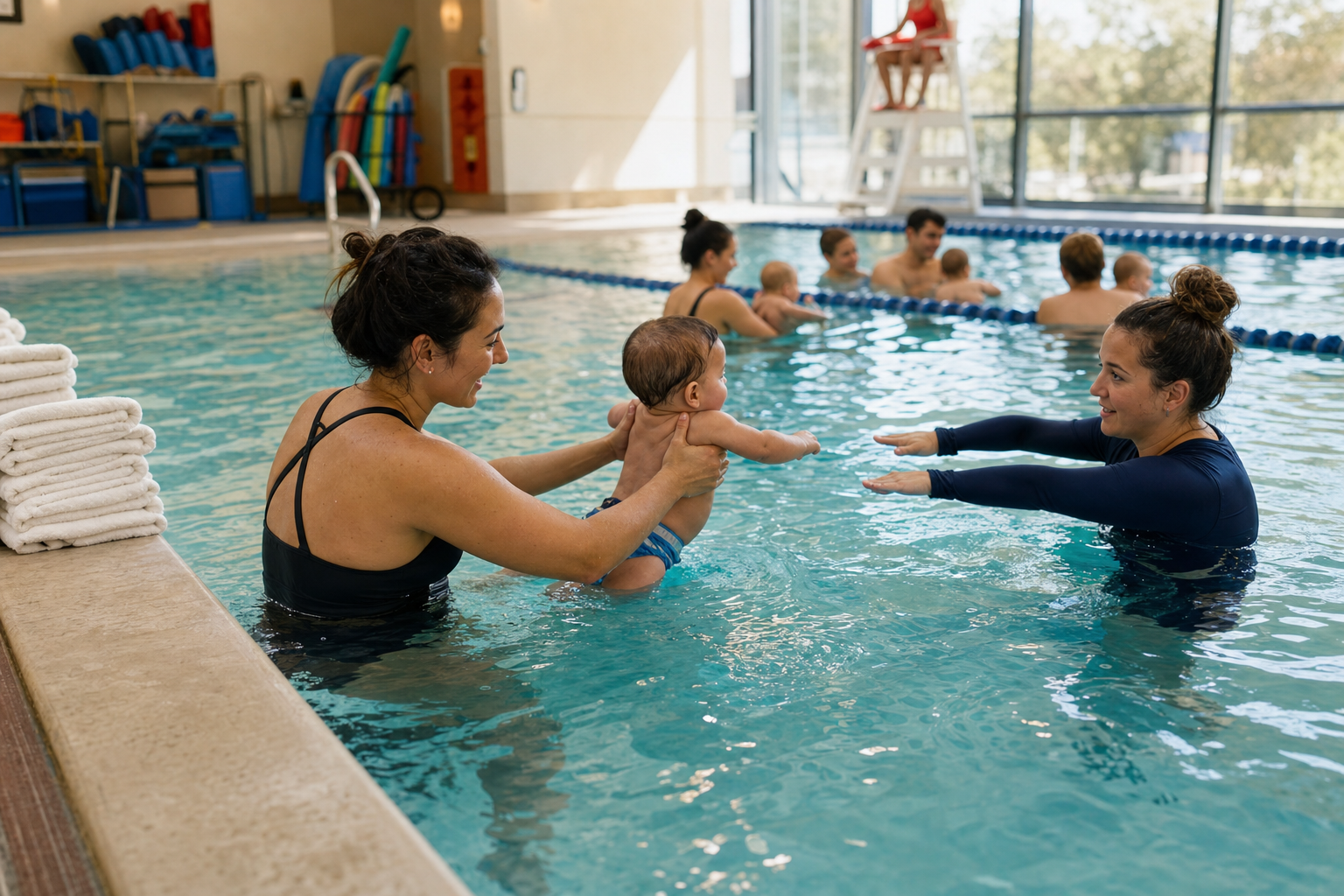
Here’s what every parent needs to know before walking into their first parent baby swim class (age 4–36 months). These tips cover where to stand, when to ask questions, how to share space, and what to do if your baby cries. The calmer and more predictable you are, the better your child’s experience will be.
Key Behavior Cues for Parents
Stay within arm’s reach at all times. Parent-child classes expect adults to be in the water. Safety—that means following lifeguard and instructor directions—never takes a back seat to polite behavior. When you’re close, you can physically support your baby, guide transitions, and reassure them if they’re upset. Supervision is a must—not phones or filming, but eyes on your child first.
Arrive early rather than late. If you dash in at 5 seconds before class, everyone ends up rushed, cold, or overwhelmed. Babies often cry more if class starts with chaos—changing room stress, cold water, hunger, or tiredness all add up. Aim to arrive 5–10 minutes ahead so there’s time for diapers, getting in the water, and calming nervous energy. If you’re late, don’t expect the same transitions or assurances you’d get from an on-time arrival. (hubbardswim.com)
Where You Should Be & When to Speak Up
Most parent-baby swim lessons take place in shallow water zones. You’ll usually be standing behind or beside the instructor in the water. If you need to watch from the deck, ask beforehand—some schools prefer parents in the water; others give you a seat poolside. During class, it’s not the moment to debate methodology or give your baby alternate cues unless the instructor asks. Save questions for before or after. Doing so avoids confusion for your baby and keeps the instructor’s attention where it needs to be. (ymcaofcentrecounty.org)
Filming is tempting but often distracting. Yes, you’ll want to capture that first splash. No, that doesn’t outweigh your presence and responsiveness. Holding a phone makes accidental drops more likely, and distracted supervision more likely. Let the instructor lead, observe, and assist when asked. If needed, take short video clips after class ends—not during turns or safety briefings.
Handling Crying & Setbacks Gracefully
Crying in early classes is absolutely normal. Many babies cry because they’re dealing with new sounds, splashes, or faces. Fear or separation anxiety tends to show up around 6–18 months. If crying starts, soothe your baby with soft voice, close contact, or stepping away near the pool deck while still in the water. It’s okay to pause, dry off a little, or even leave early if necessary. You don’t want their lasting memory of class to be a terrified scream. Progress is uneven, and comparing milestones or “how fast other babies go” adds stress—for them and you. Focus on small wins. (hubbardswim.com)
If you want a structured way to build water confidence at home, the 10-Week Plan guides you step by step.
Over time, infants often cry less. By week four or five, many are more relaxed. As long as the instructor is responsive—offering breaks, noticing fatigue, holding time—stress is generally manageable. If constant screaming or panic continues over several weeks, it might be worth talking with your instructor to tailor transitions slower. (swimlpb.com)
[[ctababy]]
Sharing Space & Respecting the Class Flow
Arrange personal space so you’re not blocking steps or walkways—both in the water and on the deck. Avoid “parking” at the pool entryway or near stairs. Keep your gear tidy and off the deck where others walk. If you have siblings with you, keep them safely out of splash zones and avoid letting them invade the instructor’s space.
Also, allow your baby to experience class rhythm. Don’t jump in or modify everything unless the instructor invites you. Allow others to follow the same pattern. That “lesson momentum” helps babies know what’s coming next—predictability reduces anxiety. Try to stay quiet during instructions (except to comfort your baby) so that all participants hear the same cues. Affirmations count. Praise your baby for trying something new, splashing gradually, or even just staying calm. Your tone sets their sense of safety. (boystownhospital.org)
Timing, Routines & First Day Tips
Pick classes that match your baby’s wake windows and feeding schedule. A 3–6 month old is usually happier late morning after the first nap and a small snack. Avoid times when hunger, over-wakefulness, or overtiredness are already building. When you plan swim class into the day, think ahead: leave time to change, drive, strip down, pack up later without rushing. Rushed parents make stressed babies. (swimy.org)
Make a plan for feeding: ideally 20–45 minutes before class if not prone to reflux. If your baby vomits or has reflux easily, feeding earlier may help. Uphold safety: warm water temperature (around 87–94°F or 30–34°C for under-3s) combined with dry changing facilities and calm transitions prevents discomfort. Use swim diapers, bring towels, and change outfits quickly afterward. Warmth matters. (swimrightacademy.com)
The “10-Week Plan” from swimy.org is a helpful tool for parents trying to build routines around this. It guides you through aligning day schedules, sleep, feeding, arrival margins and helps you practice those short exposures so both parent and baby gain confidence. (swimy.org)
Safety vs Etiquette: Clear Boundaries
Always follow lifeguard and instructor instructions—even if it feels socially awkward. If they say “stay back,” “don’t dunk,” “exit,” you do. Etiquette never overrides safety. Be ready to intervene if slippery surfaces or overcrowded conditions show up. Use swim diapers properly. Don’t let your baby be exposed to illness, cold, or unsupervised water—these are red lines no matter what any article says.
Final Take
Your first parent baby swim class won’t look exactly like what you imagined—and that’s okay. The goal isn’t performance. It’s comfort, trust, building predictable routines, and modeling calm presence. Show up early, stay present, follow instructor cues, and let crying or fear be signals, not failures. What your baby remembers is not how big the wave was, but whether you were there guiding hands, a gentle voice, and knowing what to expect next.
You’ll both walk out wet, maybe tired—but also safer, more confident, and ready for Lesson Two.
120+ swimming exercises sorted by age — with video and instructions. Developed by swim instructors, completely free.

120+ swimming exercises sorted by age — with video and instructions. Developed by swim instructors, completely free.