The Ideal Pool for Baby Swimming: Water Temperature, Shallow Depth & Hygiene Guide
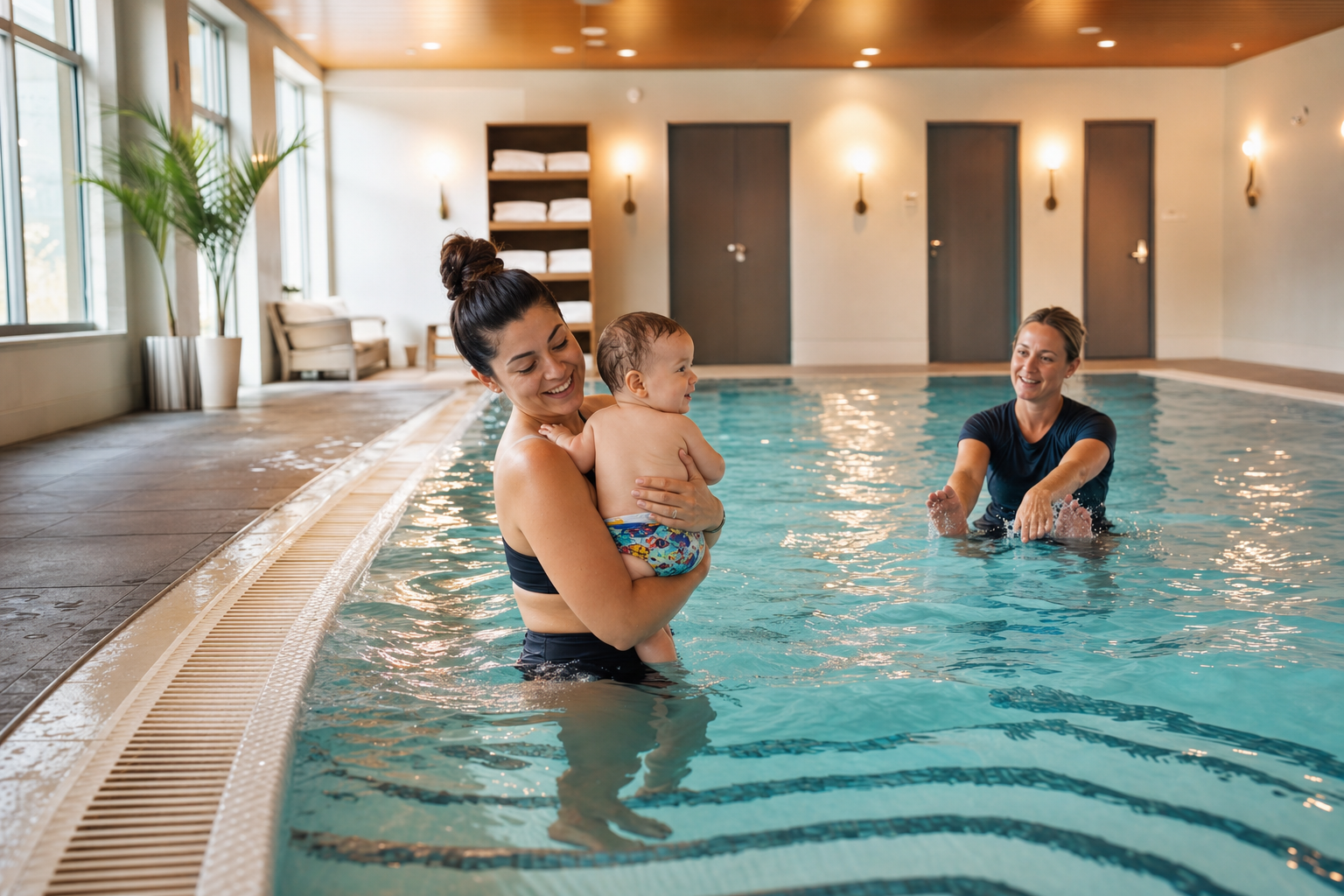
If you're taking your baby swimming, the single most important thing to check is the water temperature. Too cold, and your baby loses body heat instantly; too warm, and the risk of overheating or bacteria spread increases. For babies under three months, aim for 32 °C (≈ 89.6 °F); for infants three to twelve months, at least 30 °C (≈ 86 °F); after one year, pools can drop to 28-30 °C. UK-based guidelines from Pampers UK clearly show that for babies aged 0-3 months, you want at least 32 °C water, and from 3-12 months, at least 30 °C, not exceeding about 35 °C overall. (pampers.co.uk)
Choosing the Right Depth & Size for Infant Aquatics
Depth matters just as much as temperature. For very young infants, the pool should be shallow enough so you can hold them with ease—standing depth, waist high for an adult (around 70-100 cm), allows you full control and safety. The UK’s STA baby swimming policy recommends maximum submersion depths and care especially for under-12-month-olds, including not going deeper than 1 metre when introducing face surfaces or child-led submersions. (sta.co.uk) Facilities should have a gradual slope, no sudden drop-offs, and comfortable room for parents to move close to their babies without water pressure distress.
Session duration should also match both temperature and depth. Babies under 6 months may only be in shallow water for 10-15 minutes initially; as they become more temperature-resilient and water Confident, sessions of 20-30 minutes are more reasonable. Classes following programs like the 10-Week Plan at swimy.org often structure warm-water sessions to gradually build a baby’s comfort in the pool in manageable increments, helping parents and babies acclimate together. Use that sort of plan when trying new pools.
[[ctababy]]
Hygiene Standards That Matter: What to Ask & Look For
Hygiene isn’t just about cleanliness; it’s about safeguarding your baby’s fragile immune system. In Australia, for example, public pools have strict rules: babies and toddlers who aren’t toilet trained must wear swim nappies. That prevents solid waste from contaminating the water. Ordinary disposable nappies aren’t allowed because they swell with pool water and release materials into the tank. (waladi.com.au)
If you want a structured way to build water confidence at home, the 10-Week Plan guides you step by step.
You’ll also want to inspect disinfection practices. In NSW, Australia, public pools must maintain free chlorine at certain levels, keep pH between 7.0-7.8, test disinfectant levels daily, clean change rooms and pool surrounds thoroughly, and record all maintenance. (smhs.health.wa.gov.au) Other countries like the UK follow similar mandates: for baby pools, water quality, clarity, and chemical parameters are stricter than for general public lanes. STA’s policy requires that water and air temperature for baby swimming exceed normal public swim times, often coupled with more frequent monitoring of chlorine or other disinfectants. (sta.co.uk) Always check whether the facility is up-to-date with its inspection logs and lab testing.
Air Quality, Changing Areas & Facilities
It’s not just water that counts. Babies are vulnerable to chilling when wet, so the air above the pool should also be warm (ideally matching or a little warmer than water). The pool area should be well-ventilated, with warm changing rooms nearby so the transition from water to clothes is quick. Facilities should provide proper changing stations, separate showers, and strong hygiene protocols for nappy changes. In Victoria, Australia, healthy swimming guidance recommends changing nappies in designated areas, washing hands thoroughly, and not letting soiled water near the pool. (health.vic.gov.au)
Facility Evaluation Checklist for Parents
When you visit a pool or swim school, ask these questions: What’s the exact water and air temperature? How deep are the baby pools or the shallow end? What is their schedule for testing water chemicals and standards? Do they require swim nappies for non-toilet trained babies, and do they provide secure changing rooms? Can you tour the facility and observe a class? Do they follow accredited baby-swim policies like those from STA or Australian AUSTSWIM charities? Your comfort seeing hygiene charts, inspection certificates, and qualified instructors makes all the difference.
Balancing Comfort, Safety & Fun
Taking care of these three pillars—temperature, depth, and hygiene—makes baby swimming not only safe, but magical. Warm water soothes; shallow settings let you share close contact; sterilized, well-run facilities protect little bodies. I remember bringing my first child to a swim class—when we found a facility with 32 °C water, shallow pool that allowed me to walk while holding her, and clean, bright changing rooms—it felt like all my worries melted away. She splashed happily for the first 20 minutes without shivering. Those early experiences shape confidence.
Babies need warmth, safe arms, and clean surroundings. With the right pool—warm enough, shallow enough, and hygienic enough—those splashy first moments will be joyful, safe, and unforgettable.
120+ swimming exercises sorted by age — with video and instructions. Developed by swim instructors, completely free.

120+ swimming exercises sorted by age — with video and instructions. Developed by swim instructors, completely free.