Safe Starts and Flip Turns: Pool Depth Rules for Kids
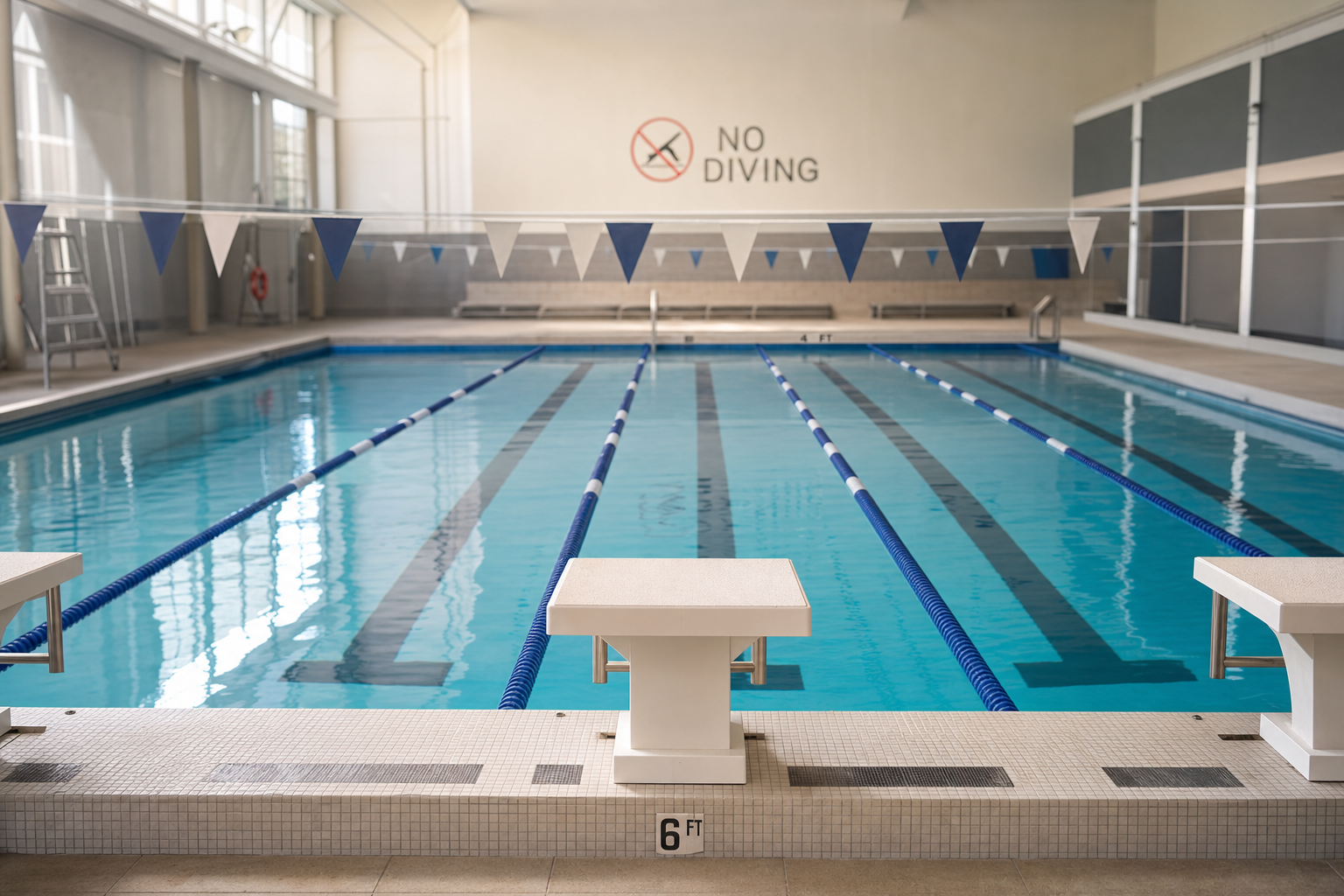
When can your child safely start racing from the deck or blocks, or perform flip turns? What minimum pool depth keeps them safe? Whether they’re 7 or 12, getting these rules right means parents won’t worry and kids won’t get hurt.
When Racing Starts Are Appropriate
Racing starts—launching forward off the pool deck or a starting block—are a big responsibility. According to USA Swimming, teaching racing starts only happens in a pool where the water depth is at least 6 feet (1.84 meters) measured between 1.0 meter to 5.0 meters from the wall.(pacswim.org) Before certification by a coach, racing starts must always be taught under direct supervision.(usaswimming.org) Once a swimmer is certified, practicing racing starts may occur in water depths as shallow as 4 feet (1.22 meters). In competition though, the minimum depth where the blocks are fixed remains tied to those 6-foot safety rules.(pacswim.org)
USA Swimming rules are echoed in many states. For example, in New Jersey, diving is prohibited in water depths of five feet or less unless certain tight safety and supervision standards are met. Swimming bodies in the UK (Swim England) require pools to have at least 1.35 meters (around 4 feet 5 inches) depth for racing entries when using diving starts.(swimming.org)
So, for kids aged 7–12, racing starts from blocks or deck should only be taught when the water is deep enough, supervised by trained coaches, and only after the child has shown proficiency.
How Deep Is Deep Enough? Headfirst Entries from Deck
Some parents wonder: “What about dives from the deck?” For that, many safety guides, including the American Red Cross, advise a minimum depth of 9 feet for headfirst dives—either from pool decks or boards—in home pools.(mypoolsigns.com) That deeper depth helps protect against head or spinal injuries from striking the bottom.
If your community pool or swim facility has “No Diving” markers or signs, those exist for a reason. Any dive, flip turn, or racing start into shallow water—especially in backyard pools or older pools—is risky.
Flip Turn Safety: What Parents Should Know
If you want a structured way to help your child progress at home, the 10-Week Plan guides you step by step.
Flip turns are core to competitive freestyle and backstroke. They’re fast and elegant, once mastered. But teaching safe flip turns involves progressions and drill work. Coaches often begin with body control: doing somersaults in place, practising underwater glides in streamline, then working on turns near or over lane lines.(swimsmarttoday.com) The drills go slow: focus on tuck, head down, quickly bringing knees to chest, and pushing off straight without twisting.(swimcoachwiki.wikidot.com)
A common error is rushing into flip turns before the child has the proprioception or awareness to judge the wall distance. Coaches usually assess whether a child can watch the wall markings underwater or feel when feet touch it without panicking.(redcross.org) No visual distractions, clear pool markings, and calm practice help.
[[ctakid]]
Teaching Protocols & Policies
Coaches should follow structured progressions. For racing starts, USA Swimming’s “Teaching Racing Starts – Safety Protocols” outlines steps such as sitting, kneeling, compact, stride, and then shallow‐angle starts.(pacswim.org) Children must first demonstrate mastery of each step before moving on. After certification, coaches might allow starts in shallower water (≥ 4 ft), but still under proper supervision.(pacswim.org)
Flip turn instruction is integrated into training sessions once basic swim skills are solid; teams often use elements from Redwood programs or even session plans like the 10-Week Plan from swimy.org, which builds skills progressively so children aged 7–12 gain strength, control, and confidence in starts and turns safely. That plan ensures skills are taught in order, each requiring mastery before moving forward.(swimsmarttoday.com) Coaches should also use signage in pools—such as “No Diving”—and check depth markers. If a pool’s depth is ambiguous or shallow, starts and headfirst dives should be banned or limited to flat entries. Facility and USA Swimming rules override what you hear informally.(pacswim.org)
Common Pitfalls Parents Should Watch
Avoid copying YouTube dives or dives seen in backyard pools that ignore posted pool markers. Many injury risks stem from headfirst entries into shallow water under five feet. Always verify the pool’s depth for the entire entry zone—not just at the wall. When water is cloudy, shallow, aboveground, or engineered with sloping bottoms, it may be unsafe.
Another mistake is giving kids flip turns or racing starts too early. If they cannot somersault comfortably in water, cannot streamline well, or tangle their limbs when rotating, they’re not ready. Patience and graduated skills keep learning fun and safe.
What to Look for in a Pool or Swim Team
Check that the facility displays clear depth markings and “No Diving” signs. Ask if the team follows USA Swimming rules or Swim England guidelines. Is the coach certified? Do they use progressive skill steps for racing starts and flip turns? Is supervision constant when teaching starts or flips? Do they test for proficiency before letting a child start from a block?
Kids aged 7–12 can learn racing starts and flip turns safely if the water depth, supervision, and technique follow clear standards. When the pool is deep enough—typically six feet and up for teaching starts, and nine feet for headfirst dives from deck or board—when a coach certifies proficiency, and when rules and signs are followed, children gain exciting skills without unnecessary risk. Parents who ask the right questions and support careful training help their swimmers thrive with confidence and safety.
120+ swimming exercises sorted by age — with video and instructions. Developed by swim instructors, completely free.

120+ swimming exercises sorted by age — with video and instructions. Developed by swim instructors, completely free.