Pool Playdates: RSVP Safety Rules for Babies & Toddlers
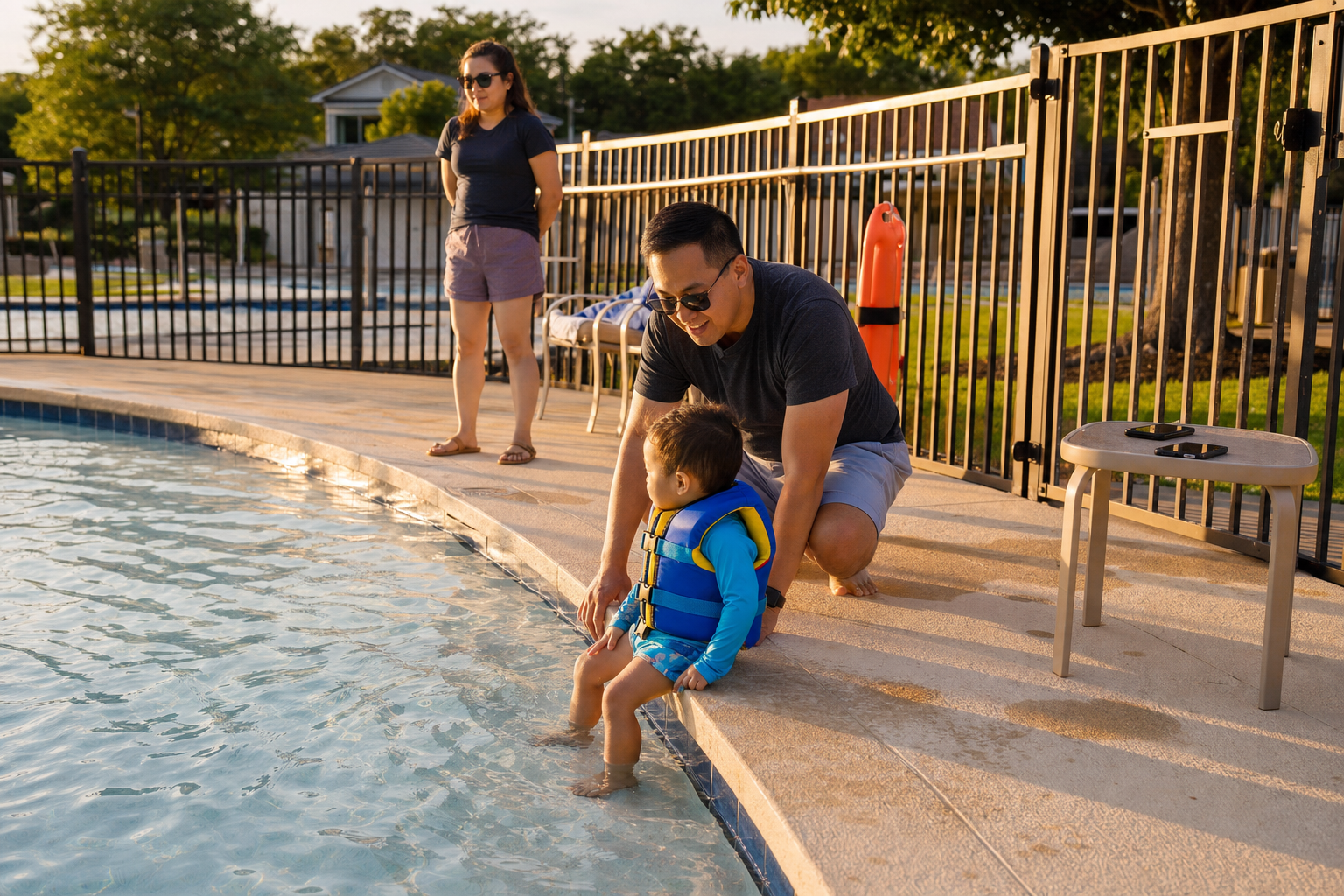
Picture this: texts flying back and forth, toddlers racing across the yard, and you suddenly realize you didn’t ask the crucial questions to make the pool safe. Instead of scrambling once the playdate starts, lay the rules before you arrive—when you can make sure your child is safe around the water.
What to Ask Before the Playdate
When you're invited to a friend’s pool with a baby or toddler (crawling up to 36 months), you need certain facts. Send a message like: “Can you tell me about your pool’s safety setup—fence type, gate that locks, drain covers, and escape steps?” Ask who will be watching the kids—and whether that person plans to be in the water. Find out what floating gear is available—whether there’s a properly fitted life jacket and not just floaties or water wings. Also run through dismissal: “What’s the exit routine? Do we all leave together?” These pre-playdate text-message questions set boundaries and help avoid surprises.
Supervision Ratios & Watchers
The Centers for Disease Control and Prevention (CDC) and pediatric experts now insist on close, constant, attentive supervision for infants, toddlers, and weak swimmers. That means an adult with swim skills should stay within arm’s reach the whole time any child under 36 months is in or near water. (publications.aap.org) Assign a designated “water watcher” whose only job is watching—not checking phone messages, not chatting at the grill. If there are two toddlers, two adults is ideal; one adult per child or no more than two toddlers per adult can help prevent overwhelming situations.
Barriers, Gates, & Restricting Access
Assuming the pool setup is toddler-safe is risky. The CDC recommends home pools have four-sided fencing at least 4 feet high, fully enclosing the pool and separating it from the house. Gates need to be self-closing and self-latching. Even guests with portable or inflatable pools must meet local standards. (cdc.gov) Check that doors and windows toward the pool are locked or alarmed. These restrictions are part of a system involving the Supervise, Restrict, Teach, and Respond framework—originating in Australia’s Royal Life Saving “Keep Watch” campaign. (royallifesaving.com.au)
Teaching & Swim Lessons
If you want a structured way to build water confidence at home, the 10-Week Plan guides you step by step.
Swim lessons can begin after a child’s first birthday, depending on readiness, emotional maturity, and physical ability. The American Academy of Pediatrics advises that small children and weak swimmers wear U.S. Coast Guard–approved life jackets, even in familiar water. (publications.aap.org) Floaties and water wings are conveniences, not safety tools—they often fail to provide enough support. Use them only under vigilant adult supervision. From crawling babies to 36 months, experiments like water familiarization classes help, but they are not a substitute for full protection systems. (rch.org.au)
Teachers and parents should also teach basic rules: do not enter the water without an adult, stay close, don’t run near the pool, and always wait to exit the water together. Skills like floating on the back, identifying water hazards, and recognizing danger signs help toddlers grow water-aware. To get started, you might check out helpful structured swim or water awareness programs like the “10-Week Plan” from swimy.org, which builds consistent water comfort over time. (rch.org.au)
[[ctababy]]
Exit Routines & Ending the Playdate
Leaving a pool can be just as tricky as entering it. Once swim time is over, make sure there’s a clear exit plan. Gates must be secured. Children shouldn’t wander between the pool and indoors without an adult watching. Ask the host: “Do you have locks or alarms on the doors leading outside? What’s your plan for clothes, towels, supervising during snack time?” Establish if all parents leave together or ensure no child is left near the pool alone while others collect belongings.
Respond: Emergency Plans & Lifesaving Skills
Even with every rule in place, emergencies happen. Ask whether the host has a life ring, shepherd’s hook, or rescue gear poolside. Confirm if there's a first aid kit and phone nearby. It is best if multiple adults present know basic CPR and infant/child rescue—just in case every second matters. The CDC and AAP emphasize that any adult around a pool should have the skill to respond—able to rescue without putting themselves at risk. (publications.aap.org)
Why Multiple Layers Prevention Works
Royal Life Saving Australia’s Keep Watch campaign promotes four actions: Supervise, Restrict, Teach, Respond—used together, these layers form the best protection. (royallifesaving.com.au) Data shows many toddler drownings happen when supervision lapses or barriers fail. In Australia, nearly half of drowning deaths in young children aged 0-4 occur at pools when no adult was watching closely. (royallifesaving.com.au) The CDC warns U.S. drownings among 1–4 year olds spike when pools lack safe fences, gates, or life jackets, or when adults assume someone else is in charge. (cdc.gov)
When you send those RSVPs, bring these safety conversations upfront. These rules aren't just for you—they help hosts plan better too. Being explicit ahead of time eliminates awkward moments poolside, makes expectations clear, and keeps everyone—including your toddler—safe. Because nothing ruins a playdate faster than a preventable emergency.
120+ swimming exercises sorted by age — with video and instructions. Developed by swim instructors, completely free.

120+ swimming exercises sorted by age — with video and instructions. Developed by swim instructors, completely free.