Don’t Stop Kicking to Breathe: Freestyle Fixes for Kids
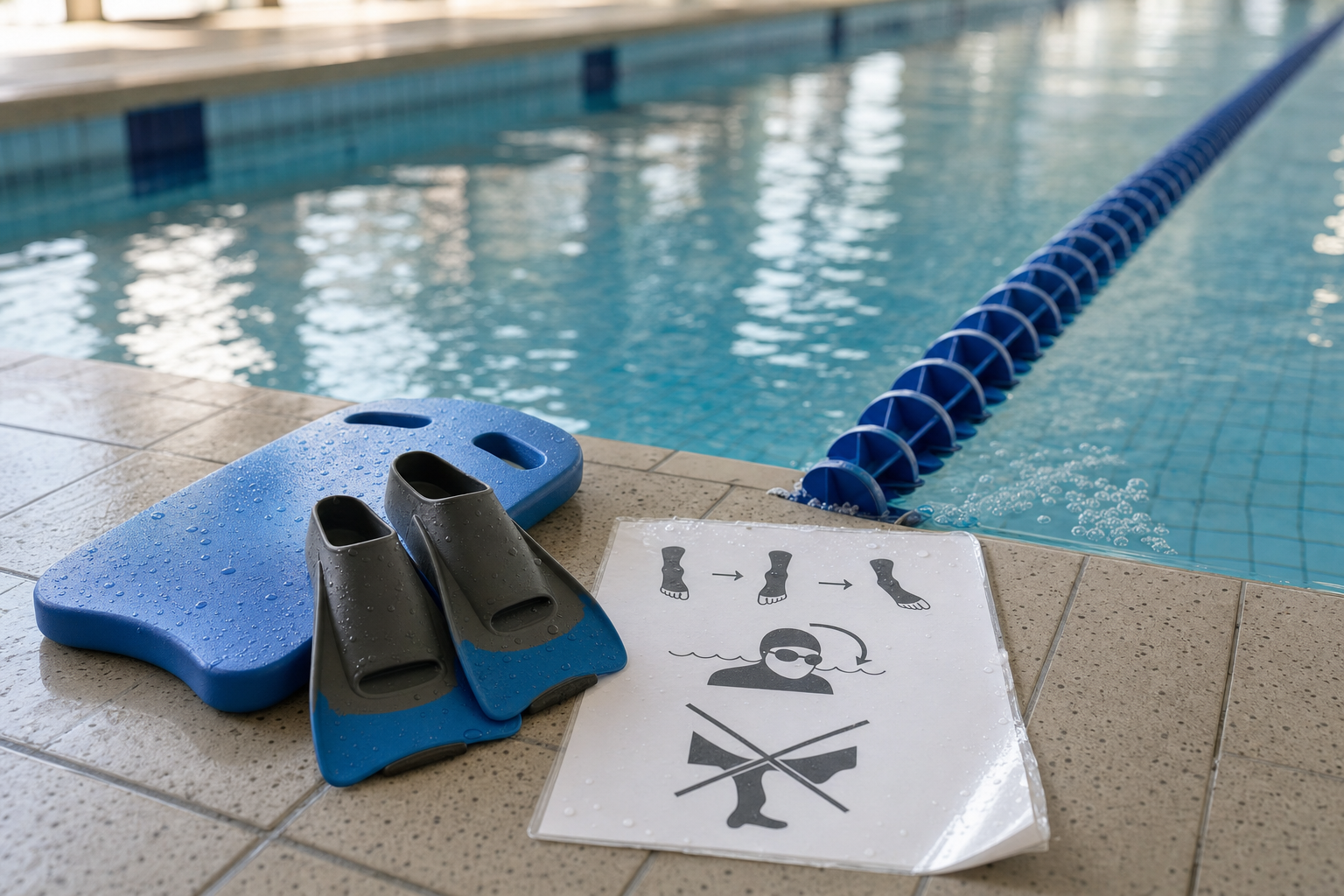
When your 6-12-year-old stops their kick every time they take a side-breath, or kicks scatter into scissor-like legs, you’re seeing very common freestyle breathing issues. Below are three powerful fixes: kick-count rhythms, “quiet head” cues, and drills to prevent scissor kicks. These tools target the main pitfalls parents notice: breath-holding then gasping, over-rotation, or stopping the kick to inhale—all of which destroy fluid freestyle breathing for kids.
Why Kids Lose Their Kick When They Breathe
The first mistake is breath-holding underwater until the very end of a stroke. When the breath is held, the face stays down too long, so the child must turn hard and lift the head to inhale. That lifts the hips—and the kick often stops or becomes weak. Then comes the gasp, body over-rotates, and legs splay into a scissor pattern.
Over-rotation is another issue: some young swimmers twist their shoulders too much without rotating the hips, trying to get enough air. When that happens, the kick gets out of sync. Legs drift apart since the core can’t maintain alignment.
Stopping the kick to inhale often comes from fear or confusion: a child who’s unsure when to breathe may press pause—literally—and everything falls apart.
Experts agree: solving these issues isn’t about telling kids to swim “faster” but helping them maintain a steady kick and calm exhale underwater so they can turn just enough to breathe. One helpful drill is the underwater kick with bubble‐blowing, letting them practice exhaling continuously while kicking hard so that breathing feels natural rather than frantic. (usms.org)
Use Kick-Count Rhythms to Keep the Kick Alive
A kick-count rhythm is a simple pattern like “kick-kick-kick-breathe” or “kick-kick-breathe-kick-kick.” By keeping track of kicks, the child knows they will get to breathe soon rather than waiting until they're gasping. On land, you can help them practice these rhythms (imagining the water) before ever getting in the pool. Then progress into side-kick drills with breathing. Those who teach freestyle breathing for kids say the side-kick drill helps children connect body rotation with calm breathing. (swimy.org)
Another rhythm trick is using “3-beat kick.” That pattern gives them enough kick between arms to stay stable, then rotate, take a quick breath, return the head, and keep kicking. You can use metronome beats or music to reinforce the rhythm; children often internalize patterns more easily that way. (reddit.com)
“Quiet Head” Cues: What Kids Respond To
“Head quiet” means when the child breathes, they don’t lift the head or pull it forward—just rotate gently so only the mouth clears. Cue phrases like “look at your shoulder when breathing,” “one goggle always underwater,” or “chin near your shoulder” are powerful because they create a visual in their mind. Simple words work best: “ride the rotation,” “roll, not lift,” “ear down” are cues coaches often use. (swim-teach.com)
If you want a structured way to help your child progress at home, the 10-Week Plan guides you step by step.
Parents watching from the deck should look for signs like splash over the ear (which means head lifted), legs dropping (hip drop), or wide leg splits (scissor) each time breath is taken. If you often see one leg doing more or toes pointing down, it’s time to reset with a quieter head cue before adding distance or speed.
[[ctakid]]
Scissor-Kick Preventers: How to Stop Legs Splitting
Scissor kick—when one leg swings wide off the centerline while the other trails—is often triggered by alignment faults: head lift, late breathing, slow hip rotation, or knees locked. The legs drop to compensate. Recognizing that cause helps you choose the right fix. (swimy.org)
Drills that prevent scissor kick focus on hip alignment and early rotation. Two effective drills: Streamline Side Kicks with Feathered Breaths (from streamline push-off, roll, and kick while breathing only when arm is up, switching sides), and Seated Splash & Wall Push Kick (child kicks from edge or wall, working to keep legs close and knees slightly bent). These drills force hips forward, reduce knee bend, and teach kids to kick continuously, even during the breathe. (swimy.org)
Avoid over-use of kickboards. While kickboards support arms, they often allow head lift and hide hip misalignment. Fixing scissor kick usually comes from full-body alignment work rather than relying on float devices. (swimy.org)
Putting It Together: A Sample Progression
Here’s how you build this over several weeks. Begin with on-land rhythm and head-quiet drills, then move into side-kick drills in shallow water. When those feel solid, integrate full freestyle laps with breathing patterns like breathe every 3 strokes, always returning the head before kicking off. Around week 4-6, many parents follow structured pacing tools like the 10-Week Plan of swimy.org, which guides breathing drills, kick-count work, and alignment steps in manageable segments. (swimy.org)
During sessions, keep reps short (20-30 seconds of effort), with rest between. A child’s skill consolidates when they’re not exhausted. Focus on quality: correct head, body roll, and kick on every rep.
What to Avoid Saying (and Saying)
Words matter. What to avoid: “Kick harder while you breathe” (makes them tense), “Don’t lift your head” (negative framing), or “Just hold your breath until the arm comes” (encourages breath-holding). Instead, say things like “Ride the wave,” “Mouth comes up gently,” “One ear stays under,” “Kick through the breathe,” “Roll early, kick steady.” These cue the movement you want rather than the error you fear.
Safety, Seasonality, and When You’ll See Progress
This work is safe year-round. If you swim in pool, lake, or indoor facility, you can do drills any time. Always do short reps with plenty of rest so child stays confident and doesn’t panic or hold breath. Safety includes watching for bubbling exhale underwater—if they’re holding their breath, ease back.
Expect to see progress in two to three focused sessions per week over 2-4 weeks. You’ll notice calmer breathing, less scissor kick, and more steady kick through breaths. Full alignment and rhythmic breathing often develop more fully by day 30 or so of consistent work.
Freestyle breathing for kids, fix-scissor-kick child issues, and keeping kicking when breathing are not just lip service—they are fixable with the right rhythm, cues, and alignment drills. With patience, playful drills, and the right words on the deck, your child will keep their flutter kick alive, inhale smoothly, and swim stronger.
120+ swimming exercises sorted by age — with video and instructions. Developed by swim instructors, completely free.

120+ swimming exercises sorted by age — with video and instructions. Developed by swim instructors, completely free.