Hoop Highway: Streamline Targets for Kids — Safe Underwater Hoops That Boost Technique and Fun
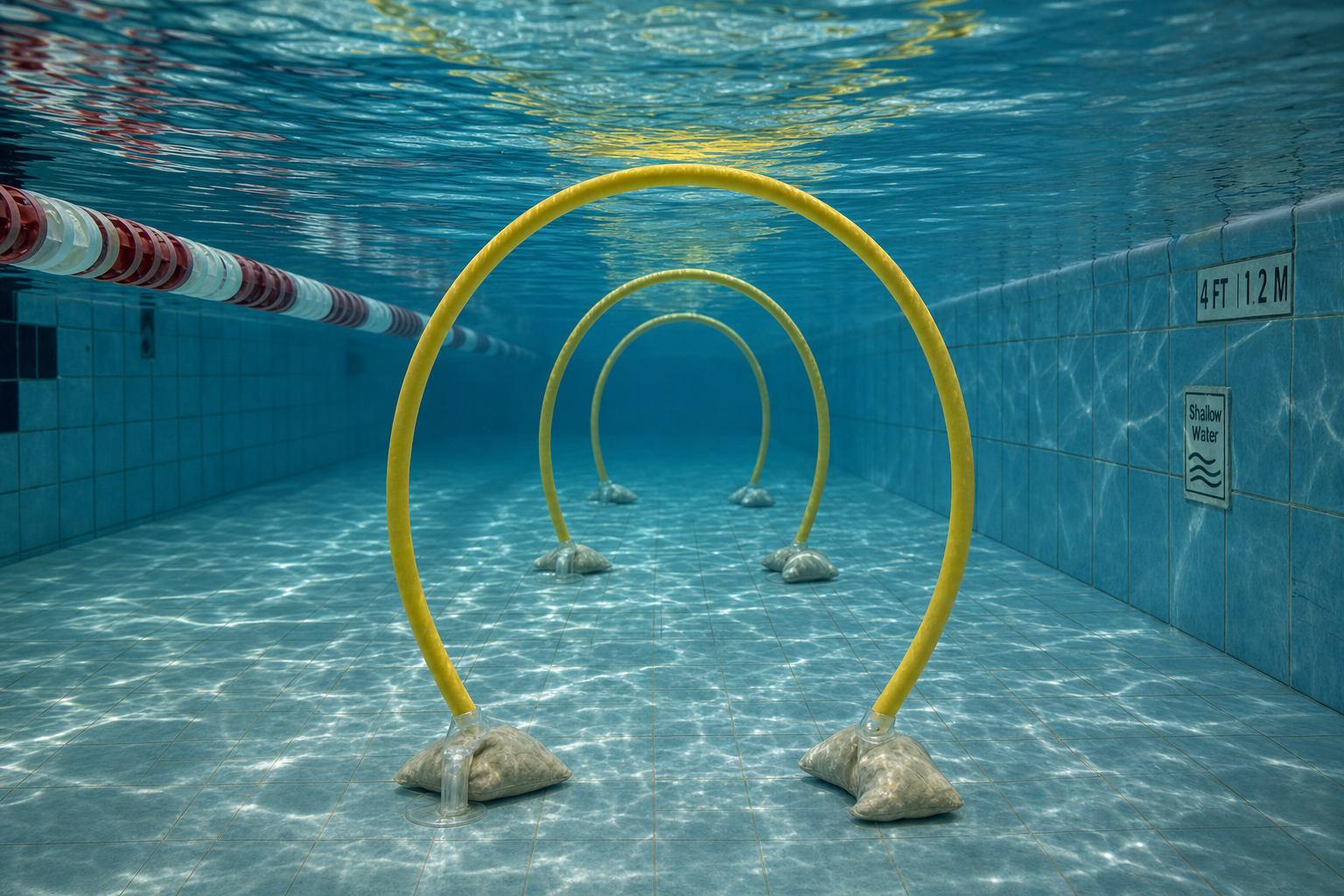
Giving children ages 6–12 visible underwater “gates” in the form of submerged hoops can transform swim practice. These gates act like visual streamline targets, helping kids perfect push-off angles and body alignment, while making drills fun. Parents and coaches get buy-in when kids score clean passes through hoops and learn safety, setup, spacing, and smart clean-up. Dive in to see how you're going to make this work for your child, safely and effectively.
What Is a Swim Hoop Drill and Why It Matters
A swim hoop drill places submerged hoops at safe depths in the pool so swimmers can push off, enter streamline, navigate through the hoop, and emerge cleanly. This gives instant visual feedback: if they miss the hoop or strike it, they know alignment or bodyline was off. For ages 6-12, these drills reinforce good form without complex explanation, because the hoop itself becomes the teacher. Streamline targets like these are often used in body awareness work, where kids learn how their arms, hips, and spine align underwater through single-arm drills or glide work.(waterwisekids.com)
Using hoops also naturally supports streamline push-offs. It emphasizes arms overhead, head tucked, body long and tight—what proper streamline technique demands. According to drills described by ParentEdge, streamlined push-offs with glides done properly reward consistency and encourage speed and efficiency without extra fatigue.(parentedge.com)
How to Set Up Hoops Safely and Smartly
Streamline gates only work if set up well. First, get coach or lifeguard permission. Choose shallow water or chest-deep zones so kids can touch down or resurface easily. Depths around 3-4 feet are often ideal. Secure the hoops so they don’t drift—use weights or tie them to lane lines. Drifting hoops are one of the biggest pitfalls. When hoops move, kids chase after them, risking deeper dives, collisions, or disorientation.
Space matters: set hoops about 1.2-1.5 meters apart so there’s room to glide, adjust streamline form, and surface safely. One exercise called “Tunnel Diving” uses three offset underwater hoops spaced about 1.5 meters apart in roughly chest-deep water to teach directional control and air break timing.(swimy.org) The setup allows kids to dive, maintain depth, then surfac while keeping body alignment in check.
Also decide how often and when to use these drills. Sessions where hoops are used shouldn’t dominate; balance with warm-ups, regular stroke work, kicks, and streamline push-offs. In fact, in training-aid guidance for ages 6 to 12, experts suggest limiting aid-based or novelty-drills to about 20-30 percent of session time so technique transfers without dependence.(swimy.org) One way to organize these drills is to embed them into a structured module like the “10-Week Plan” by swimy.org—which includes underwater hoops and streamline targets among other progressions—so improvements build systematically.(swimy.org)
If you want a structured way to help your child progress at home, the 10-Week Plan guides you step by step.
Safety Rules to Follow Every Time
Underwater hoop drills are fun, but safety is not optional. Always have supervision: a coach, instructor or lifeguard needs to be present and aware. No tricks or rup progression—kids should never feel pressured to stay submerged longer than they’re comfortable. No breath-holding contests. As a rule, avoid prolonged submersion and don’t let kids chase hoops so deeply that equalizing ears becomes difficult. The American Academy of Pediatrics emphasizes checking pool depth and underwater hazards before setting up aquatic play or drills.(publications.aap.org)
[[ctakid]]
Ensure children understand posture for streamline: hands locked, arms overhead, head tucked, eyes down, body flat. Errors like flared elbows, loose hips, bent knees are common and often best corrected by visual feedback from the hoop. Pair that with body awareness drills: for instance, streamlined glides off wall or single-arm underwater travel to make kids aware of their alignment.(waterwisekids.com)
How Parents Can Frame Setup, Spacing, and Clean-Up to Keep Lanes Friendly
You’ll want to keep the environment safe and respectful—for your child and for others using the pool. Before swimmers enter the water, plan where the hoop circuit will go. If you're using public lanes, choose a non-crowded lane or designate set times so others know to avoid. When placing hoops, leave two feet or more clearance from lane ropes or crowded areas; avoid placing hoops where innocent swimmers might collide.
Clean-up matters: remove hoops immediately after the drill, so the pool returns to standard lap condition. Floating or submerged obstacles left out cause tripping hazards for feet or legs. Teach children to help carry and store equipment properly. A positive routine of putting gear away develops responsibility and keeps public pool staff and other swimmers happy.
Sample Drill Progression for Ages 6-12
Begin with chest-deep water and a single hoop placed fairly close to the wall for easy reach. Goal: push off, streamline and glide through hoop, then surface. Once that is consistent, increase spacing slightly, add a second hoop, or alternate front- vs back-streamline passes. Use timing or distance markers (e.g. “coast to the second hoop”) to create feedback. Once kids are comfortable, combine with streamline push-offs drilled in separate sessions as described above.(parentedge.com)
Add games at the end: who can glide cleanly through without touching? Who gets farthest through the hoop while maintaining streamline? These contests build excitement. Always warm up with a few glides, then graduate to hoop passes. At the end, debrief: what feel was different when alignment was right vs off.
Final Thoughts: Why This Drill Sets a Foundation
When done right, hoop-through streamline targets do more than teach form—they build confidence, spatial awareness underwater, and a love of scoring clean passes. Kids light up when they see their bodies acting like arrows, not flopping. For parents, seeing immediate feedback (hoop hit vs clean pass) helps you coach with clarity and meaning. Because this drill relies on simple visual cues and regular safety checks—secure hoops, shallow starts, no prolonged submersion—it fits all seasons, everywhere there’s a pool and supervision.
By combining clear setup, smart spacing, corrective feedback, and strong safety defaults, you build a swim routine that improves technique and makes swim practice a joyful game. Streamline targets through submerged hoops aren’t just drill—they're a highway to better swimming.
120+ swimming exercises sorted by age — with video and instructions. Developed by swim instructors, completely free.

120+ swimming exercises sorted by age — with video and instructions. Developed by swim instructors, completely free.