New Swim Parent? Three Volunteer Jobs You’ll Nail: Timer, Runner, Ready Bench
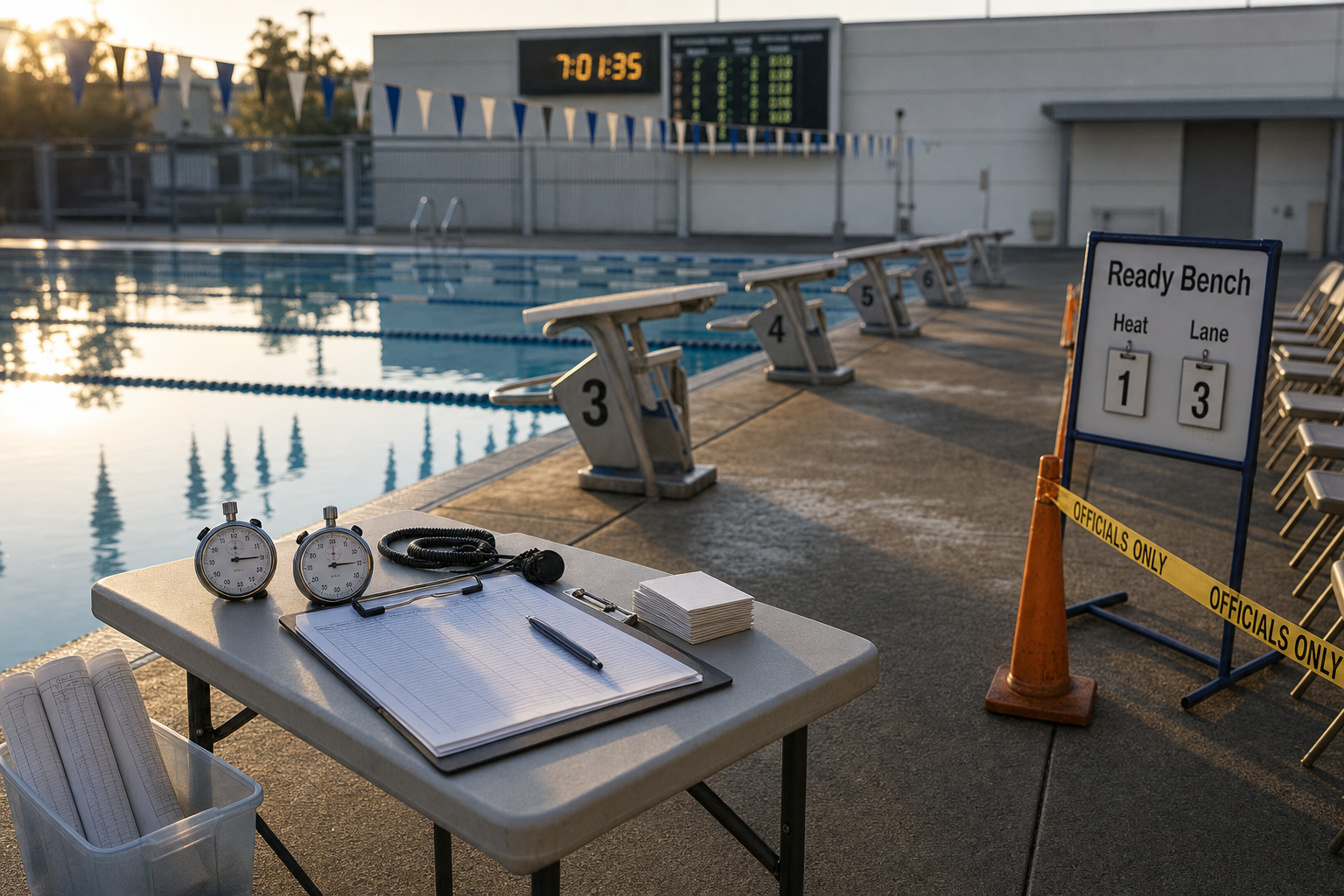
If you’re brand new to swim meets and want to help out without being overwhelmed, these three volunteer roles—timer, runner, and ready-bench parent—are high-impact and perfect for parents of kids aged 6-12. These roles keep things running smoothly, help your child stay on track, and let you catch most of their races. Here’s how to sign up, get briefed, and do the job right—without missing a splash.
Timer at Swim Meet
As a timer at swim meets, your job is crucial to the fairness and flow of every race. Before the meet begins, there’s a timers’ meeting—usually during the warm-ups. You’ll get your lane assignment, stopwatch or plunger (or electronic timer), timing sheets or cards, and instructions on what to do if start or finish times don’t match. Showing up on time to this briefing ensures you know what’s expected. (swimteam101.com)
On race day, your lane is your station. You’ll press the button to start timing and again for the finish. With manual stopwatches, two timers cover each lane in case one misses something or the automatic unit fails. Accuracy matters more than speed. Stay focused and don’t get distracted at the first splash. (swimteam101.com)
You can still see your child’s race even as a timer. You’ll be right at the pool deck, close enough to watch from the blocks or finish end when it's their lane’s turn. Just don’t block the officials’ view, especially at the start or the touch pads—those positions need clear sight lines to catch false starts or finishes. (thornwoodsharks.org)
Runner – Help Behind the Scenes
Runner isn’t glamorous, but it’s one of those swim meet volunteer jobs that makes everything smoother. You shuttle swim time cards, trophies, snacks, water, and sometimes heat sheets between officials, timers, and parents. The runner often supports the ready bench, helping line up swimmers, getting goggles or caps fixed, even escorting kids to the bathroom. (pmrrays.com)
You’ll need to sign up before the meet—many teams use websites where you can pick your shift. Sign-ups often close when registration ends, and any unfilled spots get assigned. (swimfst.com) When the meet starts, check in with the volunteer coordinator for your job and shift details. Get a briefing from the coordinator or another parent who’s done it. Knowing the layout—where the heat sheets, cards, and officials are—is half the job. (gomotionapp.com)
You’ll still catch your child’s races. Runners move between areas, so you can catch a glimpse when they swim. Just don’t linger in the starter’s view or interfere with officials. Where you position yourself matters—stay out of “official deck areas,” which must remain clear. (thornwoodsharks.org)
By stepping into any of these swim meet volunteer jobs, you make meets more on-time and less chaotic. Kids know their lanes, parents know what’s expected, and the whole meet can run smoothly. You’ll feel part of the team—not just cheering from the stands. Most veteran swim teams use season-long planning so listings for roles open when you register your child. A few skills you might pick up along the way—like organising heat cards quickly or helping with the sound system—turn out to be surprisingly useful. If you want structured guidance, check out the 10-Week Plan by swimy.org when preparing for your first set of meets, especially for age group meets where kids are 6-12. https://www.swimy.org/10-week-plan
[[ctakid]]
Ready-Bench / Age Group Helper Parent
Age group helpers or ready-bench parents watch over swimmers when they’re not racing and help them line up for their heats. This is especially important for kids ages 6-12 who might get confused or lose track of what event comes next. Duties include supervising them under the team tent or staging area, ensuring caps and goggles are ready, keeping track of heat and lane numbers, and taking them to the blocks at the right time. (hiddenforestpiranhas.swimtopia.com)
You’ll sign up just like with other volunteer jobs—through your team’s system or via email with the meet coordinator. Before your shift, you’ll get a run-through of when events are called, where to get updated heat sheets, how to reach us in case someone’s missing. Many squads use tools like SwimTopia or GoMotion for tracking event lists, and you may also take part in a training or orientation session at the start of the season. (ccrseals.swimtopia.com)
Ready-bench parents are close enough to cheer during every race and pick your child up right after they finish. You’ll see them jump off the block, touch the wall, and head back to the tent. Because you’re right there helping get them ready, you never truly miss—it’s one of the few roles that blends doing and watching. (wilchesterwahoos.swimtopia.com)
How to Sign Up, Get Briefed, and Avoid Mistakes
Every swim team has a volunteer coordinator. When meet registration opens, sign up early through your team’s website or via email. Popular roles like timer or ready bench fill fast. If you're unsure which job suits you best, ask for something “age-group helper” or “runner”; those are versatile. (swimfst.com)
Briefings are non-negotiable. That’s where you’ll learn all the rules: when to begin timing, what to do if equipment fails, where runners should stand, how ready bench line-ups work. Skipping the briefing risks confusion or mistakes—missed starts, late swimmers, or blocking someone’s view. Being briefed properly builds your confidence. (swimteam101.com)
Don’t leave early. Even if your child has finished their races, if you signed up for a volunteer shift or role, stay until your job is officially done. Cleanup, collecting equipment, checking sheets—all of it needs finishing touches. Leaving early stresses other volunteers and can mess up meet results. (ccrseals.swimtopia.com)
Avoid blocking officials’ views. Don’t stand behind the starting blocks, in walkways, or behind the finish line area. Always keep pathways clear for timers, stroke and turn judges, and the starter. When moving around, choose places that allow you to do your job and watch without getting in the way. (thornwoodsharks.org)
Why Your Help Matters and Where to Go from Here
Once you’ve done a timer or ready-bench shift, talk to coaches, officials, and longtime parents to learn more advanced roles if you're interested—like lane judging or officiating. But until then, timer, runner, and ready bench are high-impact and doable, and you’ll still see your kid swim every race. Your team will run better, your child will feel supported, and you’ll walk away knowing you helped make it happen.
120+ swimming exercises sorted by age — with video and instructions. Developed by swim instructors, completely free.

120+ swimming exercises sorted by age — with video and instructions. Developed by swim instructors, completely free.