When Another Child Keeps Splashing Baby: Calm Scripts & Safety Steps
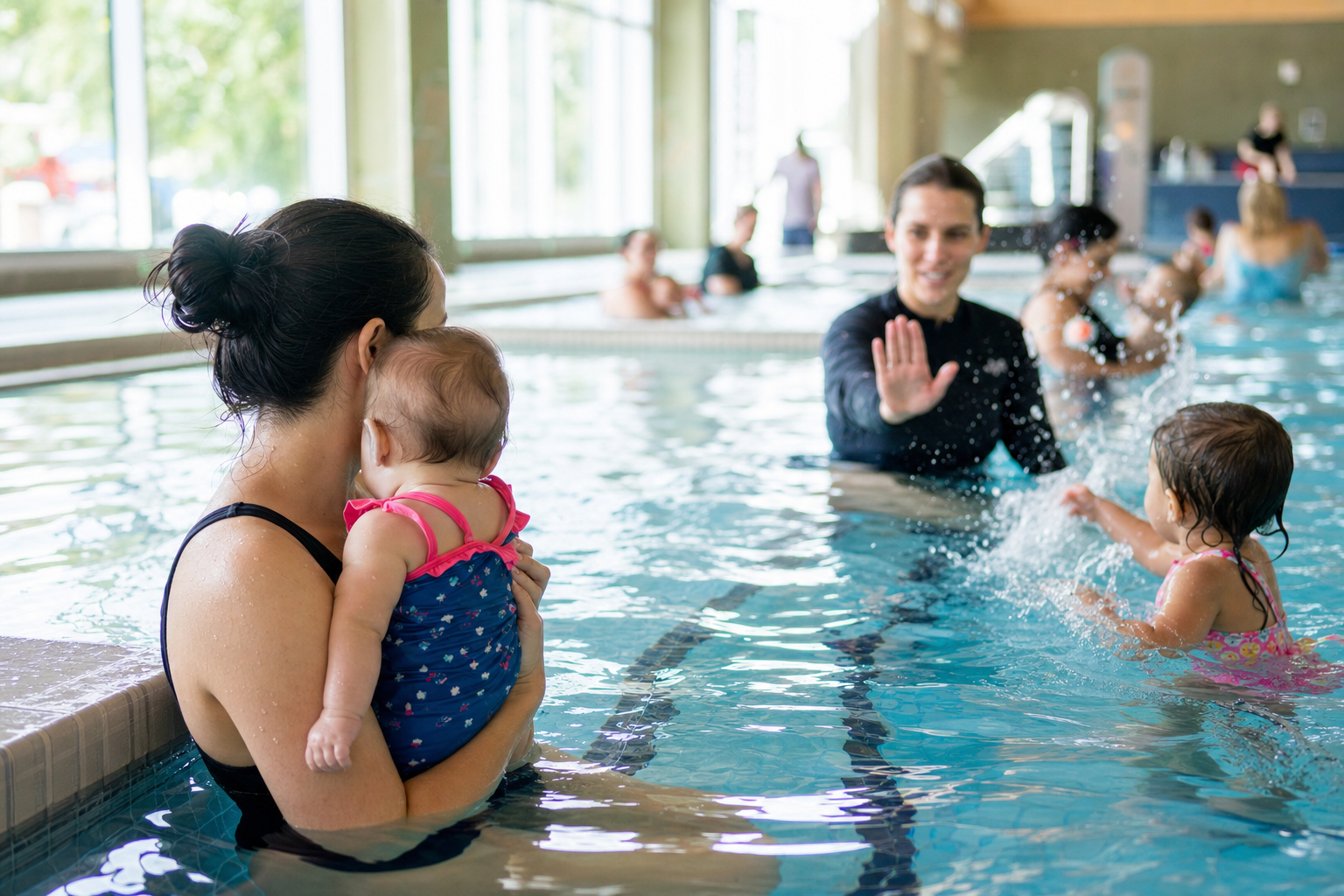
It’s hard seeing your little one startled by “toddler splashing” in swim class, or frequently bumped by other children. For babies aged 4–36 months, these moments can chip away at water confidence. When you notice your baby is repeatedly splashed, bumped, or crowded, here are clear safety actions and gentle scripts that protect your baby’s emotional and physical safety—while letting you advocate for them calmly.
Stay Calm, Stay Close: When to Move Away
First priority: stay within arm’s reach. The American Academy of Pediatrics (AAP) emphasizes “touch supervision” when infants or toddlers are in or near water—even during swim lessons. That means an adult physically close enough to support them, without distractions. (healthychildren.org)
If splashing or crowding is overwhelming your baby, moving them to safety is better than trying to correct someone else’s child. Shift to the pool edge, a quieter lane, or take a short break out of the water. Protecting water confidence sometimes means pausing so your baby feels secure again.
Recognising “Baby Scared by Splashing Pool”
Watch body language. Signs your baby is scared by splashing pool water might include stiff arms, turning head away, crying when water hits their face, tightly clenched lips. If these happen repeatedly, forcing them to “get used to it” may backfire—kids can develop negative associations with water. The AAP warns that repeated face splashes may lead to a negative aquatic experience and recommends water play and parent-child classes rather than aggressive submersion drills. (publications.aap.org)
Instead, gently ease them in. You can start by sitting together at poolside, dipping feet, then holding them in chest-to-chest support while you splash lightly away from their face—building comfort gradually.
Speak Up: When to Ask Instructor to Reset
If another toddler is repeatedly splashing or bumping and your baby is visibly upset, it’s okay to ask the instructor for a “reset.” Here are script suggestions you can use:
- “Could we pause splashing for a moment so baby can regroup?”
- “I need to pull my baby a little away; they’re scared of face splashes right now.”
- “Would it be okay if we spend extra time on quiet lap holds until she feels safe again?”
These phrases are calm, direct, and focus on your baby's needs without blaming another child. In many parent-and-baby or mixed-age family swim classes, instructors are trained in calming transitions and supporting children emotionally through water discomfort. Look for programs that invite you to observe or choose small class sizes. (healthychildren.org)
Choosing the right swim class matters. You’ll want instructors who understand baby sensitivity to splashes and face washing. Find swim schools that use gradual introductions to water, have small parent-and-baby or family classes, and support emotional transitions. A great example is the 10-Week Plan from swimy.org, which builds water confidence step by step, including time for adjustment and supportive activities between parents and babies within each class.
[[ctababy]]
Foundational Safety Steps—Always
Keep the basics non-negotiable. Always stay within arm’s reach of your baby or toddler in the water. Touch supervision isn’t optional—it’s essential. Distractions like phones or chatting away from your child weaken your ability to react fast. The AAP identifies those lapses as major risk zones for drownings. (publications.aap.org)
Also assess water conditions: How warm is the pool? Is the instructor aware of group dynamics? Are larger toddlers being encouraged to splash freely without guidance? If bowlfuls of water are constantly aimed at babies, it might be time for an instructor intervention or considering a different class format.
Preventing the “Forcing,” Not “Healing” Pitfall
Common advice like “just get them used to it” or pushing face sprays can make things worse. Instead, follow the child’s lead. If they recoil from water on their face, don’t force it. Use games, soft songs, and predictable cues—like saying, “Here comes the water!” before any splash. Let them decide when to try again. Repetition of joyous, safe experiences is what builds water confidence—not coercion.
Program Choice & Ongoing Support
Programs following AAP guidelines enroll toddlers in formal lessons after their first birthday, but parent-child water play can happen earlier. Always remember swim lessons do not make a child drown proof. They are one layer in water safety, alongside supervision, barriers, and life jackets. (publications.aap.org)
Scripts That Help You & Your Baby Speak Up
When the older toddler is leaning in or repeatedly splashing, these simple phrases can help create space and safety:
- “I’m going to step back with my baby until splashing slows.”
- “Could you ask that we splash more gently over here?”
- “I need a little break from the splashing; once baby feels calm, we’ll join again.”
Use calm tone. Signal with body language: pull your baby into your chest; use “quiet hand” or gesture to indicate less splash. You’re modelling protective behaviour: clear, kind, boundary-setting.
Final Thoughts
You don’t need to tolerate crowding, splashes, or repeated face douses just because it’s part of group swim. By staying close, using supportive touch supervision, choosing the right class, and using calm, clear scripts, you help protect your baby’s water confidence. When they see you advocate gently on their behalf, they feel safer—and that safety is the foundation for joy in the water. Keep communication open with instructors; if necessary, shift environments so the pool becomes a place of trust and fun—not fear. Safety first always wins.
120+ swimming exercises sorted by age — with video and instructions. Developed by swim instructors, completely free.

120+ swimming exercises sorted by age — with video and instructions. Developed by swim instructors, completely free.