Rivers and Currents: Toddler Swim Safety Rules
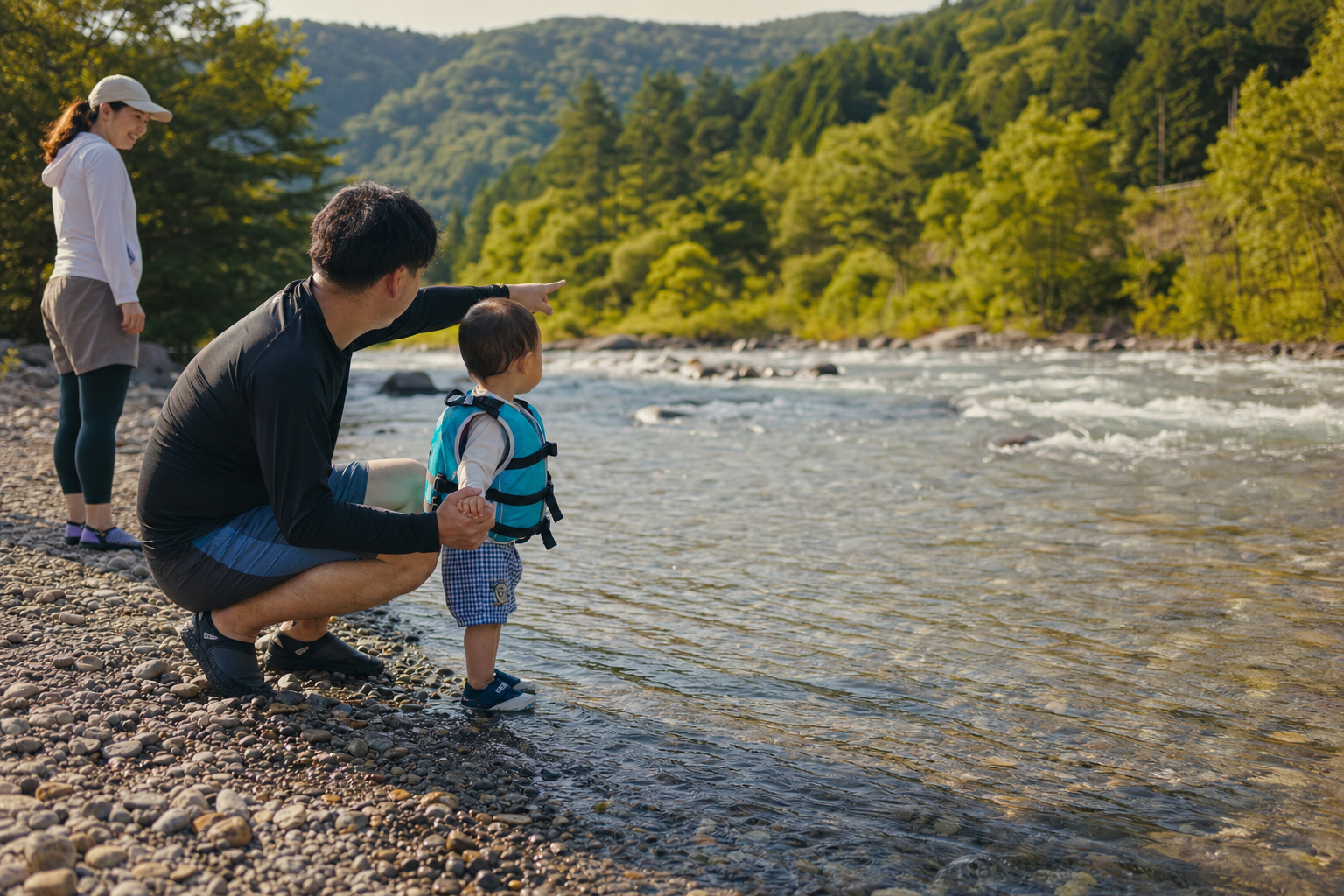
Rivers, creeks, streams, and fast-moving shallows may look like enchanting spots for a toddler’s first splash—but they’re very different from pools. When you’re out with a walker up to 36 months old, you need rules that specifically guard against hidden dangers. Let’s dive into the “Look, Hold, Stay Out” rules for toddler river safety so your family outings stay joyful, not tragic.
Why Rivers Behave Differently Than Pools
In a pool, depth, temperature, and surface are all mostly predictable. In natural water, everything can shift in moments. Cold water, slippery banks, and sudden depth changes can catch even experienced parents off guard. After heavy rain, rivers churn up more debris and currents grow stronger. Banks slope irregularly, and submerged hazards like branches or rocks lie unseen under murky water. Even ankle-deep moving water can knock toddlers off balance or sweep them away. The US Red Cross warns that rivers have fast-moving currents and sudden underwater obstacles, all more dangerous than pool risks. (redcross.org)
Also, toddlers’ bodies are less capable of handling cold water. Their arms, legs, and core tires easily, and they can’t regulate temperature well. Hypothermia risk rises in spring and early summer especially. Washington State Department of Health confirms that during spring rivers are often high and swift from snowmelt and rain—even warm days don’t protect from cold water shocks. (doh.wa.gov)
The Core Rules: Look, Hold, Stay Out
Look: Always Scout and Assess
Before any feet touch a river or creek, look carefully. Check the current speed—places where water flows faster than your walking pace can still pull a child off their feet. Look for hidden depth changes where rocks or sandbanks drop suddenly. Inspect the bottom before allowing your toddler to enter; logs, weeds, and debris can trap or trip them. Also note whether the recent weather has made water levels higher or flow stronger—post-rain rivers are rarely safe for toddlers. State health departments warn that water levels and currents change rapidly after heavy rain. (vdh.virginia.gov)
Hold: Never Let Go of Control
Keep toddlers within arm’s reach near any natural water. Use proper supervision, often called “touch supervision.” If your toddler gets unstable or steps into unexpectedly deep or swift water, being able to grab them instantly is lifesaving. Always have a properly fitted life jacket, U.S. Coast Guard–approved in the U.S., or certified in the UK/AU. Regular floatation devices like wings or noodles can fail; they’re not substitutes for life jackets. The American Academy of Pediatrics emphasises this very strongly. (healthychildren.org)
If you want a structured way to build water confidence at home, the 10-Week Plan guides you step by step.
Stay Out: When Dangers Are Present
This is non-negotiable: avoid entering or letting toddlers enter moving water when risks—fast currents, steep drop-offs, post-storm flow—are present. Do not wade or swim after heavy rain. Wet, mossy banks are slippery. Even if water seems shallow, undercurrents can tug upward or downstream with surprising strength. State river safety advisories warn that even six inches of moving water can be dangerous. (vdh.virginia.gov)
[[ctababy]]
Building Skills Before the Water Adventure
You don’t need to wait until toddlers are strong swimmers before creating safety habits. You can build confidence and awareness now. Swim classes starting around 6 months old often focus on water familiarisation rather than strokes. Then from 12–36 months, structured lessons become very valuable. Consistency—class once or twice weekly—is more important than long hours. Swimy.org’s guided 10-Week Plan helps build skills gradually, reinforcing safety behaviours, entries, floating, and comfort in controlled environments before ever stepping into unpredictable water. (swimy.org)
Practising between lessons is just as important. Quick play-focused sessions that revisit what the instructor shows—like floating, kicking, holding the edge—can cement behaviours. Keep sessions short, warm, and fun so toddler finds water joyful rather than scary. And always make time to rest if baby seems cold or tired. The Royal Life Saving and HealthyChildren.org sources emphasise that early exposure should be about familiarity and safety—not pushing performance. (healthychildren.org)
Applying “Look, Hold, Stay Out” During Outings
When you take your toddler to a river, creek, or stream for spring or summer camping, hiking or holiday travel, these rules protect everyone. Before arrival, always check the local conditions: weather warnings, water level updates, and posted signs or advisories. Bring the right gear: a life jacket that fits, water shoes with grip, sun protection, and dry clothes. Set clear family rules: “We stay in this area,” or “Feet only until I check the safety.”
During the outing, assign a “water watcher” role: an adult focused solely on supervising. No distractions—phones, grills, chatting—to take your eyes or attention off the toddler. If you see a danger zone—a bank that plunges, fast water just beyond, murky depths—do not let your child wander even briefly. If in doubt, stay out. Cool water dip? Great only if fully within your control and observation.
Putting It All Together
Natural water can be magical for toddlers, but the magic needs to rest on safety. Rivers and streams are not splash pads. They hide risks: currents stronger than expected, slippery banks, cold shock, sudden depth changes, and unseen obstacles. By following Look—scout hazards, Know your limits; Hold—constant, close supervision and life jackets; Stay Out—avoid risk zones and don’t enter water when unsure—you give toddlers the safest foundation.
Teach them early that water always demands respect. Your consistency, your attentiveness, and your safety rules make all the difference. With the right skills and awareness, family river outings in spring and summer can be joyous adventures—not regrets.
120+ swimming exercises sorted by age — with video and instructions. Developed by swim instructors, completely free.

120+ swimming exercises sorted by age — with video and instructions. Developed by swim instructors, completely free.