Jellyfish, Sea Lice & Stings: What Parents Should Do Fast
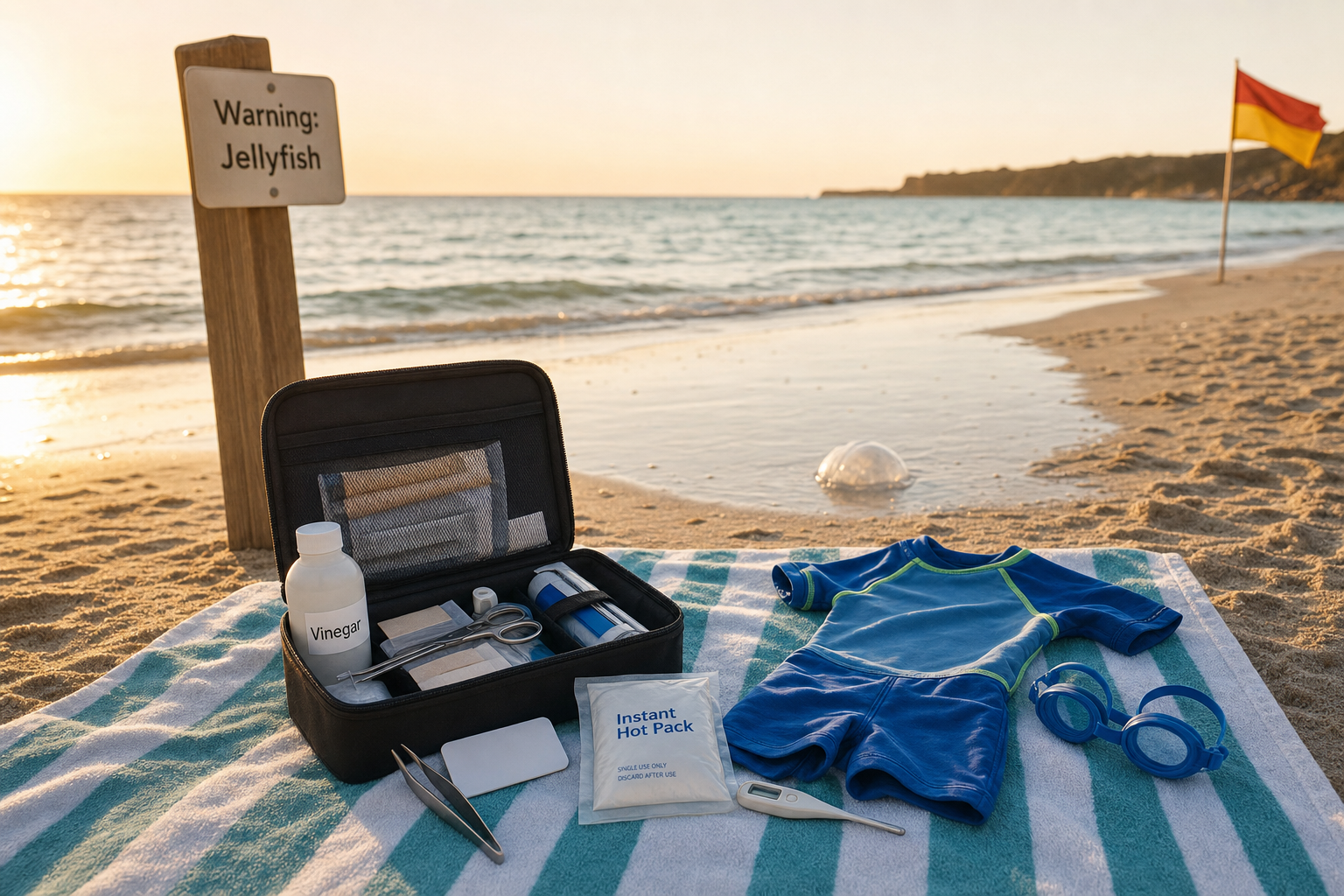
Imagine your child screaming, clutching their arm or leg after a swim—did they brush against jellyfish, get sea lice stuck under their swimsuit, or something else? Here’s what to do right away to ease the pain, avoid making it worse, and know when it’s time to seek professional help.
Quick First Aid: Jellyfish Stings
When a typical jellyfish stings a child, the most reliable first steps are vinegar and hot water. Start by getting your child out of the water to avoid more tentacles. Rinse the affected area with vinegar (household white vinegar, 4–6 % acetic acid) for at least 30 seconds, which helps stop unfired stinging cells, called nematocysts, from releasing more venom—especially important with species like box jellyfish. After that, carefully remove any tentacles using fine tweezers or the edge of a credit card. Do not scrape with sharp tools or rub, since touching active tentacles can trigger more stings. (akronchildrens.org)
Next, soak or shower the area in hot water, around 110-113°F (43-45°C), for 20 to 45 minutes or until the pain eases. This hot-water immersion helps denature the venom proteins and offers better pain relief than ice or cold water.
Species Matters: Box Jellyfish & Portuguese Man-of-War
Some marine creatures demand extra caution. Box jellyfish—found in tropical waters like northern Australia—are dangerous, and vinegar is strongly recommended for first response because it can prevent more venom from being injected. Portuguese Man-of-War is tricky: many guidelines recommend vinegar for these too, followed by hot water immersion, though some species in Australia may react differently. If you’re unsure what stung your child, use hot water as your safest bet. (scienceinsights.org)
What Not to Do with Jellyfish Stings
Don’t rinse with fresh water. It can cause more nematocysts to fire. Don’t use urine, rubbing alcohol, meat tenderizer, or vinegar substitutes unless specifically advised. Also avoid scraping with anything sharp.
Check for signs of serious reactions: swelling of lips or throat, trouble breathing, dizziness, or widespread rash. Call emergency services if these occur. Also get help if the sting covers a large area, hits a sensitive location like eyes, face, or mouth, or comes from something known to be very venomous. (webmd.com)
Sea Lice Rash (Seabather’s Eruption): When It’s Not a Sting
Don’t forget: if you haven’t yet taught your child to swim confidently, consider structured learning programs. For example, the 10-Week Plan at swimy.org helps children aged 5-12 gain better swimming skills—making beach days safer and more fun. https://www.swimy.org/10-week-plan
Sea lice are actually tiny larvae from jellyfish and anemones—not real lice. They drift in saltwater and get trapped under bathing suits. If your child has a rash of small itchy bumps under the swimsuit lines, or on their shoulders, groin, or chest, that started minutes to hours after swimming, it’s likely seabather’s eruption. Children often have strong reactions. (health.clevelandclinic.org)
[[ctakid]]
Treat seabather’s eruption by calming the itching and supporting healing. Use hydrocortisone cream (0.5–1 %) or calamine lotion on the rash, give an antihistamine if itching is bad, and use cool compresses (wrapped in cloth) for short periods. Try to keep your child from scratching so it doesn’t get infected. The rash usually improves within 1–2 weeks, though more severe cases may last longer. (health.clevelandclinic.org)
Avoid These Common Mistakes
One of the most widely believed (but false) ideas is that urine helps, but that’s wrong. Vigorous evidence shows urine, fresh water, lemon juice, or alcohol can worsen most jellyfish or Portuguese Man-of-War stings. (scienceinsights.org)
Another mistake is scraping tentacles with rough implements when only gentle removal is needed. Scraping can push more venom into skin. And using ice or cold water instead of hot water reduces effectiveness. (redcross.org)
When to See a Clinician
Most jellyfish stings heal at home if treated promptly. But take your child to a doctor or emergency department if: you suspect box jellyfish; the sting covers a large area; there are signs of anaphylaxis (swelling, breathing trouble); pain doesn’t ease after hot-water treatment; or signs of infection appear (pus, spreading redness, fever). (webmd.com)
Similarly, for sea lice rash, see a clinician if itching becomes unbearable, rash spreads, or you see signs of infection. Also, if your child has underlying skin issues or is young and gets a systemic reaction (fever or nausea), don’t wait. (health.clevelandclinic.org)
Beach Day Prep & Prevention
Packing smart lets you respond fast. Toss a small bottle of vinegar, clean tweezers, and a thermometer-safe hot pack into your beach bag. Teach your children safe swimming habits: wear tight-fits where possible (to limit fabric trapping larvae), remove swimwear right after getting out of the water, rinse off with saltwater before fresh, and check beach alerts for jellyfish or sea lice warnings from lifeguards. (health.clevelandclinic.org)
Summary
If your child gets stung by a jellyfish: rinse with vinegar, remove tentacles gently, then soak in hot water; species like box jellyfish and Portuguese Man-of-War make vinegar especially critical, though occasionally controversial in certain species. If it’s a sea lice rash, calm the skin with creams, antihistamines, and avoid scratching. Always follow lifeguards’ advice, monitor for allergic reactions, and don’t wait if things get serious. With quick, evidence-based first aid, you can help your child heal faster and make future beach trips safer.
120+ swimming exercises sorted by age — with video and instructions. Developed by swim instructors, completely free.

120+ swimming exercises sorted by age — with video and instructions. Developed by swim instructors, completely free.