Puddle Jumpers, Floaties and Real Safety: What Parents Need to Know
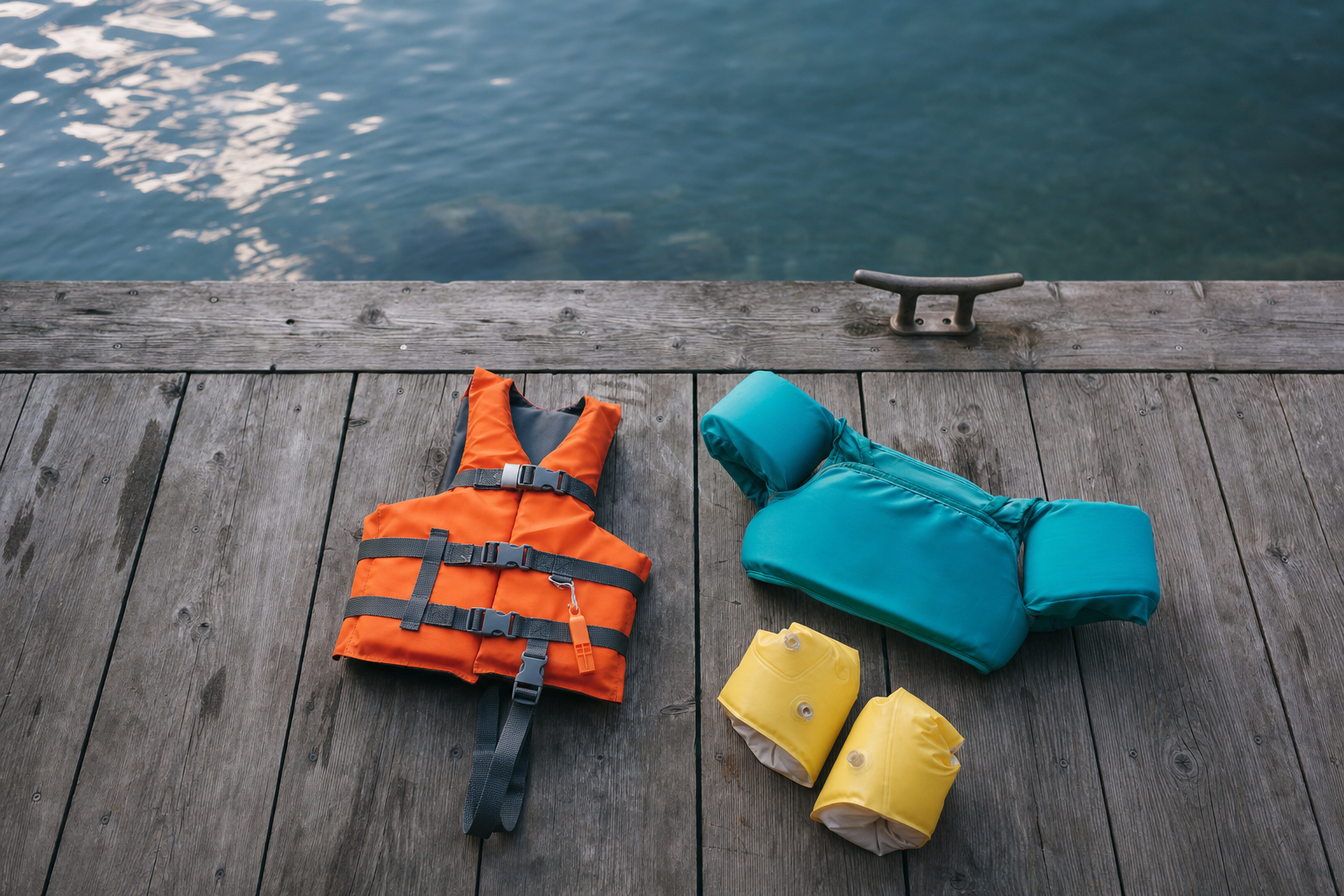
Want quick clarity on floaty devices? Here’s what parents really need to know about are puddle jumpers safe, floaties vs life jacket, and USCG approved life jacket kids.
When USCG-Approved Means Real Protection
A genuine USCG-approved life jacket is labeled and built to rigorous standards—there are performance levels now replacing old "Types," but the rules remain tough. Devices that meet Level 70 or higher are sturdy enough to use in open water and boating, provided the fit is snug. (legalclarity.org)
By law, in the U.S., children under 13 must wear a USCG-approved personal flotation device (PFD) whenever a recreational boat is moving, unless they're below decks or inside an enclosed cabin. States often have stricter rules. (boatus.org)
Approved life jackets are designed to turn an unconscious child face-up in the water and preserve airway safety. They come in different performance levels—Levels 70, 100, 150, etc. For calmer, nearer to shore water and boating, Level 70 is common; for offshore and rough open water, go higher. (legalclarity.org)
Floaties and Puddle Jumpers: When They Work—and When They Don’t
Floaties, arm bands, water wings, and puddle jumpers feel fun. But they are often misused and misunderstood. These devices are not full life jackets—they may slip off, they may not turn a child face-up, and they often force kids into a vertical posture, what safety experts call the “drowning position.” (consumerreports.org)
A USCG-approved puddle jumper is technically approved—as a personal flotation aid—but that doesn’t mean it’s safe for open water or that it will do everything a life jacket does. These devices perform best in calm, shallow pools and only under close, constant supervision. (healthychildren.org)
Floaties risk giving both kids and parents a false sense of security. That relaxed feeling can slip into lighter supervision, which is exactly when trouble can start. Kids may come to believe they can do things in water without devices that they really can’t. (consumerreports.org)
If you want a structured way to help your child progress at home, the 10-Week Plan guides you step by step.
Age 3-7 in Pools: Best Practices
For children ages 3 to 7 playing in a pool, floaties and puddle jumpers might be okay for short supervised play—lasting only a few minutes and always when an adult is within arm’s reach. But they’re not useful for developing swimming skills. Kids need time without devices so they can learn posture, floating on belly or back, kicking, breathing. Swim lessons help a lot. (consumerreports.org)
[[ctakid]]
Parents should teach “permission to enter” rules—kids need to check in before going near water. Watch them closely even when flotation devices are worn. Don’t let a puddle jumper or floatie serve as excuse to be distracted. Guardrails, pool barriers, and alarms can also help add layers of safety. (consumerreports.org)
Ages 7-12 in Open Water & Boating: What to Use
Once kids are older, stronger swimmers, flotation devices still matter—in open water, lakes, rivers, or boating. A USCG-approved life jacket is non-negotiable here. Devices must fit, be fastened correctly, and be the right performance level. Devices marketed simply as floaties or “swim aids” won’t meet legal or safety requirements on a moving boat or unsupervised beach. (waterwisekids.com)
Always assume risks: currents, drop-offs, waves, temperature. Even good swimmers struggle sometimes in natural water. That’s why adult supervision must still be close and constant. Someone should always be designated the “water watcher,” staying focused and undistracted.
Investing in Skills and the Right Gear
Mark this down: correct gear alone doesn’t keep kids safe. What really makes the difference is skill development plus good habits. Swim lessons help children ages 3-12 gain competence—for floating, stroke technique, breath control. Something like the 10-Week Plan at Swimy.org is designed to build swimming skill in a structured, progressive way. (consumerreports.org)
Also practice safety routines: checking floatation device labels, doing the pull-up test (raise the child by shoulder straps—if the jacket rides up past chin it’s too large), checking all straps or buckles, replacing worn-out gear. Teach kids never to go in water without permission. Even stronger swimmers ages 7-12 benefit from rules, supervision, and having a life jacket nearby.
Floaties vs Life Jacket: Summary and Takeaways
Puddle jumpers and other floaties are swim aids or buoyancy devices for calm, shallow water and very close supervision. They are not full replacements for USCG-approved life jackets. Life jackets are built to save lives—they’re designed to handle emergencies, to float unconscious users face-up, and to be legally required in many settings. Well-fitting, USCG-approved life jackets are necessary for open water, boating, and anytime children are beyond close supervision.
Always check the device’s label for USCG approval, size, performance level. Keep watch constant. Pair the right device with regular swim education and clear rules. With gear used properly, supervision steady, and good skills, parents can feel confident letting kids ages 3-12 enjoy water safely.
Stay alert, choose wisely, and never let a floatie replace your eyes.
120+ swimming exercises sorted by age — with video and instructions. Developed by swim instructors, completely free.

120+ swimming exercises sorted by age — with video and instructions. Developed by swim instructors, completely free.