Why Dads Belong in Mommy-and-Me Swim Classes
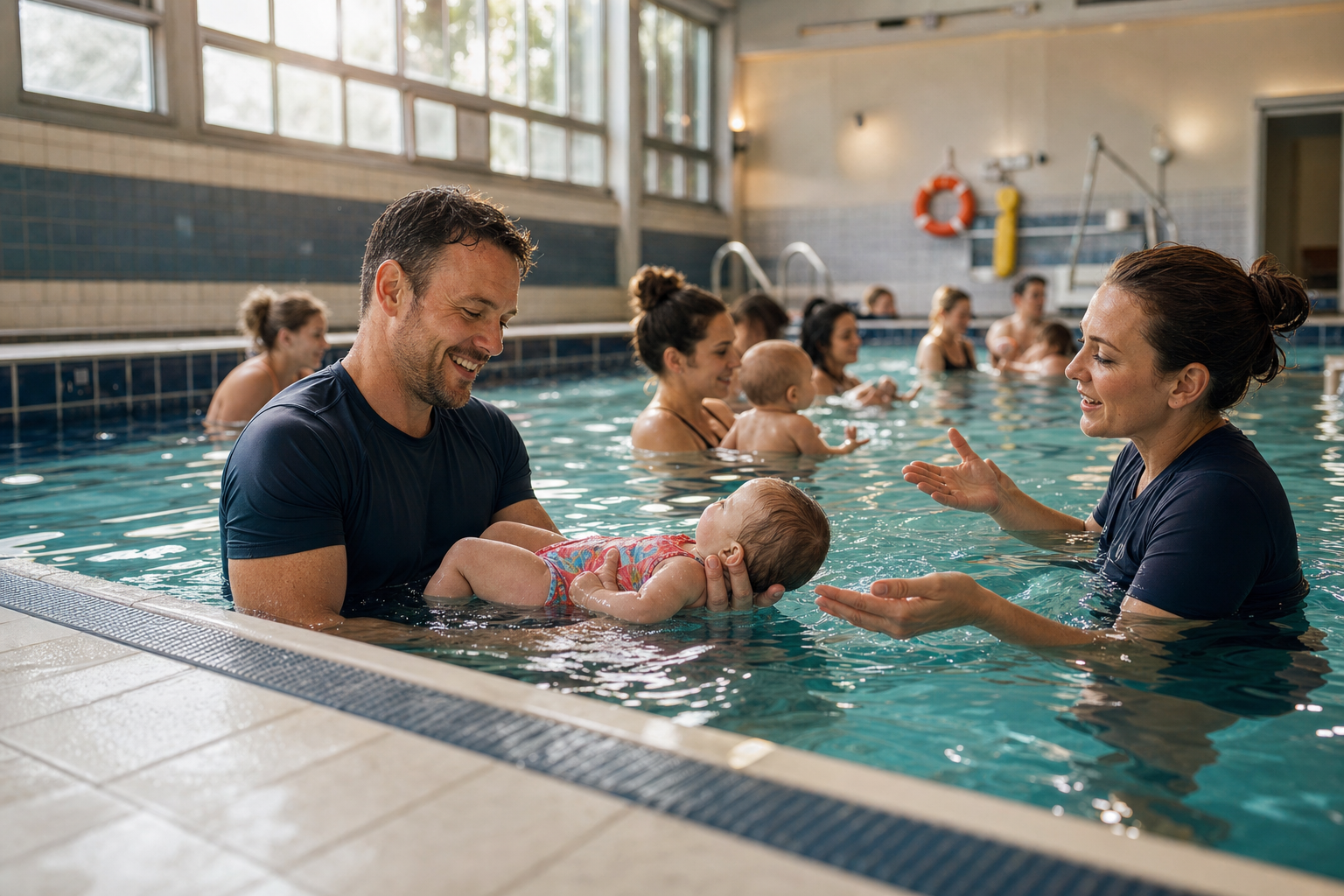
Dads (or anyone who cares for a baby) playing a full part in a “mommy-and-me” swim class isn’t just fair—it’s vital. Studies show that when more than one trusted adult learns the same holds, cues, and safety steps, babies feel safer and parents are more confident. Including dads, grandparents, guardians—everyone—helps the child and adult bond while learning the same routines and expectations in the water.
It isn’t enough for just one adult to be schooled in safety habits. If different caregivers take turns without knowing what the instructor taught, or without being briefed on baby’s cues like when they feel cold, tired, or overstimulated, kids get confused and less secure. Dads at the poolside, on deck, or in the water, bring huge benefits—not only physically supporting the infant, but reinforcing routines, respond consistently, and reducing risk.
What Happened in Class (3-36 Months): What You’ll Learn
In two adult-child inclusive classes, both caregiver and baby explore water together. One major goal is building comfort: floating with support, blowing bubbles, and gentle glides. There’s no pressure to swim independently until much later—this stage is about safety foundations, familiarity, and cue recognition. (swimrightmarjcc.org)
You’ll practice simple safety habits like entering and exiting the pool safely, staying at arm’s length (“touch supervision”) of the baby, responding to distress cues, and being aware of water temperature (ideal between 87 to 94°F or 30-34°C for young babies) to prevent chilling. (babyswim.info)
Simultaneously, caregivers are taught how to support floating, back and tummy holds, and smaller movements—kicking, reaching, turning—through playful songs or toys. These familiar routines build confidence in both baby and adult. Thanks to accessible plans like the 10-Week Plan, parents can practice cues and safety routines in between formal classes so that caregivers, including dads, aren’t stepping in cold.
How to Make the Class Inclusive for All Caregivers
First, when you enroll, ask explicitly whether caregivers beyond moms are welcome. A good program makes clear that any trusted adult—dad, grandparent, guardian—is encouraged to attend, and that there’s permission for consistent participation.
Second, clarify whether lessons follow a caregiver-transfer model—does the class expect the adult in the water to always be the same person? If not, make sure anyone who might step in has been shown the routine and safety holds. Swapping caregivers without that hand-off introduces confusion and often raises safety concerns.
Third, ask what the instructor’s approach is to baby cues: crying, turning away, refusing submersion. It’s a red flag if the lesson demands compliance no matter the child’s emotional state. Better programs are responsive—they accept baby’s pace, offer breaks and reward small successes. (swishswimming.com)
What Parents (and Dads) Should Prepare Before First Class
[[ctababy]]
Wear a swim suit that lets you move freely while holding or supporting the baby. You’ll want one also for whoever may substitute you in subsequent classes. Bring swim diapers, towels, dry clothes for both of you. Pack familiar items: a favorite toy, blanket, anything that soothes.
Arrive early so baby has time to settle in—play in warm water or watch the class before joining. Babies feel safe when there’s predictability, and rushing in often leads to tears or resistance. When you arrive, check water temperature and make sure it feels comfortable—often lessons under 3 years old are held in warmer water. (ymcala.org)
Communication with the instructor is key: ask about how underwater exposure is introduced, how they handle transitions, what safety things a caregiver needs to monitor. If you’re a dad who’s less familiar with baby handling in water, say so—the instructor can guide you through correct holds and positioning.
Potential Pitfalls to Avoid
One common mistake: assuming only mothers attend these classes. That can leave dads or secondary caregivers feeling unwelcome or unprepared. It’s important for the program to use language—“parent and baby” class—that feels inclusive.
Another risk is sending someone to class who hasn’t learned or observed the safety routine. If dad sits it out even one day and then tries to step in without knowing how to support a back float, help with cues, or follow the submersion policy, baby and substitute caregiver both lose consistency.
Also, keep in mind that these classes—whether you search them under “mommy and me swim class dads,” “parent and baby swim classes,” or “daddy and me swim lessons”—do not replace supervision outside class. One responsible adult must always be focused on the child in the water.
Why Inclusive Swim Lessons Matter
When dads—or any alternate caregiver—take part alongside moms, the child benefits emotionally and physically. Two or more adults sharing knowledge of the same safety routines gives the child multiple layers of protection and consistency. Babies sense safety in calm, confident caregivers; having more adults who understand cues reduces fear, builds trust.
Programs with inclusive language and policy attract more families, and help normalize dad participation. Seeing fathers in “mommy and me” environments challenges norms, lowers anxiety for dads who feel unsure, and strengthens family water safety overall. It also builds caregiver confidence so transfer of responsibility (e.g. dad taking baby to pool time) can happen smoothly.
Every family deserves that kind of support. If your local swim program uses “mommy and me swim class dads” as a search phrase, reach out and ask: will I (you) be welcome? What safety and caregiver-swap plans are in place?
Remember, the goal isn’t flawless technique—it’s safety, comfort, bonding, and laying a foundation for future swim learning. With both parents and caregivers fully involved, babies learn water familiarity, safety habits, and trust—all vital for enjoyment and lifelong skills.
120+ swimming exercises sorted by age — with video and instructions. Developed by swim instructors, completely free.

120+ swimming exercises sorted by age — with video and instructions. Developed by swim instructors, completely free.