Coral, Rock & Barnacle Scrapes: Beach First Aid for Kids
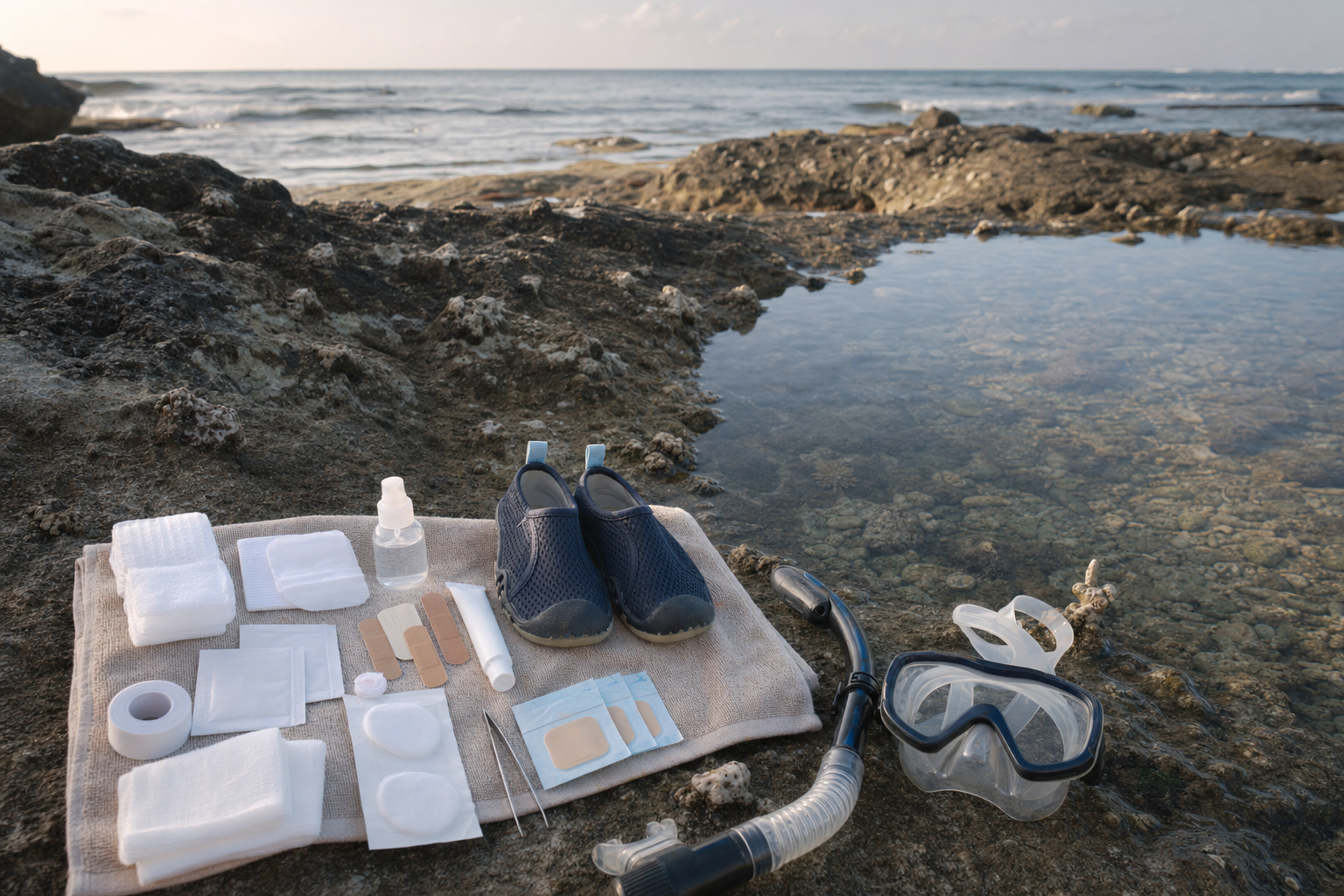
When your child cuts their foot or leg stepping over coral or scraping on barnacles while reef snorkeling, every minute counts. Acting fast can mean the difference between a clean healing process and infection that ruins the rest of your beach trip.
What to Do Immediately: Cleaning and Covering Coral Cuts First Aid Child
First, get your child out of the water. Rinsing an open wound with ocean water risks germs getting in. Use clean, fresh water to flush out debris. If coral particles, sand, or barnacle shell pieces are visible, gently remove them with clean tweezers rinsed or wiped with rubbing alcohol. Next, use mild soap and cool running water to wash around the cut—avoid scrubbing the wound itself aggressively. Mayo Clinic guidance says rinsing under running water lowers infection risk. Applying soap around it and keeping it clean prevents bacteria from entering. (mayoclinic.org)
Apply direct pressure with a clean cloth or sterile gauze until bleeding slows or stops. Once bleeding is under control, pat dry gently, apply a thin layer of antibiotic ointment, and cover with a sterile bandage. Keeping the wound moist helps it heal without excessive scarring. HealthyChildren.org advises washing with soap and water, applying antibacterial ointment, and using a dry dressing. (healthychildren.org)
Avoid swimming with the open wound. Let the wound heal closed before letting water back on it—saltwater and marine bacteria can easily infect cuts, especially those from barnacles or jagged reef edges. CDC confirms that germs in natural waters can lead to infections if they touch open wounds. (cdc.gov)
Watching for Barnacle Cut Infection Kids: Signs and When to Seek Care
If it’s been 24 hours and the area around the wound is red, warm to the touch, swollen, or oozing pus, that suggests infection. Other warning signs are red streaks extending from the cut, increasing pain, or a fever. If any of these occur, contact your pediatrician. According to Nationwide Children’s Hospital, clean cuts that are poorly cleaned or left unprotected often become infected. (nationwidechildrens.org)
Deep or gaping wounds—including cuts that expose fat, muscle or longer than half an inch—need medical attention and possibly stitches. Even shallow wounds on sensitive areas like the face or over joints should get examined. HealthyChildren.org says that cuts longer than half an inch, gaping, or with visible fat or muscle likely need stitches. (healthychildren.org)
If you swim regularly, especially on reef trips, consider programs like the 10-Week Plan from swimy.org to build your child’s swimming strength, confidence, and water awareness — strong swimmers are less likely to slip and hurt themselves in coral or rocky entry zones. https://www.swimy.org/10-week-plan
Don’t delay medical care. Cleaning and covering wounds matters, but some injuries need professional work within hours. In certain severe lacerations, parent or guardian shouldn’t wait more than 6 to 24 hours for wound closure of deep or dirty cuts. (healthychildren.org)
[[ctakid]]
Preventing Future Scrapes: Before and During Beach Trips
Make sure kids wear closed-toe water shoes or reef-safe footwear. These protect feet from sharp coral and barnacles. Teach kids to shuffle feet rather than stepping directly when walking in rocky ocean areas. Before entering water, inspect the terrain—look for barnacle clusters or brittle coral patches. After swimming, rinse feet and legs right away with fresh water to remove salt, sand and irritants.
Avoiding Common Pitfalls: What Not to Do
Putting kids back in the ocean on the same day with an open cut is risky. Open wounds in water can trap bacteria and lead to marine infections. CDC warns against letting open wounds contact untreated natural water. (cdc.gov)
Don’t overuse hydrogen peroxide, iodine, or alcohol directly on the wound. These might kill germs but also damage skin cells and delay healing. Mayo Clinic suggests sticking with mild soap, water and antibiotic ointment unless a healthcare provider advises otherwise. (mayoclinic.org)
Don’t leave debris inside coral cuts. Even tiny fragments from coral or barnacles can harbor pathogens and cause deep tissue infections. If you can’t safely remove all pieces, seek medical help to avoid complications. HealthyChildren.org notes that cuts with embedded debris carry higher risks. (healthychildren.org)
Expert Analysis: Why These Injuries Can Be More Serious Than They Look
Coral and barnacle surfaces are rugged and porous. When these cut or scrape the skin, they often leave behind tiny splinters or microscopic damage. Those act like tunnels for bacteria. In warm, salty ocean water, bacterial growth is faster. Heat and moisture around the wound also delay clotting, making even small coral cut injuries riskier for kids.
Moreover, a barnacle’s sharp edge isn’t sterile. Barnacles often host algae, microbe films or crustaceans; coral may harbor nematocysts (stinging cells). A cut may feel minor but provoke swelling or infection later. That’s why cleaning and covering cuts from coral or barnacles absolutely shouldn’t be rushed or ignored.
Final Takeaways for Parents
Get fresh water, soap, wipes or running hose ready at the beach. Know basic first aid steps—stop bleeding, clean, cover—and keep supplies like antibiotic ointment, sterile bandages, tweezers handy. Never underestimate a small coral or rock cut—watch for infection signs carefully over the next 24–72 hours. Don’t let your child return to swims or sea time until the wound is closed or cleared by a health professional. Teach kids reef-safe behaviors and footwear so they avoid coral cut first aid child issues before they begin. With prompt care, a little vigilance, and avoiding those beach-time mistakes, your school-age kid will be back snorkeling and exploring safely in no time.
120+ swimming exercises sorted by age — with video and instructions. Developed by swim instructors, completely free.

120+ swimming exercises sorted by age — with video and instructions. Developed by swim instructors, completely free.