Backyard Ponds and Garden Water: Keeping Toddlers Safe Around Non-Pool Hazards
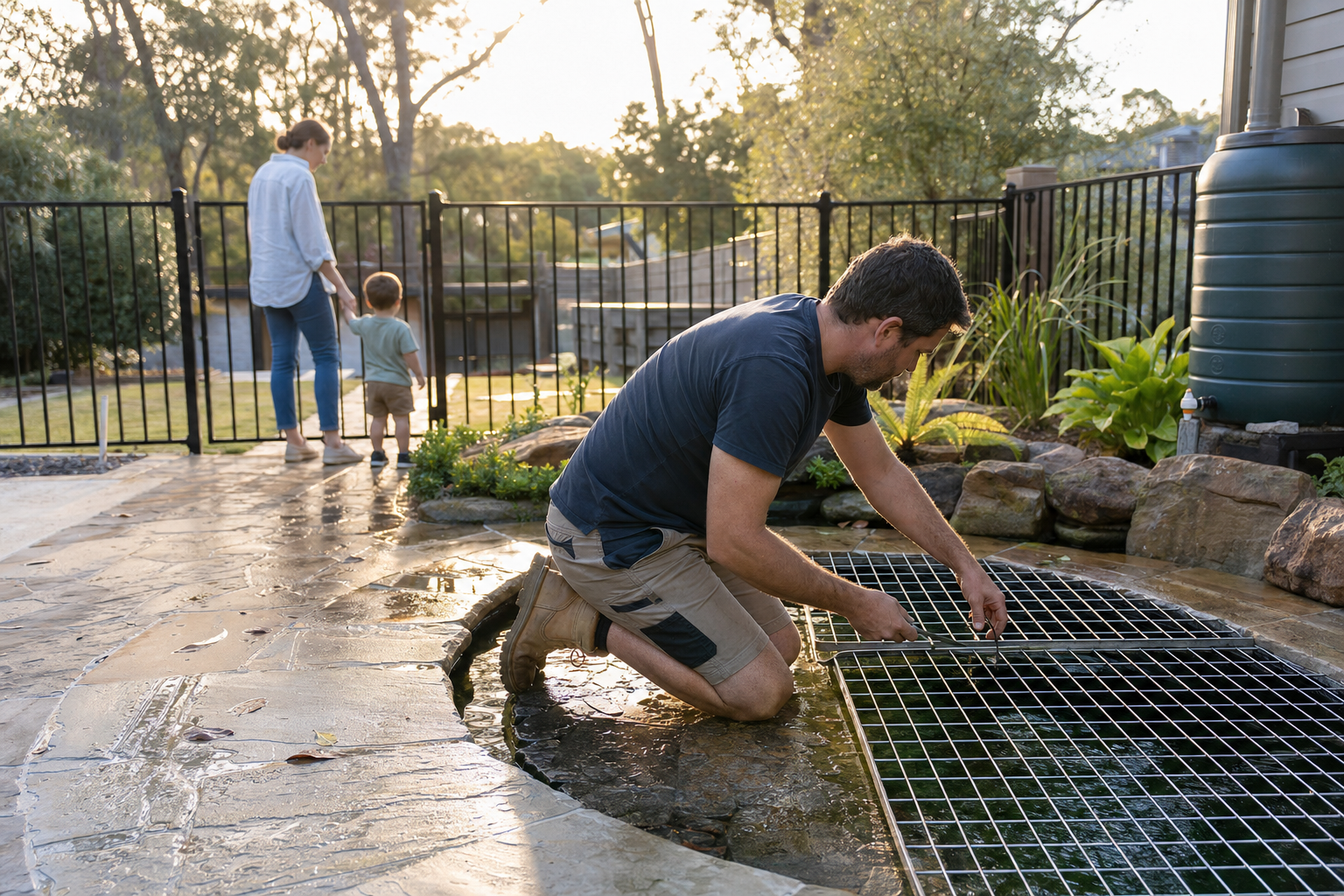
Garden ponds, fountains, decorative water features, rain barrels—all of these can look peaceful, beautiful, or even play-friendly. Yet many parents focus mostly on pool safety and forget the risks lurking in smaller water sources. If your child is between 6-36 months, their natural curiosity and emerging mobility mean they can reach small water features faster than you realise. The most useful thing you can do right now is to spot and address overlooked hazards—and create safer outdoor play zones today.
Why Backyard Water Features Are Danger Zones
Toddlers don’t understand rules, much less danger. Even just a few centimeters of water—like in a rain barrel, bucket, or shallow pond—can pose a drowning risk. According to RoSPA, garden ponds are involved in one in four (26 %) of all child drownings in the home in the UK. (rospa.com) Toddlers are good climbers and explorers, so a decorative fountain or water butt just within reach becomes an unexpected risk. (rospa.com) In Australia, children under five—especially between ages one and three—are most likely to drown in lakes, rivers, or even backyard water containers. (childsafetyhandbook.com.au)
Spotting Overlooked Hazards in Your Yard
To make your garden toddler-safe, first identify hidden threats. Look for stationary features: ponds without covers, fountains with exposed reservoirs, rain barrels, buckets, even pet water bowls. Check for termite-thin or flimsy covers—chicken wire may look protective but won’t hold a toddler. Always inspect gates, fences, and grilles to ensure they’re locked and rigid. RoSPA stresses that a fence should be at least 1.1 metres high and that access points must be secured. There's also guidance recommending that all garden ponds be temporarily filled in or transformed until a child is older than six. (rospa.com) Nature of surfaces around water matters too: slippery stones or unstable stepping stones dent safety. Even simple containers collect rain; an empty bucket can refill unnoticed and present a hazard. (rospa.com)
Practical Steps Parents Can Take Right Now
Fence it, cover it, or fill it
For fixed water features like ponds or fountains, RoSPA recommends a rigid metal grille or a fence with a self-closing, lockable gate as your first line of defence. (rospa.com) If maintaining these isn’t feasible, filling in the feature and turning it into a flower bed or sandpit while the child is under six is a more reliable option. (rospa.com) Rain barrels and decorative containers should have secure lids or covers, not left open even for short periods. (rospa.com)
If you want a structured way to build water confidence at home, the 10-Week Plan guides you step by step.
Supervision: non-negotiable
No safety feature replaces vigilant adult supervision around water. Even when protected, toddlers should never be left unsupervised near any form of water—pond, fountain, or even a water table. Accidents can happen in seconds. (rospa.com)
[[ctababy]]
Empty and store movable containers
Inflatable pools, buckets, paddling pools, water tables—these are high risk. Always empty them immediately after use, store them upside down, and ensure rain can’t refill them when you’re not paying attention. (rospa.com)
Rethink design and materials
Raised edges around pond features help by lifting water away from ground level so toddlers can’t lean in without balance. Shallow margins, safety ledges, textures that aren’t slippery, and hiding climbable objects near water will reduce temptation. A pond that’s only 18 inches (≈ 46 cm) deep with a ledge halfway up gives toddlers something to stand on while trying to escape water. (wm.edu)
When Swimming Safety Isn’t Enough: Broader Skills and Plans
Parents often focus on pool rules, lessons, floaties—but water safety is broader than that. For backyard water hazards toddler safety, you want a layered approach combining education, distance, design, and supervision. Many resources focus on pool safety, but groups like RoSPA stretch beyond that to include garden ponds, rain barrels, and even hot tubs. (rospa.com)
If you want to build a foundation of water confidence, there’s also skill learning available even for children under three. One program—called the 10-Week Plan at swimy.org—walks you through age-appropriate water safety skills in a structured way. It complements—but doesn’t replace—the physical protections in your yard. (Linking to that 10-Week Plan naturally connects what you do outside with what you teach inside.)
Actionable Checklist for Garden Water Safety
Take these steps to reduce risks around non-pool water areas:
- List all water features: ponds, rain barrels, decorative statues, fountains, planters, buckets.
- For fixed features: install rigid covers or build fences at least 1.1 m high with self-latching gates.
- For shallow or movable water: empty after use, cover, and store securely.
- Remove or relocate climbable objects that could give toddler access.
- Keep sight lines clear from windows—ensure you can always see the water area.
- Replace slippery surfaces with mats or textured paving around water.
- Teach simple, consistent rules like “no playing near the water without an adult.” Even though toddlers won’t always follow them, repetition helps.
- Know what to do in emergencies: learn toddler CPR, have phone nearby, and stay calm.
Why This Makes a Difference
Implementing these steps won’t just reduce the odds of a tragedy; it will help you enjoy garden water features with peace of mind. Many parents report feeling relief once ponds are fenced or covered properly, or once buckets are always swept away. The reality is toddlers explore by touching, crawling, climbing—and that means your protections need to stay in place, not be switched on only when company visits. RoSPA data shows that even “very shallow” water sources are involved in many drowning incidents. (rospa.com)
Keeping your backyard beautiful and watery doesn’t have to come with anxiety. By acknowledging that garden water hazards toddler safety deserves as much attention as pool safety, creating multiple layers of protection—barriers, covers, design, and supervision—you can let your child play and discover, without putting their safety at risk.
120+ swimming exercises sorted by age — with video and instructions. Developed by swim instructors, completely free.

120+ swimming exercises sorted by age — with video and instructions. Developed by swim instructors, completely free.