Breaststroke Arms for Kids: Timing That Finally Clicks
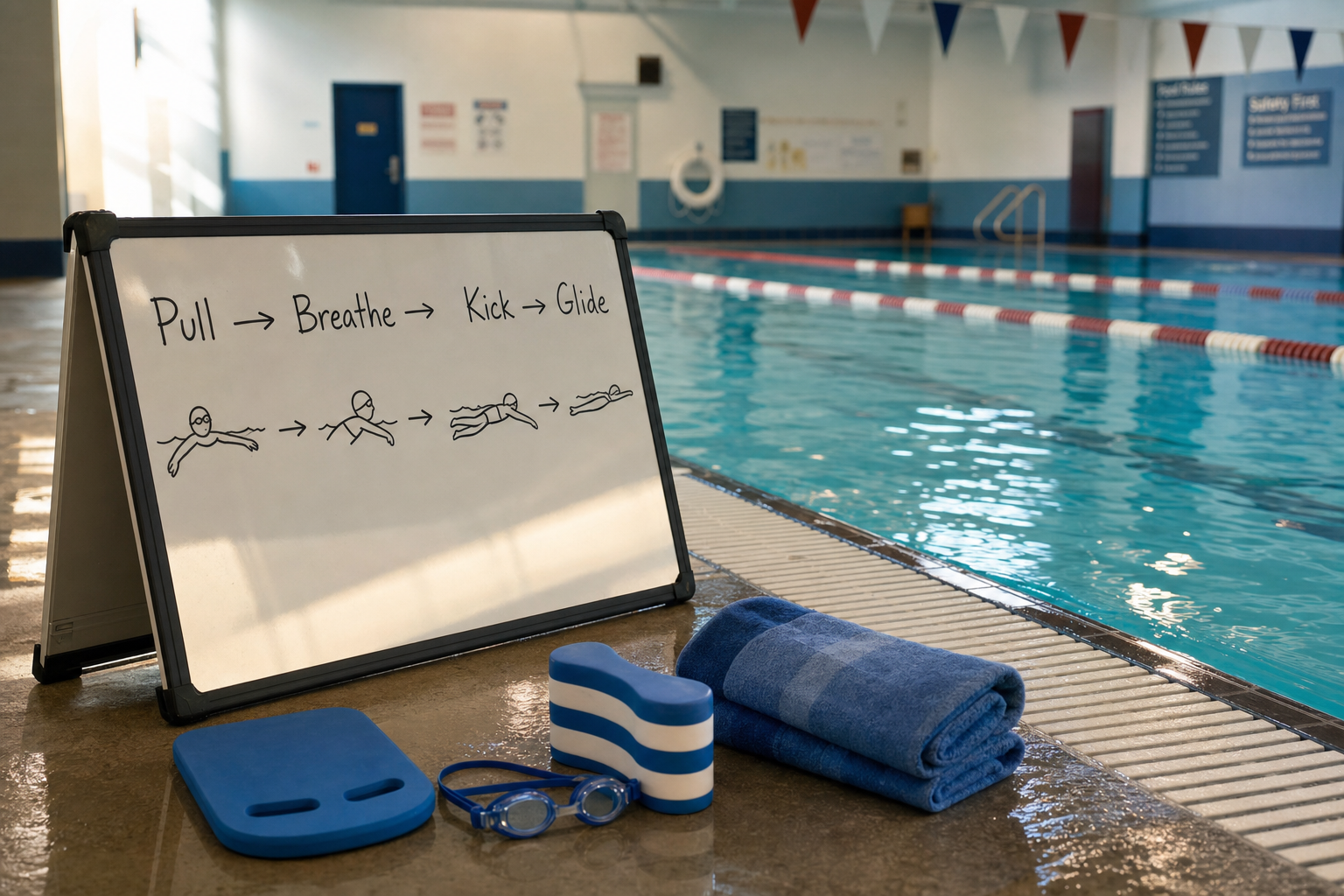
To help your child aged 6-12 stop windmilling in the water and start moving efficiently, the first thing to master is the rhythm: Pull → Breathe → Kick → Glide. When that timing clicks, the breaststroke arms bring power without wasted motion. Let’s dive into how to simplify the arm pull-breathe-glide rhythm, what cue words work well, and two land drills you can supervise between lessons. Always keep work low-volume to protect shoulders, and stop immediately if your child feels pain.
What Kids Get Wrong (and How Timing Fixes It)
Many youngsters rush from pulling into kicking, or breathe too late, or pull too wide like paddles—creating drag. These errors break up the rhythm, forcing arms and legs to fight each other instead of working together. Most experts teach the sequence “pull, breathe, kick, glide” as the foundation for efficient beginner breaststroke technique. This precise order ensures arms create propulsion, breath happens smoothly, legs fire powerfully, and a glide lets momentum carry forward. (cd2.usms.org) Without a clear glide, stroke after stroke becomes a flurry of wasted motion. Rushing the pull or kicking too early means the glide gets skipped, and drag skyrockets. Pulling too wide in the outsweep flattens hips and slows recovery. Breathing late causes the head to pop up abruptly, again disturbing streamline.
Cue Words You and Your Child Can Use
Cue words are magic. They make complex timing simple and memorable. Here are three cue-phrases that help children remember:
“Heart, Cup, Kick, Glide.”
“Pull, Breathe, Kick, Glide.”
“Hands Sweep, Chin Lift, Legs Snap, Float Forward.”
Each puts breathing during the pull and makes the glide phase memorable. Try saying “Pull… Breathe… Kick… Glide” out loud together during a swim. According to coaching guides, mentally naming each phase enforces separation of actions—no overlapping pull and kick, no breathing too late. (singaporeaquatics.com)
Parents can also watch where most inefficiency shows up: Is your child pulling too wide? Are they starting the kick while arms haven’t yet recovered forward? Or maybe the glide is almost non-existent. Use these cues and decide together what to fix next.
Two Land Drills You Can Do Between Lessons
To support the in-pool work and make timing more automatic, try these two land drills. Low impact, no equipment needed.
Dry-land Arm Pull Drill: Have your child stand tall with feet shoulder-width apart, core engaged, arms extended in front—palms together, like they’re touching the wall in a streamline. Then instruct them to sweep their hands outward like drawing a cauldron at chest height, fingers leading. Keep elbows slightly moving outward but fairly stationary. Palm faces backward during the sweep. As hands meet near chest, recover quickly forward, returning to streamline, and hold for two seconds. Then repeat. This builds the feel of a smooth arm pull without water. (swimy.org)
If you want a structured way to help your child progress at home, the 10-Week Plan guides you step by step.
“10-Count Stroke Try”: This is based on swimy.org’s 10-Week Plan for improving stroke technique, which recommends low-volume, high-quality strokes in early weeks. (swimy.org) Pick a stretch of carpet or mat. Your child on hands and knees (or seated), mimic full arm pull with breath timing: pull arms (outsweep + insweep) then pretend to breathe forward, then mimic kick by pressing knees outward (without actual swimming legs), finish by stretching arms forward for the glide. Hold the glide for a slow count of one or two. Repeat 5-10 times. This helps reinforce sequence without fatigue and protects shoulders.
[[ctakid]]
Both drills help kinesthetic sense of timing—how pulling starts, breath aligns, legs kick, and glide happens.
Putting It Together in the Pool Safely
When in the water, keep swimmers’ volume low—short distances with plenty of rest. If you spot shoulder discomfort, pause or back off. Use simplified stroke reps: swim just the pull and breathe sequence, or just glide with arms forward and legs together, to emphasize each part of timing.
Try swim-based drills like doing two kicks per pull or three kicks per pull so arms stay in glide longer, reinforcing that the kick shouldn’t start too early. (usms.org)
Carefully emphasise that the glide phase is not optional—rushing into the next pull wastes the propulsion built by the kick. Keep hips high, head low (chin just above water when breathing), and ensure pull isn’t too wide—that elbow-lead heart-shaped pull is compact and powerful. (waterwisekids.com)
Common Pitfalls and How to Fix Them
One: rushing the glide. You’ll know this is happening if your child never seems to straighten into a streamline — arms always moving, legs always in motion. The remedy: pause at the end of each kick with arms extended. Encourage “arms straight, head down, body like a board”.
Two: breathing late. If their head comes up only after arms recovery is done or during the kick, they’re missing timing—the breathe must happen during the pull (“Breathing during the insweep when hands come in”). Cue “chin up with hands coming together”.
Three: pulling too wide. If the outsweep goes beyond shoulder width or backward, that increases drag and slows recovery. Teach them to pull no wider than about 1.5× shoulder width, keep elbows high, push water backward not downward. Cue “hands sweep wide, push back, hug in”.
If any pain or strain shows, especially in shoulders, reduce reps and ensure recovery is full. Shoulder rest is not optional when learning arms.
Final Thoughts: Where Efficiency Lives
When timing—pull, breathe, kick, glide—becomes intuitive, your child stops windmilling. Efficiency replaces frantic motion. Often it takes slow, deliberate practice: land drills, cue words, low-volume pool reps. Once the rhythm clicks, everything flows: arms pull smartly, breathing feels natural, kick snaps powerfully, glide gives rest and momentum.
With consistent work using the drills and cues above, most kids begin to swim breaststroke smoother in just a few lessons. Stay patient, watch for pain, reward precision over speed—and in time, your child will move through the water with a timing that finally clicks.
120+ swimming exercises sorted by age — with video and instructions. Developed by swim instructors, completely free.

120+ swimming exercises sorted by age — with video and instructions. Developed by swim instructors, completely free.