Pool Hygiene Rules Parents Forget for Baby Swimming
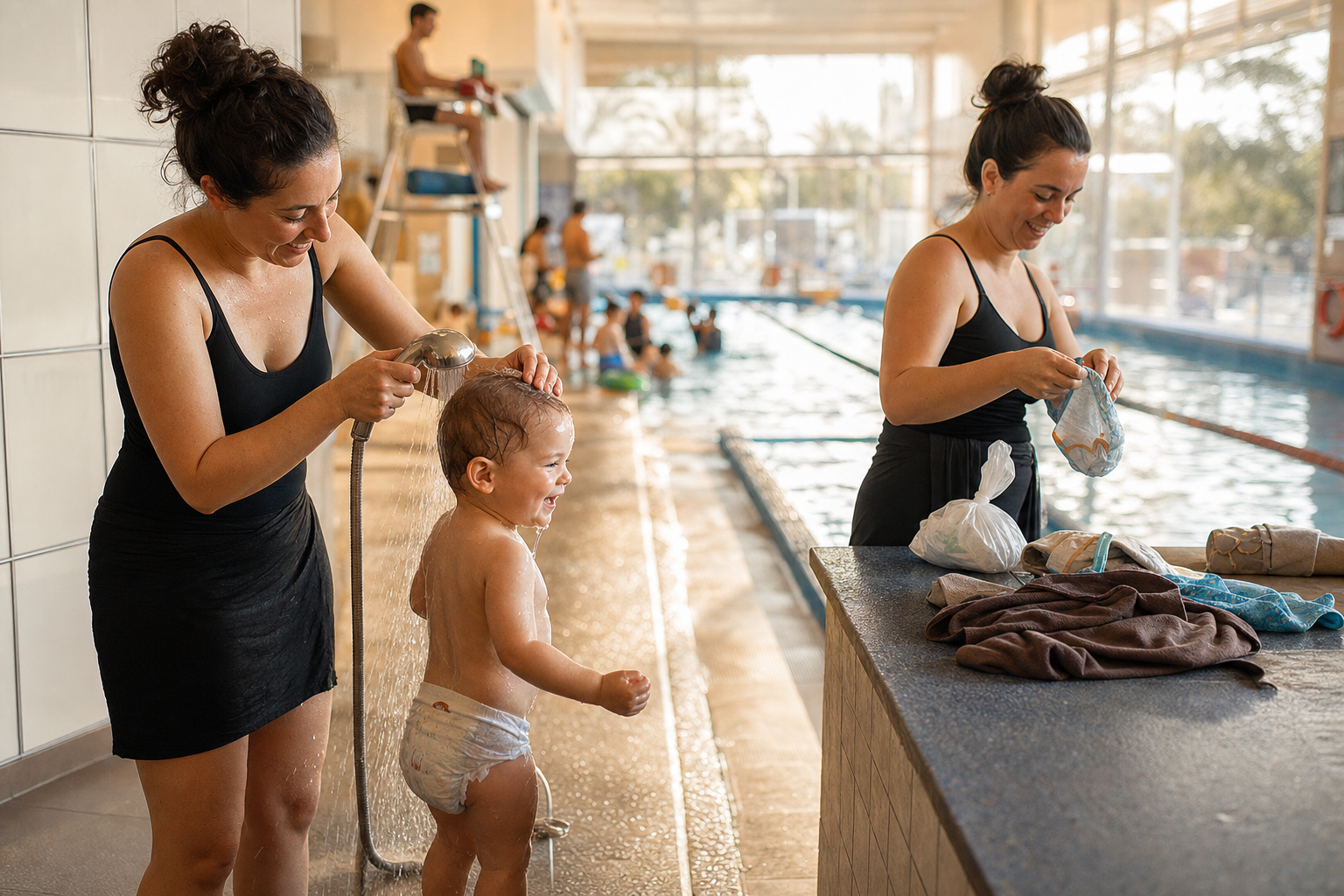
When it comes to baby swimming (0–36 months), parents often focus on what their little one should wear. What gets overlooked are the essential hygiene rules that protect your child’s health and the health of everyone else in the pool. These may seem small, but they make a big difference—especially with non-toilet-trained toddlers.
Why Showers Before Swimming Matter
Even a quick rinse before entering the pool removes dirt, sweat, sunscreen, and germs from your baby’s body. These things eat up chlorine, making it less effective at killing harmful bacteria. Clean skin reduces the risk of spreading germs that can cause skin irritations, eye infections, and worse. According to a recent CDC “Share the Fun… not the germs” guide, showering before swimming helps pool chemicals work properly and keeps the water safer for all swimmers. (cdc.gov)
Swim Diapers: What They Can and Can’t Do
Swim diapers are designed to trap solid waste (poop), not to absorb urine or stop germs entirely. That means if your baby has diarrhea, swim diapers alone won’t protect others in the pool. Research from the CDC clearly states that swim diapers are not leak-proof and do not prevent germ spread in cases of diarrhea. (cdc.gov)
Frequent checking is key. The CDC recommends inspecting and changing swim diapers about every 60 minutes, and always changing them away from the poolside to keep bacteria off surfaces. (cdc.gov)
Stay Out of the Water with Diarrhea
One of the most important rules that many parents forget: babies with diarrhea should not swim. Even with a swim diaper, germs from liquid stool can contaminate pool water. The CDC’s advice is clear—no exceptions. Swimming while sick with diarrhea puts your child and other swimmers at risk of infection. (cdc.gov)
If you want a structured way to build water confidence at home, the 10-Week Plan guides you step by step.
Proper Diaper Changes and Handwashing
Changing diapers incorrectly can spread germs. You should always use designated diaper changing areas—not pool decks—so poop doesn’t fall into the water. Wash your hands thoroughly afterward to avoid transmitting illness. These practices help protect babies and keep pool surfaces clean. (cdc.gov)
[[ctababy]]
Getting Into Better Routine: Health, Lessons, Swim Diapers
If you’ve ever wondered how to build a safer, healthier swimming routine with your baby, here’s what can help. Consistently insisting on pre-swim showers, checking swim diapers every hour, staying out of the water with diarrhea, and always washing hands after changes will save you a lot of trouble.
One strategy is to follow a structured plan. For example, the 10-Week Plan from Swimy.org outlines incremental steps to introduce babies and toddlers to swimming while reinforcing hygiene routines—like always checking diapers and showering first—and developing both water familiarity and good hygiene habits in parallel. (swimoutlet.com)
Less Obvious Rules Parents Often Miss
Parents sometimes know the basic rules but miss these:
Changing Diapers Away from the Pool
Diaper changing areas are essential for hygiene. Changing right on the deck or at the pool edge risks waste—and germs—ending up in the pool or on surfaces where people walk. (cdc.gov)
Handwashing After Every Change
Even if your baby’s swim diaper looks clean, you—as the caregiver—need to wash your hands properly after every diaper change. Germs love to hide around diaper seams and even on plastic coverings. Washing helps stop them from going anywhere they shouldn’t. (cdc.gov)
Bathroom Breaks and Hourly Checks
Check swim diapers about every 60 minutes because poop or leaks can happen quickly. If your pool visit is long, take bathroom breaks. Letting solids or severe leaks go unchecked means they might enter the water. (cdc.gov)
Children gain real health benefits when these rules are followed—fewer stomach bugs, cleaner skin, and a safer swimming experience for everyone. Parents often learn the hard way that swim diapers are helpful but not perfect, that cleanliness beyond clothing matters deeply, and that sometimes the kindest thing is to wait until your child is well before getting back into the water. With care and awareness, pool time can stay fun, safe, and free from messy surprises.
120+ swimming exercises sorted by age — with video and instructions. Developed by swim instructors, completely free.

120+ swimming exercises sorted by age — with video and instructions. Developed by swim instructors, completely free.