Butterfly Without Tears: Dolphin Tag & Body Waves for Kids
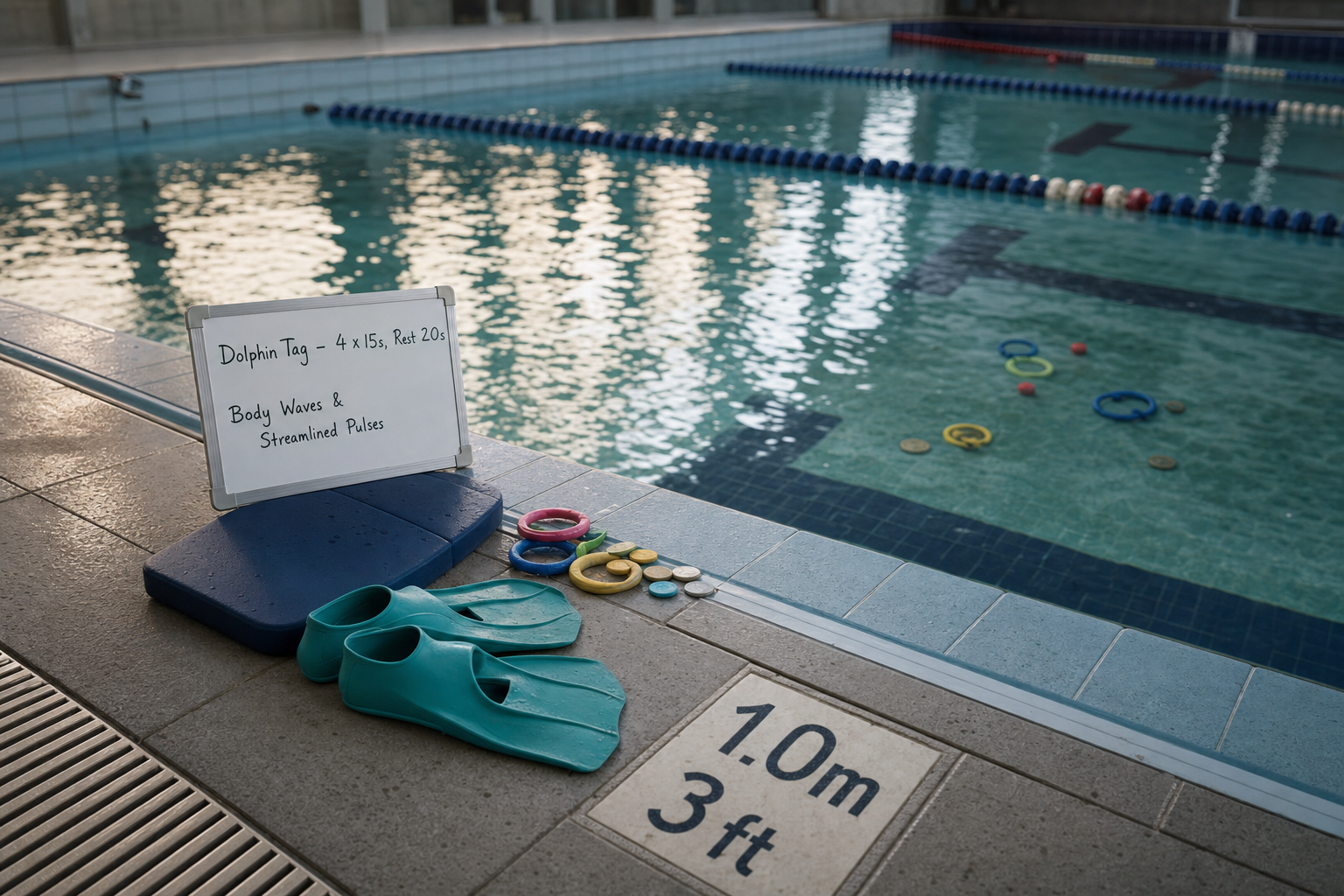
When your child is frustrated by butterfly, it's often not because they don’t want to learn—it’s because the first few swims feel exhausting and awkward. So instead of endless full butterfly laps, start with shallow-water games that build the dolphin kick rhythm and strengthen their core timing. You’ll need only shallow lanes, fun progressions, and sharp limits on reps so you avoid fatigue and shoulder strain.
What Makes Butterfly So Tough for Ages 6-12
Most kids try butterfly and immediately tire from missing two things: rhythm between kicks and arm movement, and strong core support for body undulation. The butterfly stroke (also called the fly stroke) uses two dolphin kicks per arm cycle—one when the hands enter, and one during the pull towards the hips—and your child’s body should move like a wave. The chest presses forward, hips follow, legs snap down. More than power, it’s this kick-arm timing that makes butterfly efficient, joyful, not just exhausting. (sgsinkorswim.com)
Over-volume (too much distance), fin overuse (especially long fins), and breath-holding contests make matters worse. Long fins are tempting—they give propulsion—but kids can become dependent on them, losing body position when fins come off. (swimoutlet.com) And breath-holding underwater can be dangerous, even leading to shallow water black-outs. That’s why safety guidelines from Swim England and others warn that young swimmers should never be encouraged in prolonged breath-holding, especially when unsupervised. (swimming.org)
Game-Based Progressions You Can Run During Garden Pool Time
You don’t need full pools or gruelling butterfly sets. Use low reps, frequent rest, and safe progressions in shallow water—about chest to waist depth. Here are two playful progressions parents can do with children aged roughly 6-12.
Dolphin Tag (for rhythm & fun)
This game gets kids moving with dolphin kick while barely noticing technique drills. Choose a shallow lane (no deeper than waist height for younger ones), mark ends of the lane. One swimmer is “it” (the Dolphin). On your go, the Dolphin tries to tag others by swimming dolphin kick only—no arms—that match the rhythm of real butterfly. Others may dodge with flutter kick or freestyle, but must return to dolphin kick when tagged. Limit each round to 15-20 seconds, then rest 20-30 seconds. Do 3-4 rounds max for each child to avoid shoulder overuse. Incorporate short-fin work only occasionally, and move to no fins as soon as possible.
If you want a structured way to help your child progress at home, the 10-Week Plan guides you step by step.
Body Waves & Streamlined Pulses (for core timing)
In shallow water, with hands either extended overhead or by the side, practice body undulation waves: press chest forward, hips down, then legs kick together. Add breath every other wave. Then move into pulses while pushing off the wall in a streamline position: glide, small wave, restore arms, repeat. These drills rewire the motor pattern of butterfly without the arms fatiguing early.
[[ctakid]]
Two Progressions to Try Over a Season (Year-Round)
These progress gradually over weeks and months, not in one session. Use shallow lanes only. Cap total butterfly-oriented activity per session to maybe 20-30% of time so arms aren’t being overtaxed.
Progression A: Dolphin Rhythm First (4-week block)
Weeks 1-2: Body dolphin waves and pulses only. Hands overhead or at the sides. No fins. Very short sessions.
Weeks 3-4: Introduce single-arm butterfly drills with two kicks per arm stroke. Arms alternate. Use short blades for just one lap per child if comfortable.
Progression B: Game-Based Integration (4-week block)
Weeks 5-6: Play Dolphin Tag and other kick games like “fetch the pennies”—kids dive a short distance off the wall using dolphin kick, collect sinkable toys. Always without breath-holding or too long under water. (swimatlas.com) Weeks 7-8: Blend into short full strokes in shallow lanes, combining body waves, single-arm, double kick sets. Use short blades only 20-30% of time. Rest plenty. Always monitor shoulder fatigue.
You can adapt these progressions into broader swim curricula like the 10-Week Plan from swimy.org, weaving in game-based play and drill blocks to make butterfly practice something kids look forward to rather than dread. (swimy.org)
How to Use Fins, Reps & Breathing Safely
Long fins help early feedback by boosting propulsion and allowing kids to feel alignment without sinking. But over-using them or using them always makes kids lazy in stroke timing without fins. Use long or soft blades only for warm-ups or a few short drills each session. Short blades are better for short bursts when you want race-tempo feel. (swimoutlet.com)
Limit reps: no more than 4-6 short dolphin-oriented drills per session. Total “fly-related” distance should stay modest so shoulders recover between sessions. Rest is key. Breathing should never be optional. Teach breathing with the body wave, not as a pause. Never encourage contests to see who can stay without breathing; underwater breath-holding is risky. (swimming.org)
Why These Ideas Work
First, they break the full butterfly into manageable pieces—dolphin kick rhythm and core timing. When kids sense progress in those parts, full butterfly starts to feel possible. Game-based learning taps into natural joy and competition. Shallow water protects against drowning risk and helps kids feel stable while exploring undulation.
Also, low volume protects shoulder joints. Kids ages 6-12 are still developing; over-training butterfly too early damages shoulders and ruins fun.
Final Thoughts: Make Butterfly Fun, Not Fear
Butterfly need not start with long swims or perfect form. Switch frustration to fun with shallow-water games and progressions that build rhythm and timing. Use dolphin kick games like Dolphin Tag, body-wave drills, safe short-fin use, and always breathe regularly. Swim little, often, playful—and watch butterfly become one of the favourite strokes, not the dreaded one.
By keeping sessions light, using shallow lanes, capping reps, and avoiding breath-holding, you give kids ages 6-12 a strong, safe foundation in butterfly drills for kids. Spend a season doing these drills, and when full butterfly swims come, your young swimmer will glide into them with power, timing, and a smile.
120+ swimming exercises sorted by age — with video and instructions. Developed by swim instructors, completely free.

120+ swimming exercises sorted by age — with video and instructions. Developed by swim instructors, completely free.