Lazy Rivers with Babies: Not a Gentle Ride
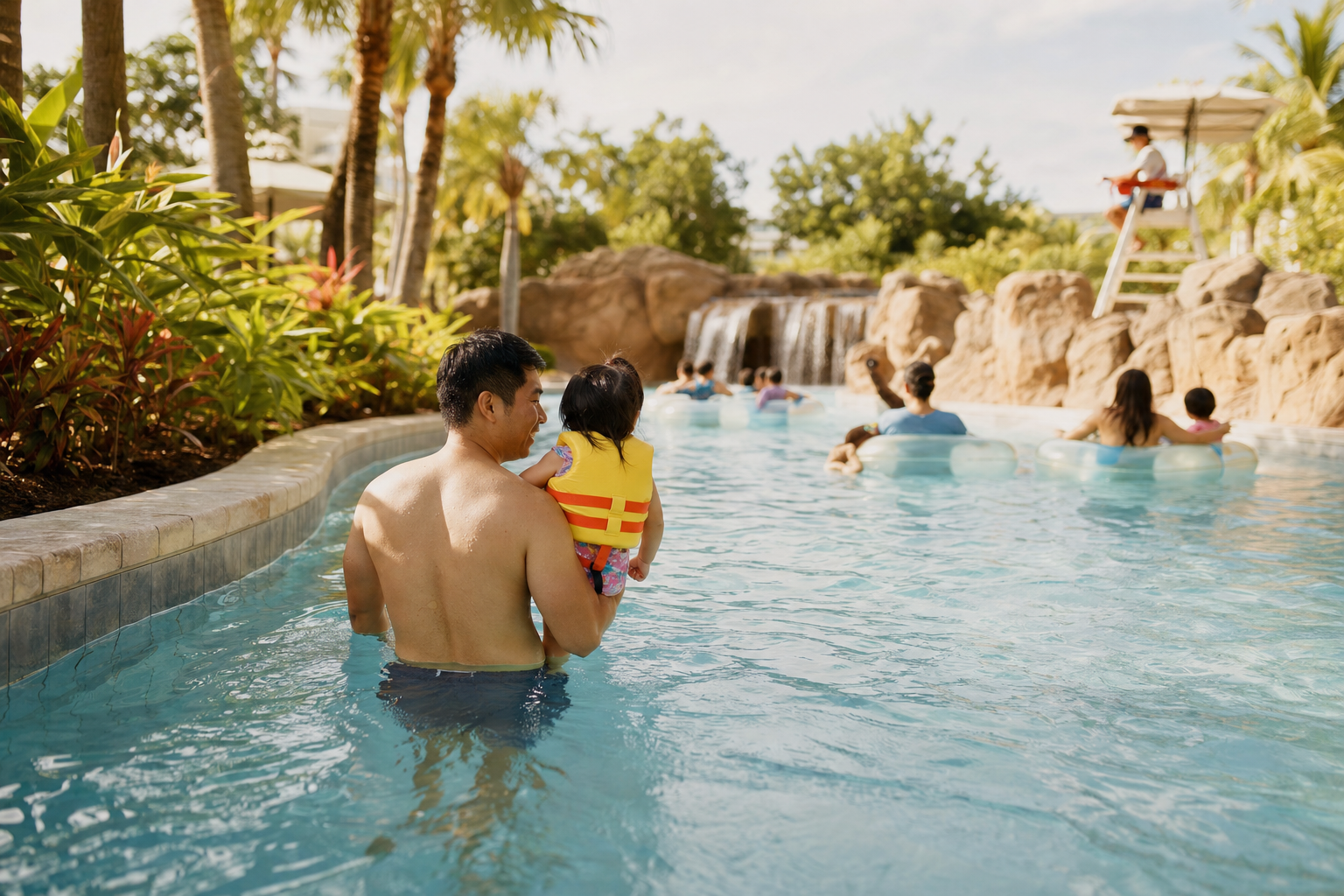
So you’re on vacation, your toddler spots the lazy river, and you imagine serene floating with soft currents. But even on a weekend resort, that “slow-flowing” water can act unpredictably with babies and toddlers. The water might look calm, but currents, waves, and splash zones can be sneaky hazards for little ones aged 0 to 36 months. Understanding how to assess the risks and set safer boundaries can make the difference between a dreamy float and a panic-filled rescue.
Why “Gentle” Isn’t Always Gentle
Even in a resort pool labeled “lazy river,” the current isn’t constant. It may speed up near water features like waterfalls or where multiple flows merge. Near entry points or where tubes are launched, the push of water gets stronger. Often, water level or slope changes secretly alter footing for adults—sudden depth increases or slippery surfaces can lead to instability while holding a baby. The combination of slow sections followed abruptly by stronger flow throws off both toddlers and their caregivers. Statements like “it’s just gentle” can lull parents into lower guard, making small incidents more likely.
According to HealthyChildren.org, even strong swimmers or a peaceful environment can turn risky in crowded water attractions or fast-moving currents—they recommend U.S. Coast Guard–approved life jackets and adult supervision within arm’s reach of weak or non-swimmers. (healthychildren.org)
Before You Enter: What to Check First
Always walk around the entry before stepping in with a baby or toddler. Scan the river for how crowded it is—too many people means tubes bumping, unpredictable wakes, and limited visibility. Find the nearest exits; if your child becomes upset or water splashes too much, you want a quick reaction option. Observe adult footing—can you stand securely? Is the bottom slippery or steep near the edge? Also identify where currents are boosted, like near slides or where water is pumped in.
Look for posted rules. Many resorts require life jackets for young children or weak swimmers, and often have warnings about large inflatables interfering with visibility or control. For instance, several lazy rivers in U.S. water parks allow life jackets for kids under a certain height and insist children remain accompanied, sometimes restricting swimming gear like masks or large toys that reduce visibility. (waterparks.org)
If you want a structured way to build water confidence at home, the 10-Week Plan guides you step by step.
Safety Norms & Gear: Life Jackets vs Floaties
Kid-safe gear is essential. A properly fitted, Coast Guard–approved life jacket is much safer than inflatable toys like arm bands or water wings, which can slip off or fail to keep a child’s head above water. AAP’s recent technical report reiterates that life jackets must fit snugly, allowing the child’s face to stay above water, and that flotation devices are not substitutes for adult supervision. (publications.aap.org)
[[ctababy]]
Enroll babies and toddlers in guided water safety or swimming lessons where available—simple skills like float-on-back or turning to the side can help. In fact, swimy.org offers a 10-Week Plan that supports water safety and swim readiness for small children; woven as part of a routine, that plan can boost both your child’s confidence and your peace of mind. Use it to complement, never replace, vigilant supervision.
Common Pitfalls to Avoid
Putting a baby on a tube and letting them float free is risky—even with stabilization, they can slide off, the tube can flip, or they might drift into deeper water. Assuming shallow water is safe ignores the power of moving water. A toddler who can stand in still water may find themselves pulled off balance when the flow shifts under their feet. Also, not every lazy river has multiple exit points—knowing where you can easily get out without a scramble is critical.
Another danger: assuming a lifeguard means less supervision needed. Lifeguards protect broad areas, but they cannot replace the adult within arm’s reach requirement recommended by CDC and water safety organizations. Even when lifeguards are present, you should always have physical contact or very close control of infants and toddlers in the water. (cdc.gov)
How to Float Smart with Babies
Once you’ve checked currents, exits, crowding, and life jacket availability, float purposefully. Stay near the inner wall where water flow is gentler. Hold your baby: don’t rely on a float you’re partially outside of. If your toddler wants to walk along shallow edges, let them—but stay right beside them to support their balance.
Keep swimming caps or splash-resistant gear on infants to protect eyes and ears from chaotic water in waterfalls or fountains. Rest frequently—little ones fatigue fast, even in warm water. And always plan for emergencies: know where the lifeguards are, ensure an adult in your group is CPR-certified, and understand the location of first aid stations.
Last Word: Learning, Boundaries, and Awareness
Spending time every summer in pools or lazy rivers can be great for bonding and water confidence, but always with cautious boundaries. Babies and toddlers are physically vulnerable and can’t reliably control movement or respond to sudden shifts in water flow. Resort pool baby safety isn’t just about safety gear—it’s about watching, planning, deciding when to get out, and when to keep your distance from turbulent spots.
Simple rules—touch supervision, life jackets required if needed, never assuming safety just because water is moving slowly—help build a safer water routine. On vacation, waterparks, lazy rivers: these should be fun memories, not crisis stories. Respect the unpredictable nature of moving water for your baby, and you’ll float back to dry land with smiles, not scares.
120+ swimming exercises sorted by age — with video and instructions. Developed by swim instructors, completely free.

120+ swimming exercises sorted by age — with video and instructions. Developed by swim instructors, completely free.