Term-Time or Drop-In Baby Swim? What Works for Your Baby—Weekly, Intensives, or Trial Classes
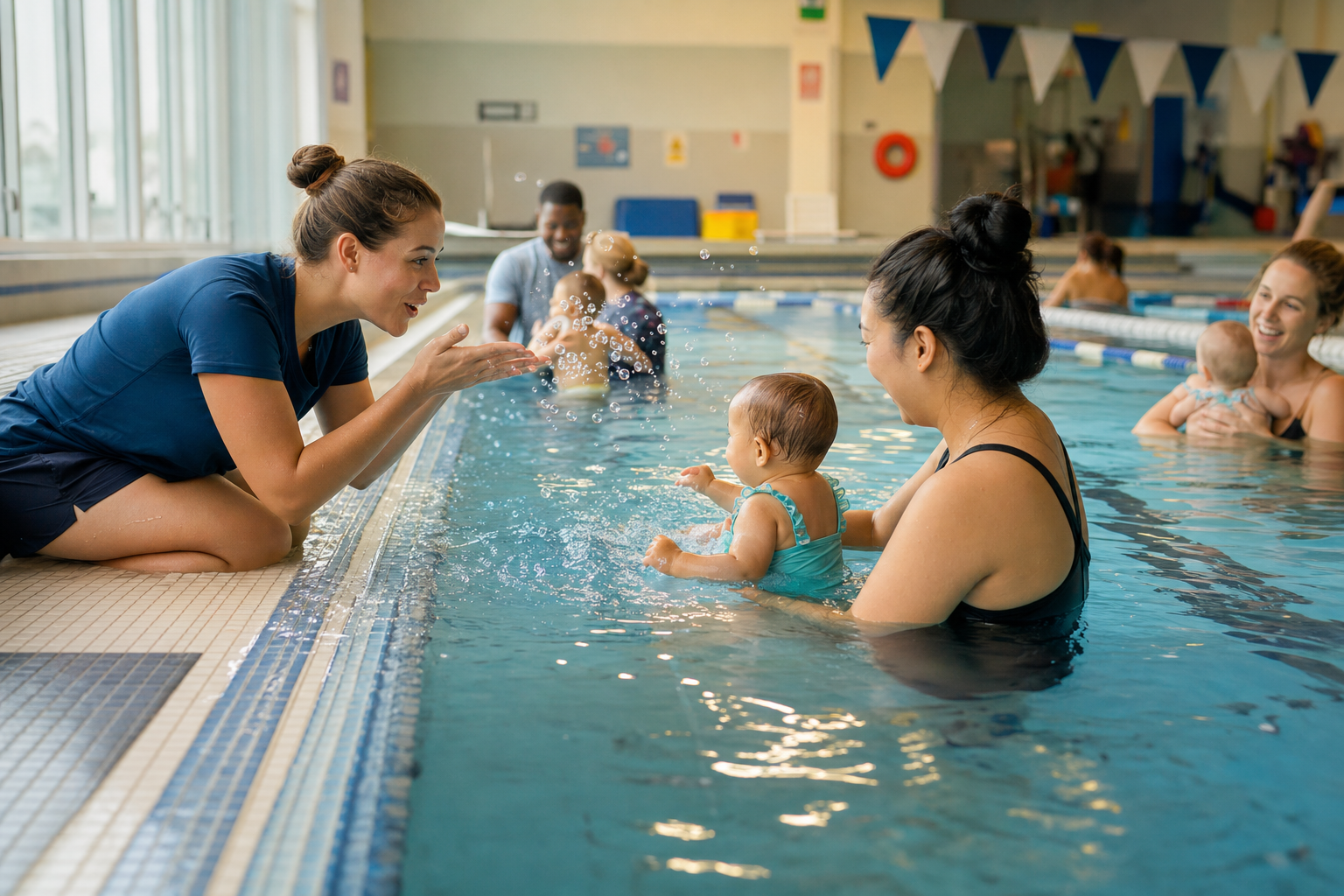
If you’ve ever wondered whether enrolling your 6- to 36-month-old in weekly infant swim classes, attending holiday intensives, doing a drop-in baby swim session, or trying a swim trial class is best, this article breaks it down. We’ll compare formats based on your child’s temperament, nap schedule, and how much repetition they need. You’ll also learn how missed classes can affect progress, how different formats support confidence, and what questions to ask before you commit—or pay.
Weekly Infant Swim Classes: Repetition Builds Confidence
For most babies and toddlers, weekly infant swim classes (one session per week) provide the right rhythm. These lessons offer consistent exposure to water comfort, breathing cues, and gradually more challenging skills. Research supports this distributed practice: weekly or twice-weekly lessons over months lead to solid long-term retention of aquatic skills.(waterwisekids.com)
Because many children aged 3–36 months are still mastering basic motor control, predictable weekly lessons give them time between classes to process what they’ve learned, sleep on it (literally), and return calmer. If your child’s temperament favors repeating the same routine, weekly classes are most forgiving. Also, with a reliable schedule, missed lessons are less disruptive when there is a generous make-up policy. WaterWiseKids warns that restrictive policies with no or few make-ups can blow out cost and slow progress.(waterwisekids.com)
Drop-In Baby Swim Lessons & Trial Classes: Flexibility with Trade-Offs
Drop-in baby swim lessons let you attend only when it suits you—handy when your baby’s nap schedule is unpredictable, or for travel. Trial classes allow you to test the waters before committing, especially helpful when selecting the right level and instructor. Programs like Superhero Swim Academy use trial classes not only for placement but also to see how your child deals with new sensory input, breathing, water spray, listening, and comfort.(superheroswimacademy.com)
However, drop-in or occasional sessions tend to slow skill development, especially with young toddlers still forming basic responses. Without repetition and structure, water comfort may remain shallow, and infants may regress more easily. If you lean this way, try to combine with some weekly classes or home water play for better results.
Holiday Intensives: Fast Gains, Short Lives
Holiday intensives (daily lessons over 1–4 weeks) are great when you want rapid progression—for example, preparing for a water-rich holiday or overcoming fear. Massed practice gives obvious gains fast. But for babies under 3, too much intensity can overwhelm them. Weekly classes build deeper retention. Experts recommend balancing the two: maybe start with weekly sessions, then supplement with an intensive when needed.(waterwisekids.com)
If you want a structured way to build water confidence at home, the 10-Week Plan guides you step by step.
Also, intensives tend to be more expensive upfront and may offer less guaranteed make-ups for missed classes. Temperament, nap disruptions, or illness during a packed schedule can erode gains quickly.
The 10-Week Plan: A Hybrid Pick That Gives Structure and Exposure
If you’re unsure, a program like the 10-Week Plan from Swimy.org can be a strong middle ground. Following a weekly schedule but over a fixed, manageable block gives your baby exposure and routine. It allows parents to see clear progress over those ten weeks, while still keeping cost and time realistic. By the end, you’ll have a good sense of what format suits your child’s learning style—and whether to commit long term.
How Missed Classes Affect Progress
[[ctababy]]
Missed weekly lessons, illness, or travel are inevitable with little ones. What matters most is the swim school’s make-up and cancellation policy. Some schools offer "make-up tokens" if you report absence 24+ hours in advance, others allow banked classes usable over 30–90 days. Many restrictive programs simply forfeit missed lessons.(coswimschool.com)
Missing too many sessions breaks the routine that builds familiarity, comfort, and gradual skill layering. That can delay milestones like floating, kicking, breath control. If the program allows flexible make-ups and consistent instructor continuity, missed classes are a setback—not a step back.
Matching the Format to Your Baby’s Needs
Temperament: A baby who gets overstimulated may thrive in a small, gentle weekly class rather than an intensive. If they’re very outgoing, intensives or drop-ins might feel exciting.
Naps & Energy: Schedule lessons when your child is rested—often right after naps. A grumpy under-rested infant will not gain much in any format.
Repetition & Routine: Most babies need at least 8-12 weekly sessions to settle into the rhythm and show comfort. A trial class is helpful for placement and expectations, not for mastery.(waterwisekids.com)
Age Range: For children aged 3–36 months, structured weekly parent-child classes are typical. From 6 months, water acclimation builds comfort. Walking toddlers need lessons that allow exploration and gradual separation.(heloa.app)
What Questions to Ask Before You Pay
Before signing up, ask these critical questions:
What is the water temperature? For infants and toddlers, warm pools around 86–92°F are optimal. Cold water causes discomfort, chills, and fatigue.(waterwisekids.com)
What are instructor qualifications and continuity? Look for instructors certified in infant aquatics, CPR/First Aid, and small class ratios (4:1 or lower). Having the same teacher helps build trust.(waterwisekids.com)
Refund, cancellation, and make-up policies: How many missed classes can be rescheduled? Under what notice period? Do banked make-ups expire? Are there fees for cancellations?(waterwisekids.com)
Is the class age- or skill-appropriate? What skills will they work on? For babies under 2, look for water survival, floating, breath control—not strong strokes or long distance. Ask whether the class mixes ages widely.(babyotterswimschool.com)
Pool conditions and hygiene: Chemical balance, water clarity, shallow depth for parent-support, secure deck surfaces. Tiny bodies are sensitive to chlorine and cold.(waterwisekids.com)
Final Thoughts: What Format Builds Confidence Best
Weekly weekly infant swim lessons are usually the safest bet for 3- to 36-month-olds who need repetition, predictability, and small-group safety. They build water confidence more gradually but more sustainably. Trial classes help reduce risk of mismatch, while drop-in sessions offer flexibility but less structure. Intensives can accelerate progress, but risk overwhelming very young toddlers and are harder to sustain long term.
Choose based on your child’s temperament and schedule. Make sure you ask the right questions—water temperature, instructor continuity, refund rules, age appropriateness—before you commit. Whether it’s a “baby swim trial class,” “drop in baby swim lessons,” or “weekly infant swim classes,” the best format is one that matches your baby’s rhythm, helps them feel safe, and gives you peace of mind.
120+ swimming exercises sorted by age — with video and instructions. Developed by swim instructors, completely free.

120+ swimming exercises sorted by age — with video and instructions. Developed by swim instructors, completely free.