Rivers with Kids: Eddies, Strainers, and Safe Entry Spots
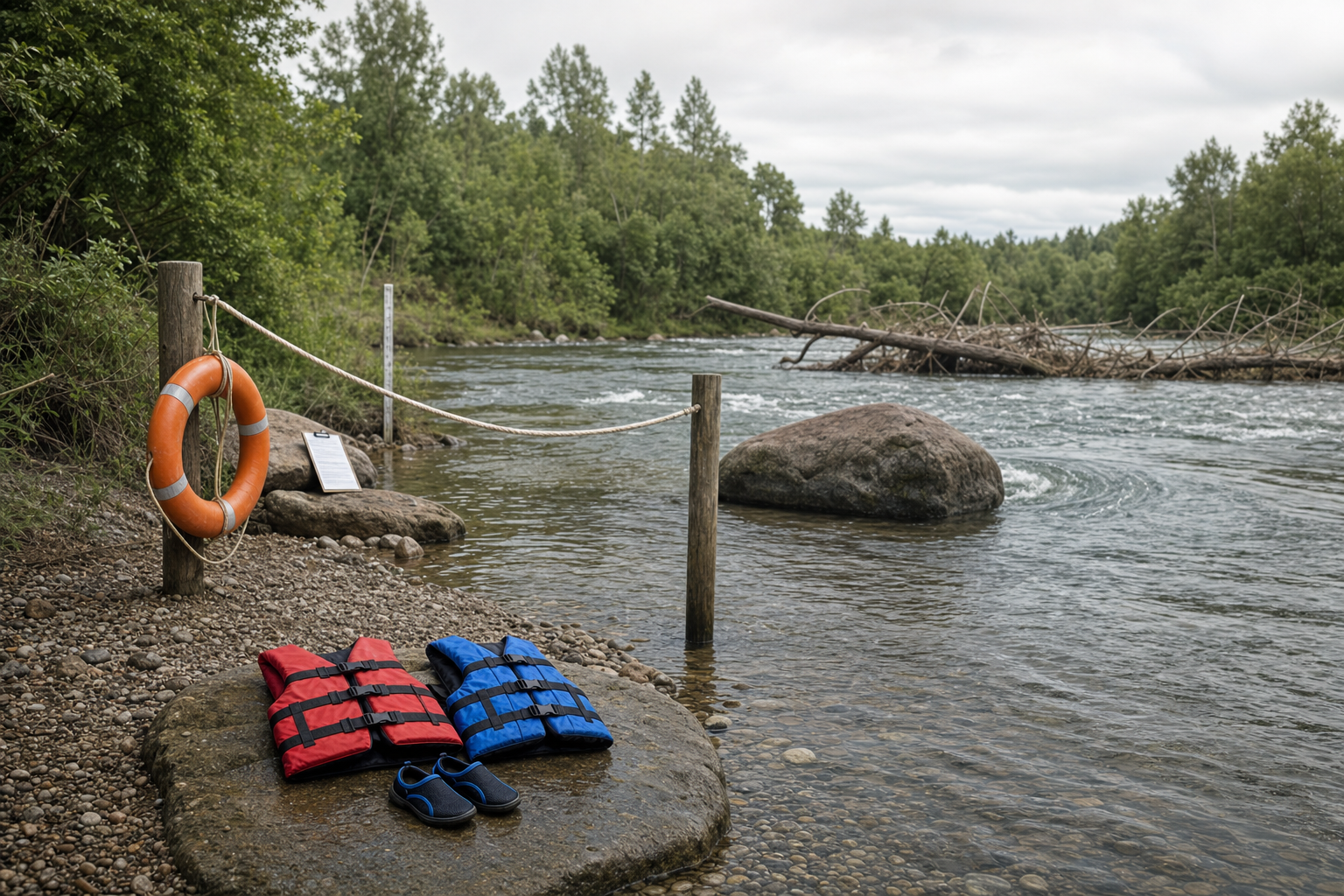
If you’re planning a river swim with children aged 6–12, knowing about eddies, strainers, and safe entry spots can make all the difference to safety. Let’s get right to the most important stuff so families can wade and swim with confidence this spring and summer.
What Every Parent Must Know Before Anyone Gets in the Water
First, always have each child wear a USCG-approved life jacket in moving water. The water in rivers can sweep kids off their feet fast. For children under 13, many states require life jackets by law, especially on moving vessels or in currents. Even when the river looks calm, deep or fast sections or cold shock can kick in suddenly. The National Park Service emphasizes: in natural bodies of water like rivers, currents, cold, and hidden obstacles make conditions dangerous even for good swimmers. Wearing a proper life jacket isn’t optional—it’s essential. (nps.gov)
Water clarity matters too. After rainstorms or during flood flow, rivers may become murky, hiding hazards like rocks, branches, tires, or even glass. Cold river water can lead to cold‐shock—rapid breathing, loss of coordination—which may overwhelm even experienced swimmers. Start with shallow water, allow children time to acclimatize, and enter feet first—no diving.
Eddies and Strainers Explained
Parents often ask: what are eddies? What are strainers? How do they affect river swimming safety for kids?
Eddies
An eddy is a circular or reverse current that forms behind an obstruction—like a large rock, a fallen tree, or a river bend. The water flows around the obstruction, then back upstream into the calm pocket behind it. It creates a space where swimmers experience less current and more control. According to guides from both kayaking communities and river safety experts, eddies can serve as rest stops—but the boundary between the eddy and the faster main river flow, called the eddy line, can be turbulent. Cross it blindly and you might be pulled downstream suddenly. (paddleroundthepier.com)
Many children find eddies to be favorite spots: calmer water, shallow edge, ideal for play. Teach kids how to stay within the eddy—away from that eddy line—and to move downstream of the eddy’s obstruction where the flow is gentler.
Strainers
A strainer is any obstruction that allows water through but blocks larger objects—trees, branches, or debris caught across flow paths. These are extremely dangerous because if a swimmer or child hits a strainer, the current can push arms, legs, or clothing through the gaps, trapping them against it. The danger is often invisible until it’s too late. River safety resources warn strongly: avoid areas with strainers, even in slow water. (nps.gov)
If you want a structured way to help your child progress at home, the 10-Week Plan guides you step by step.
Choosing Safe River Entry and Exit Spots
Here’s where many families slip up—picking risky spots. Use this quick scouting checklist before anyone touches the water:
- Look for a bank or shore that’s gently sloped, with firm footing. Avoid vertical drops or slippery mud.
- Pick a place where you can see the bottom. If water is murky, avoid getting in until it clears or until you’ve tested the area on foot.
- Check for hidden debris underwater—logs, rocks, old fence posts—that could snag feet or limbs.
- Find points where the current is slow—often downstream from an eddy or along the inside of a river bend. These are safer for entry and exit.
- Always identify multiple safe exit points both where you get in and further downstream; if someone gets swept, you need options.
- Be especially cautious of low‐head dams, ledges, or waterfalls—even these small hazards can create hydraulics, recirculating water that pulls swimmers back. (vdh.virginia.gov)
[[ctakid]]
Practicing a feet‐first entry teaches kids how to probe depth, adjust to temperature, avoid slips, and assess what’s underfoot. It’s also much safer than diving, especially when you don’t know what’s beneath.
Teaching Kids How to Move Safely in Rivers
Show children these basics before hitting the river:
- Always wade in feet first. Test the bottom with their toes or with a stick.
- If caught in current or accidentally tip into fast water, roll onto their back, point feet downstream with toes up, use feet to push off obstacles, and try to reach shore rather than fight the current.
- Teach them to move away from strainers. Even if the water seems shallow, snagged limbs are a serious risk.
- Encourage them to look for eddies—those calm pockets—and stay within them when facing stronger currents.
Parents and guardians should model this behavior too. Kids will learn fast by watching.
Seasonality: What to Watch for in Spring and Summer
During spring, rivers often rise from snowmelt or heavy rains. That increases flow, hides hazards, and reduces clarity. Murky rushing water isn’t just scary—it’s dangerous. Summer can bring warmer water—but also thunderstorms, sudden flows, or changing conditions upstream.
Before planning a swim day, check recent rainfall, river gauge readings, weather forecasts. In many regions, river authorities or environmental health departments post alerts about unsafe water levels or high bacteria counts. Use those to decide if a spot is safe today. Also, keep in mind cold water’s effect: even in early summer, snowmelt can keep water temperatures below safe levels, rapidly leading to hypothermia in children.
Putting It All Together: A Family Safety Plan
Start every outing with a plan. Below the midpoint of your adventure is a strong place to introduce a longer-term training idea like a swimming or river survival plan:
You might consider enrolling children in structured swim-lesson programs that teach river-specific skills during spring-summer. For example, the 10-Week Plan from swimy.org includes practice tasks that build confidence in water, teach feet-first entries, and help children learn to move safely away from hazards like strainers or strong currents. Fit sessions into weekends so kids gain water sense.
On the day of the swim: use your checklist. Ensure every child has a properly fitted USCG life jacket (check labels and weight ratings). Designate an adult watcher who's sober, focused, close to shore. Practice entry and exit together. Mark the safe area, show the kids where the eddy lies, point out hazards and exits. Confirm weather is stable and water is clean.
Rivers are magical places for families: cool water, laughter, adventure. But hidden beneath that we must read the currents. Understanding eddies and strainers, using safe entry points, and teaching good habits don’t just reduce risk—they build lifelong river wisdom. Keep safety first, stay observant, and enjoy those summer days with confidence.
120+ swimming exercises sorted by age — with video and instructions. Developed by swim instructors, completely free.

120+ swimming exercises sorted by age — with video and instructions. Developed by swim instructors, completely free.