Read Tides Together: Family Basics for Bays & Estuaries
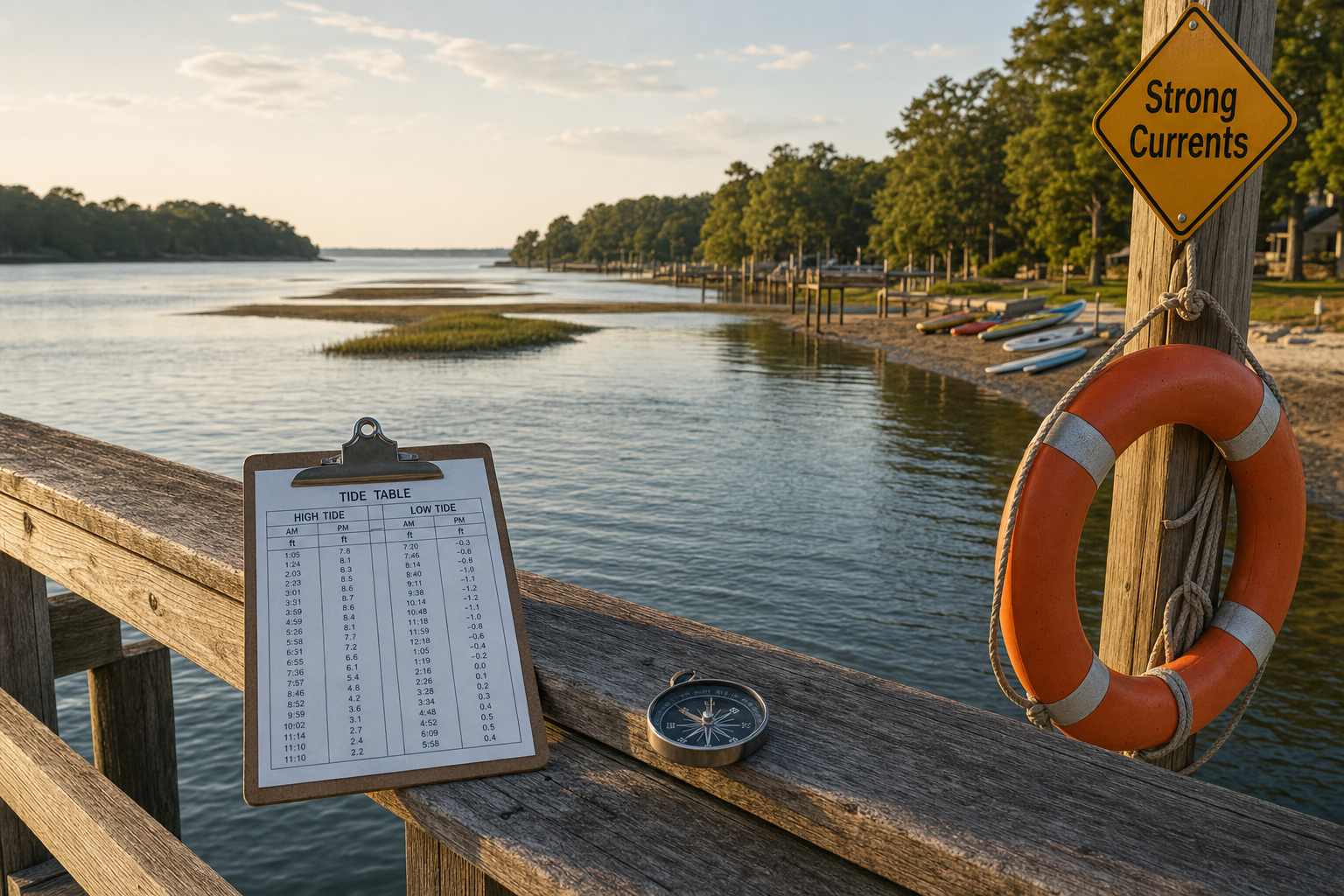
Want to plan a safe, fun paddle or wade with kids? It starts with family tide safety. Before heading out to a bay, estuary, or sheltered harbor, parents need to know how to read tide tables with kids, understand currents, and avoid common mistakes.
How to Read Tide Tables with Kids
Tide tables tell you when high and low tides happen and how high the water will get. For children ages 6-12, it helps to explain that high tide means water is up near docks or covering sandbars, and low tide means water pulls back, exposing mud or rocks. When reading a table, find the time for high tide and low tide for your chosen beach or bay and note the height in feet or meters.
Tide tables are different from current tables. The height of the tide doesn’t tell you how fast the water will move. That comes from tidal currents—flood (when water moves toward shore) and ebb (when water moves out)—which often reach their fastest speed just before a high or low tide. NOAA’s Current Predictions service shows exactly when flood and ebb currents are strongest and when slack water (when current is weakest) occurs. (tidesandcurrents.noaa.gov)
To make this hands-on, consider using tools like mobile apps, local harbormaster stations, or NOAA-provided stations to look up tide and current info. If you follow a plan like the swimy.org’s “10-Week Plan” when building confidence in the water, you can practice reading tide tables together with your child while doing land-based activities in spring through autumn.
Spotting Flood & Ebb Flow
When the tide is rising, water is flowing in (the flood), filling bays and estuaries. When the tide drops, water flows out (the ebb), often dragging toward inlets or river mouths. Teenagers may already feel “drag” on their legs as the water starts ebbing—this is a natural sign to move to shallower or safer zones.
Weather and moon phases affect how strong the flood and ebb are. During spring tides (points when the sun, moon, and Earth align—around full or new moon) water rises higher and currents move faster. Conversely, neap tides (moon at first or third quarter) have smaller differences in water height and slower currents. Spring tides are sometimes called king tides when combined with the moon being closer to Earth. (oceanservice.noaa.gov)
Teach kids to watch the moon phase and relate it to tide behavior. It makes this feel like science class in action—and reinforces the difference between height of water and strength of flow.
If you want a structured way to help your child progress at home, the 10-Week Plan guides you step by step.
Choosing Safer Timings & Entry Points
To stay safer when paddling or wading, pick times when tides are not changing rapidly. Early morning or late afternoon often offer more predictable, less windy conditions and weaker currents after spring and neap transitions.
Use slack water—that moment between flood and ebb, when currents slow—to enter or exit the water with kids. Avoid inlets, mouths of rivers, or narrow channels that can concentrate flow and become dangerous, especially during peak flood or ebb. Stick to sheltered spots or lifeguarded beaches where possible.
[[ctakid]]
Also, watch for king tides. Even though “king tide” is popular-non-scientific lingo, it refers to very high tides—this is when cliffs, docks, or rocks that are usually dry get flooded, and currents near estuary bends can be intense. (en.wikipedia.org)
Safety Rules to Reinforce
Explain that tide height plus current speed are not the same. A high tide might look calm, but strong flood or ebb currents beneath the surface can sweep feet or paddles away. Always check tide tables and current predictions together. Don’t rely on water height alone.
Never ignore local advisories. Look for posted warnings, lifeguard flags, or guidance from ranger stations or marine safety authorities. If locals warn of strong flow, bad weather, or sudden changes, take them seriously.
Avoid inlets or any spot where flow is funneled, especially if the current is moving swiftly. Even a skilled older child can be overwhelmed by strong currents there. Always supervise up close in zones where water meets river or stream discharge, especially in bays or estuaries.
Real-Life Example & Seasonal Tips
Last summer, I brought my 8-year-old to a quiet bay in early September. Tide tables showed high tide at 2:30 pm and low at 8:45 pm. Spring tide around full moon meant strong flood early in the afternoon and strong ebb later. We entered the water around 1 pm during flood, to paddle safely away from inlets before current peaked, and left before ebb when the flow pulled toward marshes.
Between spring and autumn, water temperatures are warm, weather is more stable, and the kids are stronger swimmers. But those months also bring mushrooming king tides on many coasts, meaning unusually high water during spring tides. Watch for those full and new moons—around those dates, use more caution, pick sheltered spots, and avoid narrow channels. NOAA and organizations like the EPA provide forecasts for king tides and potential coastal flooding. (epa.gov)
Teaching Kids in the Moment
A fun way to help children ages 6-12 grasp these ideas is to watch a tide transition together. Head to a bay or estuary just before slack water, and mark where driftwood or seaweed floats. Observe as the water rises (flood) or falls (ebb). Ask questions: “Which way is the water pushing?” “Do you feel it at your feet?” Use a ruler or stick to measure how far water comes up beach logs or rocks. This teaches both reading tide tables with kids and understanding currents by doing.
Seasons between spring and autumn are ideal: warm days, safer water, and more daylight for safe outings.
Understanding tides and currents empowers families to enjoy bays, estuaries, and harbors with confidence. Always read tide tables and current forecasts, avoid strong flows and inlets, pick safe times—especially during king tides—and make sure signage and lifeguards are present. Help kids ages 3-12 build both fun and respect for the powerful rhythms of the sea. Safe wading and paddling—and great memories ahead!
120+ swimming exercises sorted by age — with video and instructions. Developed by swim instructors, completely free.

120+ swimming exercises sorted by age — with video and instructions. Developed by swim instructors, completely free.