Swim Lesson Costs in 2026: Smart Ways to Save
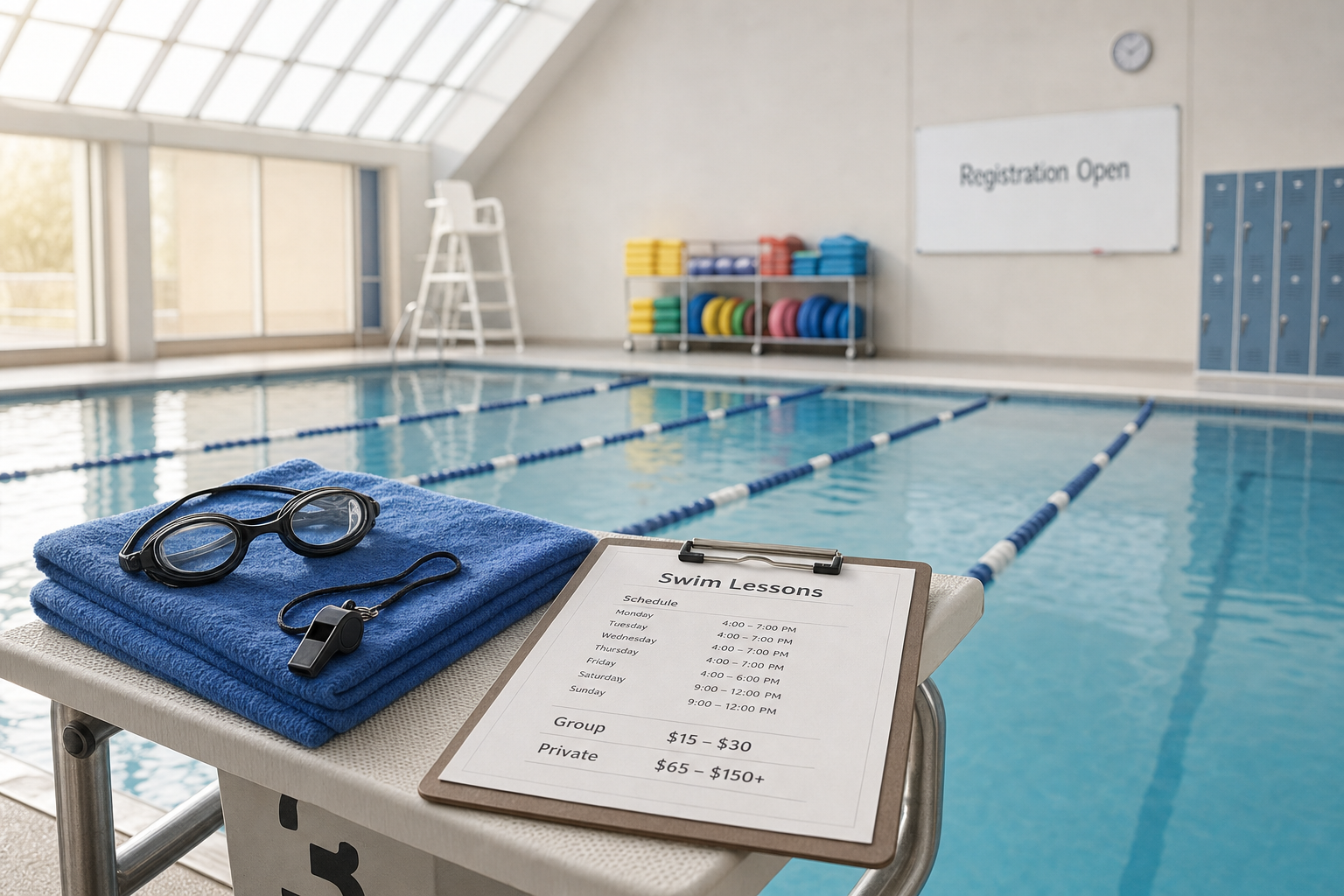
If you're wondering “What’s the swim lesson cost in 2026?”, you’ll find that prices can range widely—public or nonprofit programs might charge $15 to $30 per group lesson, whereas private one-on-one lessons can go from $65 up to $150+, depending on your location and instructor's credentials.(waterwisekids.com)
Below are the best real-world price ranges by provider type, where to find swim lesson financial aid, tips for budgeting and choosing formats, and how to make sure sessions stick so kids ages 3-12 really benefit.
Pricing Snapshots: Public vs Private Programs
Public & Community Pools (YMCA, Parks & Rec, Nonprofit)
For ages 3-12, public and nonprofit group swim lessons usually cost $15–$30 per session (30–45 minutes) in U.S. cities.(waterwisekids.com) These programs often run in spring and summer when demand is high. Membership at a community pool or recreation center can reduce non-member fees by $5-10.(grayslakebusiness.com)
Dedicated Swim Schools & Private Instructors
Smaller, specialized swim schools and private instructors charge $35–$60 per group session and $60–$100+ for private lessons, based on location, pool facilities, instructor expertise, and class size.(waterwisekids.com) Private lessons tend to kick in at the higher end of that spectrum—some premium schools in major cities charge over $150 per session.(waterwisekids.com)
For example, Trail Point Swim Academy offers weekly group lessons for non-members at about $75 per session, while private weekly lessons cost $170.(mytrailpoint.com)
Where to Find Subsidies, Grants & Municipal Discounts
Make a Splash Grants & Scholarships
The USA Swimming Foundation’s Make a Splash program provides scholarships that reduce or even eliminate swim lesson costs for disadvantaged children.(naco.org) Local community partners and swim schools often participate, so check if there’s a partner near you.(make-a-splash.org) Additionally, the Youth Learn to Swim Grant is another USA Swimming Foundation tool funding swim-lesson providers so more children ages 3-12 can access lower costs.(usaswimming.org)
Local Assistance & City-Level Financial Aid
Many municipalities offer financial assistance. For example, the City of Melbourne, Florida accepts applications showing eligibility for free-or-reduced lunch or food-stamp benefits; assistance can reduce swim lesson fees.(melbourneflorida.org) Low-income rates are often available for individual private lessons through city parks and recreation departments. A Seattle Parks pricing guide, for example, lists a discounted 30-minute private lesson for low-income families.(cityofseattle.org)
If you want a structured way to help your child progress at home, the 10-Week Plan guides you step by step.
Australia & UK Local Programs
In Australia, programs like KidSport vouchers help families access swim school lessons at reduced cost, especially in facilities run by leisure centers. At Canning Swim School in Western Australia, KidSport vouchers are accepted to lower lesson fees.(canning.wa.gov.au) Australian programs like GOswim also provide weekly lessons at affordable rates (≈ AUD $16.50 per lesson) with payments via direct debit, which helps with regular budgeting.(tilligerryac.com.au) In the UK, local councils often waive or reduce membership or joining fees, and offer discount cards or concessions for families in receipt of benefits to make junior swim courses more affordable.(gedling.gov.uk)
[[ctakid]]
Planning, Formats, & Keeping Skills Strong
Group vs Private vs Semi-Private
Group lessons are the most affordable and work well for most school-age children learning basic stroke skills and water safety. Private lessons cost significantly more per session but deliver faster progress, especially for children with water anxiety or needing remediation. Semi-private lessons (2-3 kids) offer a balance: better individual attention than group, lower cost than private.(waterwisekids.com)
Budgeting Strategically
Paying month-to-month lets you adjust if lessons aren’t working. Purchasing longer session packages or committing year-round can bring per-lesson cost down. For example, a typical swim school enrollment (once-a-week group) may cost $140-$250/month, versus $260-$450/month for a private lesson weekly.(waterwisekids.com) Be sure to check for hidden costs: registration fees, gear (goggles, suits), pool access fees, or travel.(latestcost.com)
Also explore the 10-Week Plan on swimy.org, a resource that helps parents map out lesson frequency, format mix (group + private), and costs over a manageable span so you can see real ROI. (Note: helps balance cost and skill retention.)
Seasonality & Attendance
Lessons tend to fill up fast in spring and summer, driving up prices. Signups often open in late winter. Booking early can sometimes unlock early-bird or off-season discounts. Maintaining consistent attendance (especially through summer) is critical: gaps of two or three weeks without lessons cause regression—floating, breathing, stroke form slip back. Trust that fewer, consistent lessons across the year beat short, intense bursts.
Safety, Quality & Avoiding Pitfalls
Qualified, lifeguarded programs matter. Always choose instructors certified in CPR, first aid, and recognised swim lesson credentials (Red Cross, national swim bodies, YMCA etc.). Lower price is not worth lower safety.(fitness.costhelper.com)
Avoid paying for a lesson without asking: “What is class size?”, “What’s instructor-to-student ratio?”, “How warm is the pool?”, “How are make-ups handled?” Some programs charge full price even if you miss a lesson; others offer prorated rates or free make-ups especially in public pools.(waterwisekids.com)
Making It Work for Ages 3-12
Consistent exposure is what builds swim skill and confidence in 3-12-year-olds. Early group lessons (ages 3-5) should focus on water comfort, safety, breath control; at ages 6-12, expect stroke development, endurance, maybe diving or flip turns.
Stack savings: combine public group classes for regular weekly practice, supplement with occasional private lessons to fine-tune technique. Use vouchers, grants, financial aid to reduce cost. Blend facility quality and location.
In short, don’t settle for cheapest without checking safety and instructor qualifications, and aim for consistent attendance through spring and summer, supported by a budget plan and accessible assistance. With those in place, the swim lesson financial burden becomes manageable—swimming becomes a life skill, not luxury.
120+ swimming exercises sorted by age — with video and instructions. Developed by swim instructors, completely free.

120+ swimming exercises sorted by age — with video and instructions. Developed by swim instructors, completely free.