Baby Swim After a Growth Spurt: What’s Normal, What to Adjust, and How to Stay Confident
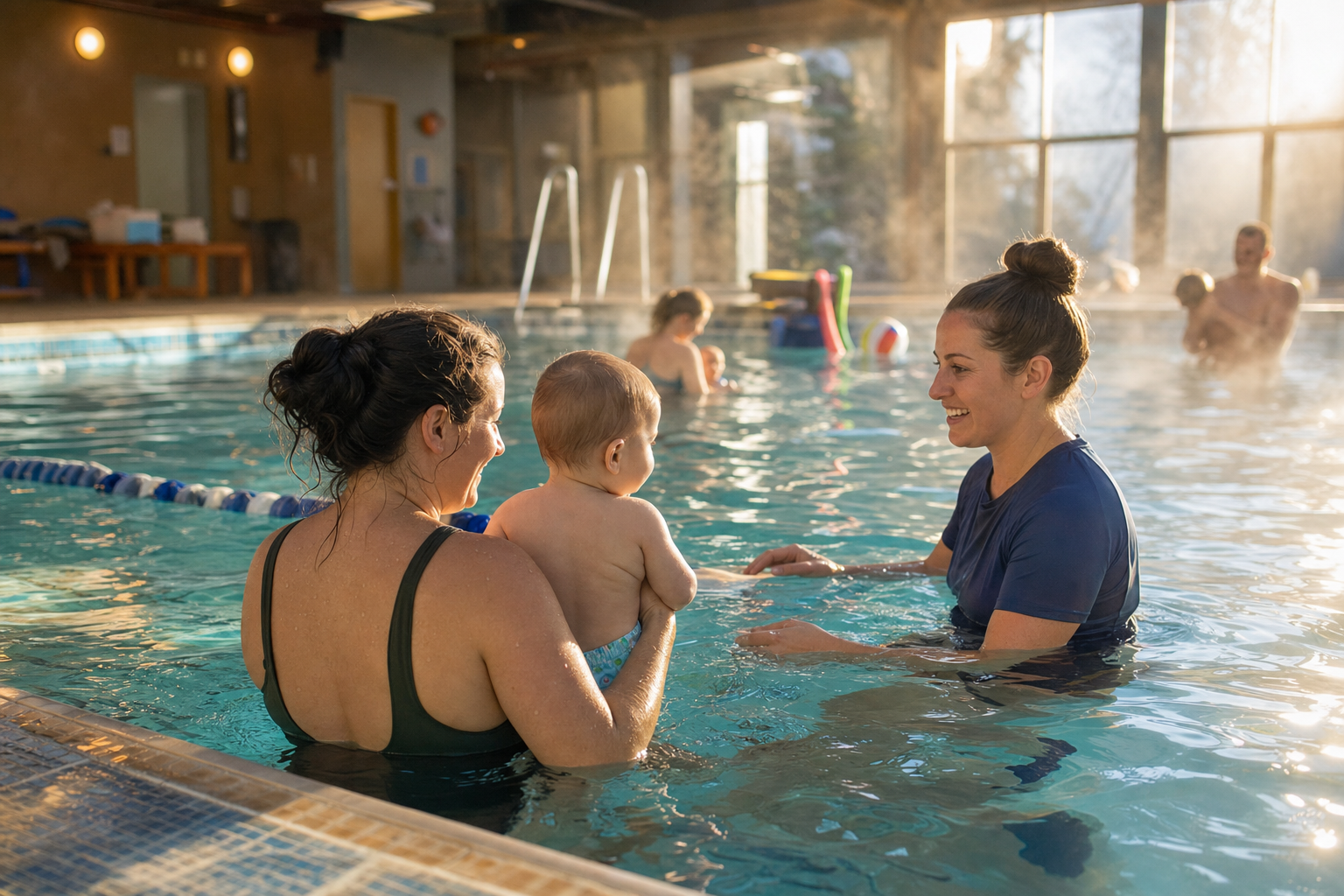
When your baby suddenly feels heavier, longer, or less coordinated after a growth spurt, it may look like a regression—but it’s not a failure. It’s your baby adjusting to a new body, and with some smart tweaks, swim lessons can stay positive and confidence-building. What follows is how growth spurts can change baby swim skills (age 3–24 months), what to adjust, and when to raise safety concerns.
Why Babies Act Like They’ve Regressed After a Growth Spurt
Sudden physical changes during growth spurts—longer limbs, more weight, shifting center of gravity—can temporarily alter how well a baby grips, kicks, balances, or holds themselves. Coordination takes time to catch up. What seemed easy last week may now feel awkward. When a baby grows, muscles, tendons, neural pathways, even confidence need rewiring. Articles about “baby swim regression” often highlight growth spurts as a leading cause. Parents notice less steady kicking, looser grip on pool toys, or fearful reactions to being held differently in the water.
Babies may also feel “off balance” when the proportions they’ve just mastered shift. For example, if arms suddenly lengthen or torso proportions change, propulsion, buoyancy, and timing in kicking or rolling may drop temporarily. Infant swim lessons that were going smoothly might suddenly feel unsettling, and that’s expected.
What to Adjust in Swim Lessons
Change the Hold
If baby feels heavier or longer, your hold must adapt. Instead of holding under the arms, use holds that support chest and belly against you, with one hand cradling neck or back. This gives more core support. For babies toward 12–24 months with rolling skills, try safety holds or back strokes that ease weight off legs temporarily so they can find new balance.
Shorter Practice Sets
Regular 20- to 30-minute sessions are typical for infant swim lessons. But during unsettled weeks—right after a growth spurt—reduce active teaching blocks. WaterWiseKids reminds us that structured attention for little ones drops off after 15–25 minutes when coordinating new movement patterns, and fatigue or temperature loss can happen quickly.(waterwisekids.com) Practice in short bursts—5-10 minutes of a skill the baby still likes, with breaks for cuddles and warm towels.
Focus on Confidence, Not Challenge
Avoid introducing harder skills like submersion or more forceful drills during this growth phase. Instead, build confidence. Celebrate small wins like toes fluttering, arms stretching, or managing a safe float. Reassure baby with your voice, playful water touches, and steady supports. Parents often feel pressure when other kids seem to “keep up,” but recovery happens with patience. Swim instructors understand this; many programs track progress over months, not weeks.(rillieux-natation.com)
If you want a structured way to build water confidence at home, the 10-Week Plan guides you step by step.
Safety Checks You Can’t Skip
Growth spurts often come with changes that affect safety, even if baby abilities are just temporarily altered.
[[ctababy]]
Re-check swimwear fit: Babies outgrow swimsuits quickly. A suit that was snug and supportive yesterday might now slip off shoulders or ride up, affecting grip and control in the water. Use stretchy materials that retain fit over slight sized changes.(swimy.org)
Ensure your grip is appropriate: Your hold needs to match baby’s new size; loosened hold or wrong arm positioning can lead to slips. Use two hands if needed, and position baby closely against your chest or side so you retain control even if limbs stretch out.
Watch the temperature: Growing bodies can feel colder than before; newborns lose heat very fast in water. Pools heated around 87-94°F (30-34°C) are safest for infants. Even indoor pools can have cold spots. If baby is shivering, lips turn bluish, or skin feels cool, wrap them up.(waterwisekids.com)
How to Support Infant Swim Confidence Through Growth
Seeing your baby angry, resisting holds, or flailing in the water can be stressful for both of you. But remember, “baby swim regression” often isn’t regression—it’s your baby’s body saying “I need time.” Rather than pushing through, support must come through adjustments. Use lessons like part of the 10-Week Plan of swimy.org to track things such as how baby’s confidence changes week to week, and to decide when to adjust hold, shorten lessons, or take rest days. This helps recognize patterns rather than assuming failure.
Affirming statements like “You’re doing great, I see your legs kicking,” or “We’ll try that again together,” make a huge difference. Baths at home can reinforce comfort with warm water, face splashes, holding positions without pressure. These are gentle ways to rebuild coordination and trust.
When to Seek Extra Help
If after two or three weeks of adjusted handling and shorter sessions, you see no easing of tension, persistent fear of splashes or refusals even when comfortable, it may be time to talk to your baby’s swim teacher or pediatrician. Sometimes discomfort, ear infections, or developmental delays can magnify the effects of a growth spurt. Good swim schools welcome updates from parents—about weight, recent growth, illness—so instructors can tailor classes. Also watch for any signs of cold stress, such as shivering, pale skin, or unsettled temperature, and end sessions early if needed. Safety is always more important than “progress.”
Bottom Line
A growth spurt around 3–24 months can temporarily throw off your baby’s kicking rhythm, grip, balance, and confidence. This is entirely normal, not regression. Adjust your hold, shorten lessons, keep swimwear fitting, warm the environment, and prioritize comfort. Trusting the process, using simple tracking tools like the 10-Week Plan of swimy.org to monitor developing confidence, and celebrating even tiny wins will help both you and your baby feel capable and happy in the water. Confidence always wins in the long run.
120+ swimming exercises sorted by age — with video and instructions. Developed by swim instructors, completely free.

120+ swimming exercises sorted by age — with video and instructions. Developed by swim instructors, completely free.