Freestyle Open Turn for Kids: Elbow-High Pivot Drill (Step-by-Step)
Want your 6- to 12-year-old to nail fast, safe open turns before trying a flip turn? The elbow-high pivot—or “open turn drill for kids”—is a playful, landmark-based set-up that teaches touch, pivot, and push rhythms. Kids build wall awareness, quick pivots, tidy push-offs. Parents learn how to use cones or stickers so practice feels fun but structured.
Put the most valuable first: the drill's step-by-step execution, what to watch for, then how to build the game-like set-ups.
How to Teach the Elbow-High Pivot Drill
Swim into a shallow lane with low traffic. Use a target (a wall tile, a cone, a stick) as the landmark so your child knows precisely where to initiate the turn.
Have them swim freestyle toward the wall, counting their last strokes. On the final full stroke, reach out one hand (whichever is closer to the target side) and touch the wall with elbow high—this is the touch phase. Then bring knees to chest in a pivot, swinging the feet onto the wall. Hand still high at elbow, other arm near side acts as balance. This is the pivot phase. Finally push off straight, head down, arms in streamline, into the next swim. This is the push-off.
Use the rhythm: “touch-turn-push.” No head dives or flips—everything stays feet-first (open turn). You want safety first while preparing for quicker flip turns later.
Why Elbow-High Pivot Beats Simple Touch Turns
One reason coaches recommend the elbow-high pivot is because the elevated elbow protects from pushing off sideways and keeps momentum going straight off the wall. US Masters Swimming points out that a common open turn mistake is pushing off at an angle. To avoid that, the elbow-high setup helps ensure a straight push-off. (usms.org) Also, keeping hip and body alignment stable during turn and push-off is smoother if breathing into the wall is avoided. (usms.org)
This drill isolates the wall-touch, the pivot, and the push-off in parts. Coaches suggest drills like “Wall-Hold → Elbow-Drop + Knee Drive → Brush Your Hair” as a progression to help children build strong open turns. (usms.org)
Swimy.org offers structured, progressive swim lesson plans that build skills step by step. A resource like the 10-Week Plan helps parents and teachers map weekly goals—start with elbows and touch turns, move toward clean open turns, then safely introduce flip turns when ready.
Common Mistakes & How to Fix Them (Pitfalls Parents Should Know)
Kids will often drift past the wall if they misjudge the approach. If the last stroke comes too far out, momentum drops. Teach them to time the final stroke so fingertips reach at full stretch just before touch. Avoid pushing off sideways: if feet aren’t planting squarely and facing toward the deep end, the push needs correction. Feet should plant firmly, hips tucked, toes pointed upward a bit, not splayed. Finally, breathing into the wall is another culprit: when the head lifts before touching, body angle drops, hips sink, and drag increases. (usms.org)
[[ctakid]]
Set-Ups Using Cones or Stickers: Making the Drill a Game
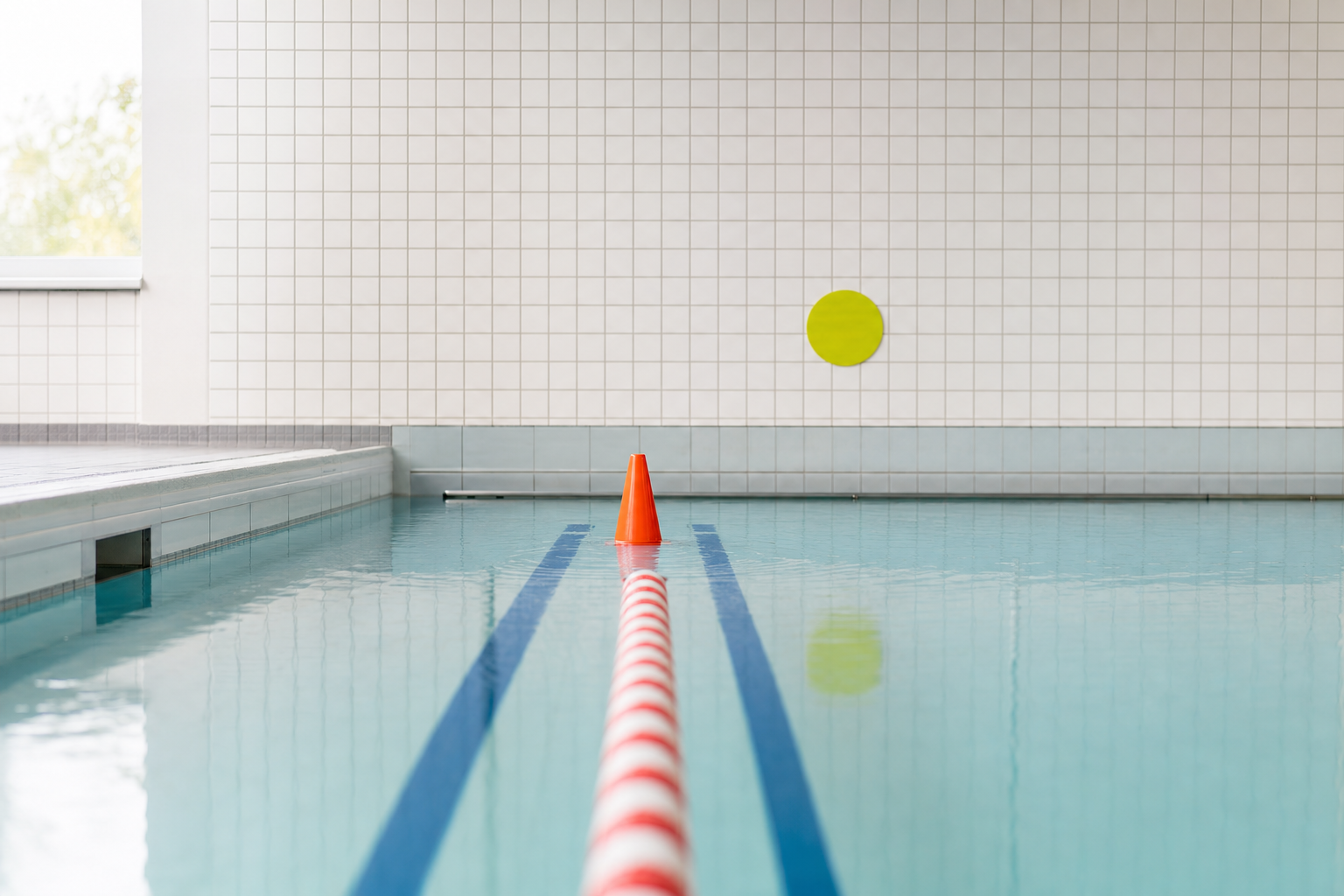
Players love challenges: place a small, coloured cone or waterproof sticker a swim-arm’s length from the wall. The child must “touch the wall just as they pass over the cone.” Or place two stickers sideways on the lane floor ending at the wall; those are “touch-turn markers.” Children try to hit the marker, pivot quickly, push off tidy.
You can also time the push off for distance: push off and glide as far as possible before kicking. Whoever glides farthest gets a high-five. These playful elements keep the structure, but make learning the open turn drill for kids feel like fun swim turn games.
Progression & Supporting Resources
After mastering elbow-high pivoting in shallow lanes, gradually add speed and reduce pauses. Combine with other open turn teaching drills such as “Knees Up, Arm Back” and “Fall Back into Streamline” to reinforce body awareness. (swimsmarttoday.com)
Tips for Practice & Safety
Always use shallow lanes with light traffic to prevent collisions as kids focus on turns. Never allow head-first dives or flips until flip turns are officially taught; open turns are enough for beginners. Give simple verbal cues: “touch wide”, “knees up quick”, “push straight”. After each turn, immediately swim several strokes to feel how the push-off influences speed and streamline.
Also, video or mirror feedback helps children see themselves. When feet go too early, elbows drop, or breathing spoils the posture, pointing these out right away helps adjust habits before they become hard to change. Keep practice sessions short and positive—5-10 open turns per session are plenty for young swimmers.
When to Move On & What Next
Once your child can perform several clean elbow-high pivot open turns under speed (say 5 turns in a row with tidy push-offs) and without drifting past the wall, then consider introducing flip-turn components. But only if tooling for safety (deeper pool, supervision) is available. Until then, practicing open turn for beginners builds confidence and strength.
Mastering open turns means fewer penalties in races, better wall awareness, and smoother rhythm in pool swimming. Add just a few minutes of elbow-high pivot work to your regular swim sessions—and soon your child will turn like a pro.
120+ swimming exercises sorted by age — with video and instructions. Developed by swim instructors, completely free.

120+ swimming exercises sorted by age — with video and instructions. Developed by swim instructors, completely free.