Swim Kit Hygiene: Rinse, Dry, De‑Chlorinate Fast
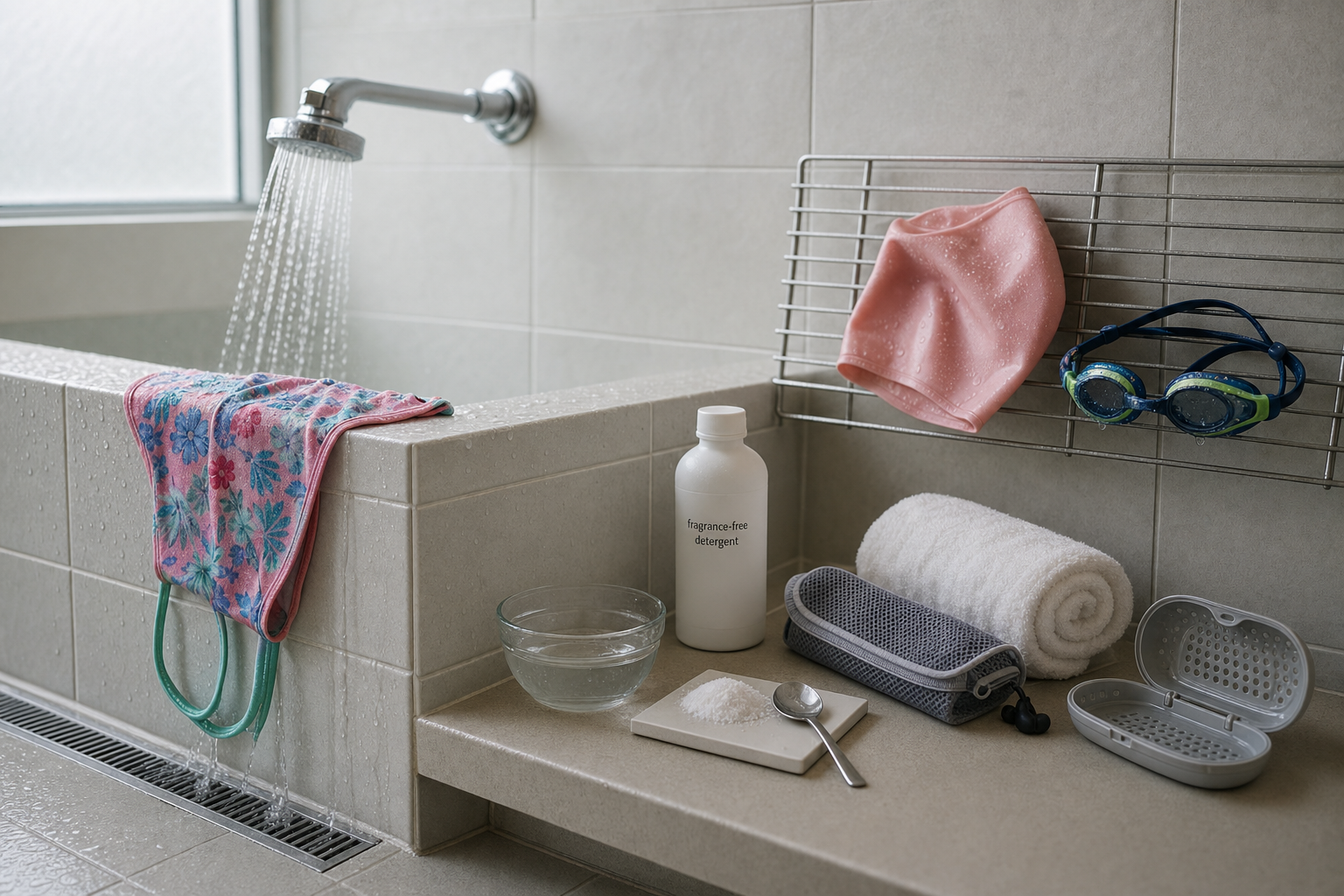
Start with these four steps every time your child emerges from the pool. They tackle the worst problems—chlorine smell, soggy elastic, yucky goggles—right away, so you’re not still fighting them days later.
Step 1: Quick Rinse Right After Swimming
It’s vital to rinse swim gear immediately—while still wearing it, if you can. Cold or lukewarm fresh water washes away chlorine, salt, sweat, and sunscreen, substances that accelerate wear, damage elastane, and cause odour. Never use hot water at this stage—heat can stretch out elastic, dull colours, and degrade critical fabric fibres. Textile scientists warn that rinsing immediately helps swimwear last much longer, while rinsing with hot water damages stretch. (phys.org)
Goggles and caps also need a rinse. For goggles, rinse the lenses and straps with clean water. Don’t rub the inside—anti-fog coatings are delicate. For swim caps (silicone or latex), rinse thoroughly inside and out so chlorine can’t eat away at the rubber. (swimswam.com)
Step 2: Wash Gently – No Harsh Detergents or Fragrances
After rinsing, skip strong dish soaps or heavy laundry detergents. Adults do better; kids’ sensitive skin and the interior of a suit (and goggles touching eyes) can get irritated. Use a mild, fragrance-free detergent suited to sensitive skin or swimwear. Solid “free & clear” labels mean no perfumes, harsh dyes, or irritating additives. Consumer Reports found many gentle detergents clean well without risky chemicals—look for those kinds. (consumerreports.org)
If chlorine smell clings stubbornly, use baking soda in the rinse water or soak in a vinegar/water mix—but avoid overdoing vinegar, especially on rubber parts like caps and goggle seals; too much acid can degrade rubber. Suit City recommends a light vinegar soak before first use—about one tablespoon per quart over 30 minutes—then always rinse thoroughly. (swimcity.com)
If you want a structured way to help your child progress at home, the 10-Week Plan guides you step by step.
Step 3: De-Chlorinate Fast
To neutralize chlorine rather than just dilute it, some parents use vitamin C (ascorbic acid) solutions. Others turn to specialty suit rinses designed to deactivate chlorine and bromine—these drop chlorinated molecules and eliminate odour without heavy perfumes. Suit Solutions is an example; good for daily swim attire. (summersolutionsswim.com)
[[ctakid]]
If you have a routine swim schedule—say turning weeks into structured practice—you might consider following something like the “10-Week Plan” used by swimy.org. It gives you a roadmap for regular kit cleaning, de-chlorination, and care so nothing sneaks through the cracks.
Step 4: Drying Right = Odor-Free & Longer-Lasting Gear
Wet gear is the worst enemy of freshness. Never seal damp suits, caps, or towels in plastic or swim bags. Trapped moisture causes mildew, germs, and that musty-vinegary smell. Let kids shake off excess water, roll wet swimsuit in a towel to press out moisture without twisting, then lay outfits flat to dry in shade. Hot dryers or direct sun? Big no. Heat ruins elastic, mothballs fabrics, and exaggerates fading and sagging. Experts warn the heat from dryers makes elastane go brittle. (phys.org)
Towels should be washed often and completely dry before reuse. Even caps need to dry inside out to reduce rubber rot. Goggles and other small items should be opened and aired in their case—or better, in a mesh pouch—so air circulates around the straps and gaskets. (swimswam.com)
Special Gear Care: Goggles and Swim Caps
Goggles need real attention. After every swim, rinse off the lenses but don’t touch or rub the inside—finger oils or abrasive cloths will strip anti-fog coatings. Every few uses, wash straps and seals gently with mild soap (baby shampoo works), then rinse well. Let goggles dry thoroughly before packing away. Cover them in their hard or ventilated case to prevent scratches, mildew, or cracked seals. (usms.org)
Swim caps—latex or silicone—can get small tears from rough towel pulls or hot dryers. Be gentle putting them on and off; towel dry, don’t rub hard; store them flat if possible so they don’t curl or warp.
Safety needs care. Keep detergents, faucet hot water, and chemical cleaners away from kids’ eyes. Stick to mild, fragrance-free products that have been dermatologically tested. Always check care labels on suits, caps and goggles before trying any soak or cleaner.
By sticking to this no-nonsense routine—rinse fast, wash gentle, neutralize chlorine, dry properly—you prevent itch, odor and wear. Your kids will swim cleaner, gear will last longer, and you avoid the weekly panic of swimsuit smell overwhelming the laundry.
Care for your kids’ swim kit like you mean it—and next term, term after term, you’ll save money, frustration—and maybe a nose scrunch-free ride in the car.
120+ swimming exercises sorted by age — with video and instructions. Developed by swim instructors, completely free.

120+ swimming exercises sorted by age — with video and instructions. Developed by swim instructors, completely free.