Five-Minute Beach Warm-Up for Kids’ Open-Water Swims
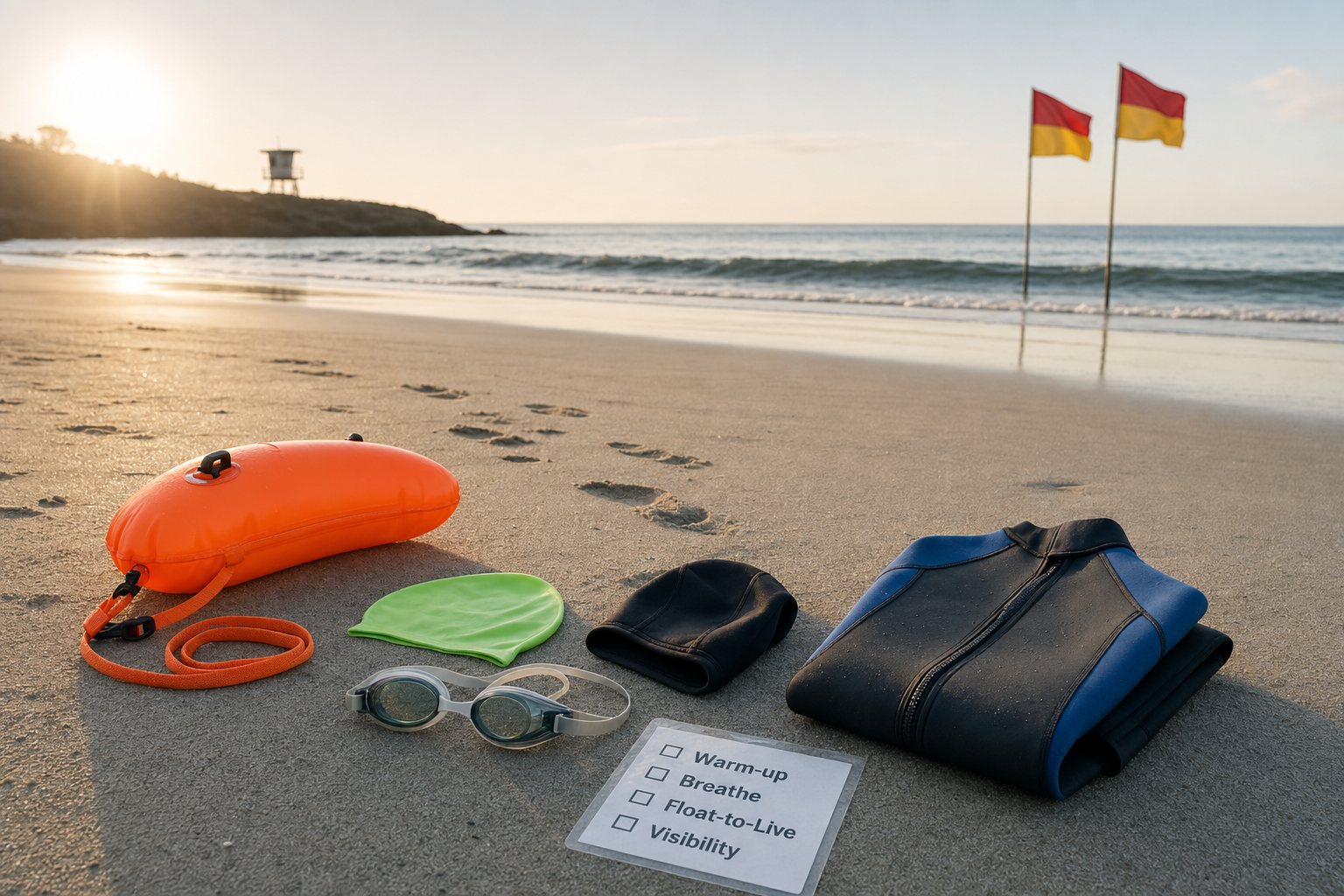
Want your child ages 5-12 to launch into open-water swims feeling calm, steady, and confident—not rattled by cold shock or first-wave jitters? Here’s a quick sand-side routine that hits big muscles, breathing, and gear checks. Parents can follow this simple script to boost visibility, safety, and control at the shoreline.
Warm-Up Minute 1: Big-Muscle Moves on the Sand
Get off the towel and get moving. Start with a gentle sand jog or skip for about 30 seconds. Raise heart rate without tiring them out. Then switch into arm circles: stretch forwards, then backwards, big swings—open those shoulders. Follow that with leg lunges or squats, paying attention to calves and thighs. This activates core, legs, arms—so when they hit the water, everything is ready.
Why this matters: Open-water swimming taxes large muscle groups, and warming them improves coordination and reduces risk of muscle cramps or stumbles during entry. Expert guidelines from Swim England emphasize land-based warm-ups before open-water events to help avoid cold water shock and autonomic conflict. (swimming.org)
Warm-Up Minute 2: Breathing and Acclimatization
Move to the water’s edge. Have your child splash water over their forearms, chest, neck, and face. Walk in slowly—don’t jump, don’t dive. Pause once waist-deep, take slow deep breaths until breathing feels normal. This helps manage the involuntary gasp reflex triggered by sudden cold. RNLI advice says to “walk into the water slowly” to avoid cold shock, and to splash exposed areas and allow breath to settle. (rnli.org)
If startled, remember: “Float to Live.” Roll onto the back, arms out, legs relaxed, holding on to a tow float if available until they feel safe to swim again. RNLI’s safety leaflet stresses this float-on-back recovery if needed. (supporttool.rnli.org)
Gear & Visibility Checks: Suit, Hat, Tow Float
Quick inspection time. Make sure swimsuits fit properly—not loose or sagging. Hats: choose bright colours—neon green or orange work best. They might want a swim-cap or neoprene skull cap for warmth. Goggles should be secure, no leaks, lenses suited to light conditions. Then ensure visibility gear is ready: a tow float for kids improves visibility to other swimmers and boats. Parents check all zips, straps, and that the float is tethered correctly.
If you want a structured way to help your child progress at home, the 10-Week Plan guides you step by step.
Seasonally, when water's cooler in late spring or early fall, gear matters more. Dorset County ASA suggests gradual familiarisation in early season, wearing a bright swim hat, splash water to sensitive zones to reduce cold shock. (dorsetasa.org)
[[ctakid]]
Script Parents Can Use for Shoreline Control
Here’s a script to follow each time you bring your child to an open-water swim:
“Okay, let’s warm up with our big muscles—jog and arm swings. Check your suit, hat, goggles. Hat bright enough? Tow float clipped? Now walk into the water slowly, splash face and chest, take deep breaths. If you feel panicked or shivery, stop, float on your back, hold the float, it’s okay. Only swim when breathing feels calm.”
This verbal guide gives structure and lowers surprises. It helps kids know what to expect—less ‘first-wave jitters’ and more confidence under water.
Why Climate & Season Matter (Late Spring–Early Fall)
By late spring, water's still chilly in many places. Without acclimatisation, that cold-shock response (gasp, hyperventilation, heart racing) can be dangerous. A recent study showed that children immersed in 11 °C water had heart rates up ~31% and breathing rates up ~58% in early seconds. (pmc.ncbi.nlm.nih.gov) When seasons shift toward summer and fall, slow, progressive exposure reduces those spikes and keeps muscles ready. Cold acclimatization helps delay shivering and improves comfort over time. (sciencedirect.com)
Avoid These Pitfalls
Don’t skip acclimatization: walking in slowly, splashing on the face, gradual immersion matter. Never let kids jump or dive in suddenly. If they start shivering, get them out to warm up. If breathless or panicked, use the Float-to-Live method. And always swim at lifeguarded beaches or under supervision—open water is full of surprises: small waves, sudden drop-offs, currents.
Build Confidence Over Time: Training Ideas
Repeated sessions build familiarity. Try short open-water practices in warm-weather months. Combine this warm-up routine with pool lessons. If following a structured plan, routines like the 10-Week Plan offered by Swimy.org guide kids gradually from calm shallow water to open-water swims. This consistent exposure improves skill, control, and reduces anxiety.
Final Thoughts: Calm Entry, Steady Swim
Start every beach swim with a purposeful warm-up. Use big-muscle moves on sand, breathing practice, gear checks, visibility aids like bright hats and tow floats. This routine takes only five minutes but transforms how kids feel stepping into cold or unfamiliar water. They enter calmer, more coordinated, and swimmers with skills—not jitters—just like intended. Stay safe, stay warm, stay confident, and enjoy every splash together.
120+ swimming exercises sorted by age — with video and instructions. Developed by swim instructors, completely free.

120+ swimming exercises sorted by age — with video and instructions. Developed by swim instructors, completely free.