Treading Water vs Back Float: What Matters for Water Competency in School-Age Kids
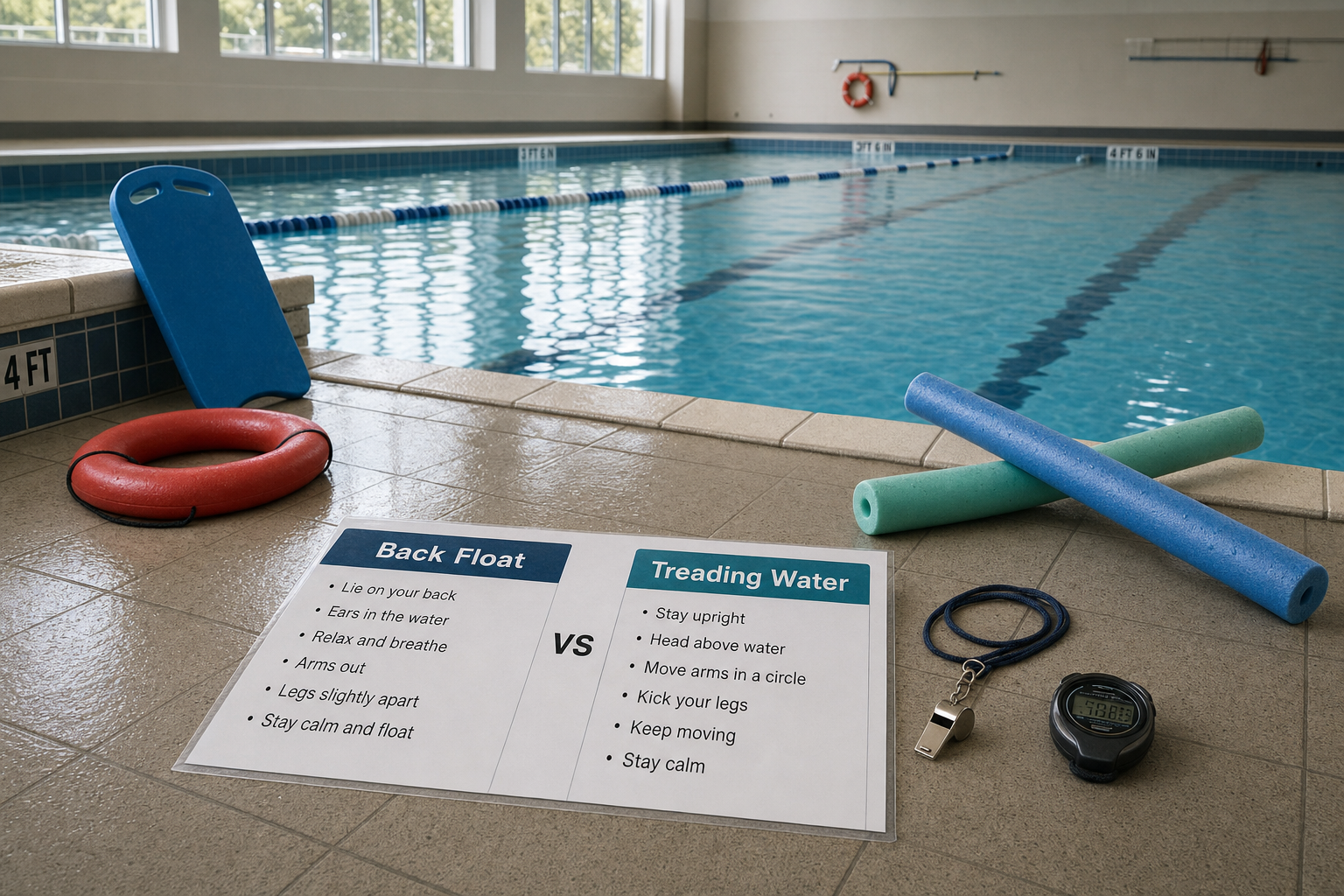
If your child can crawl, splash, or even swim a bit, it might be tempting to push straight into teaching treading water. But in practice, for school-age kids (roughly 6 to 12 years), learning a calm back float first is often far more valuable. Here’s what parents really need to know about water competency for children, when to pause and float, and how to build up safe self-rescue skills without creating panic or pushing too hard.
What Water Competency Looks Like for Ages 6-12
Water competency means your child has the basic skills to avoid common drowning risks—not to compete, just to stay safe. According to Water Safety USA standards, essential skills include being able to control breathing, float or tread water, turn in the water, swim a short distance (for example 25 yards in a pool), and exit safely.(watersafetyusa.org) In the UK, Swim England’s minimum water competency standards expect children by the end of swimming lessons to perform a back float for 60 seconds, tread water for 30 seconds, swim at least 100 metres and have experience swimming in clothing.(swimming.org) These aren’t about medals—they’re about giving children the tools to stay afloat when they need to.
Prioritize Back Float When Fatigue Beats Struggle
When a child finds themselves in deep water and gets tired, the back float becomes a lifesaver. A relaxed back float keeps the face above water, uses minimal energy, and allows the child to breathe steadily. Panic breathing or lifting the chin too high causes hips to sink, head tilts forward, and often triggers exhaustion.(aqzog.com) Experts agree: rest—or “float first”—then decide if treading is needed. A study on accidental cold-water immersion found that floating immediately is better than trying to tread under panic, reducing breathlessness and increasing survival time.(researchportal.northumbria.ac.uk)
Back float is also known as starfish float, because arms and legs are gently spread wide in a relaxed shape. Begin teaching in shallow water: use support under the head and belly, encourage ears in the water, chin up just a touch—look at the ceiling or sky. Once comfortable, gradually let them roll back without full support.(aqzog.com)
Here’s how to build strength and confidence gradually: In swim lessons or supervised pool time, let kids practice short treading intervals (10-15 seconds), alternate with rest in back float. Work up to at least 30 seconds treading plus the ability to float for a minute or more. For example, in the 10-Week Plan at SwimY.org, children gradually build skills including breath control, back floating, and short treading sessions. Hyperlinked practice and consistent repetition help solidify safety skills without pressure. https://www.swimy.org/10-week-plan(swimy.org)
[[ctakid]]
How to Teach Treading Water Wisely
When your child has mastered back float and breath control, you can safely introduce treading water. Use simple kicks and arm movements first, increase duration gradually, and never push until fatigue takes over.
Technique Tips
Start with the “bicycle kick” or a modified breaststroke kick. Later, children may progress to more efficient methods like scissors or the eggbeater kick.(swimy.org) Arms should scull—make gentle sweeping or figure-8 motions just in front of the body, palms angled slightly down and forward. The goal is to keep the head just above water without splashing wildly.(fsefitness.com)
Common Pitfalls to Avoid
One pitfall is the bicycle kick taken too literally—overextending, slowing motion, or flipping knees up too high wastes energy and triggers fatigue. Another is panic breathing: holding your breath, jerky inhalation, or face-above water gasps throw off everything. Relaxed, even exhale and inhale rhythm is vital. Chin tucked too far in or lifted too high? That sinks hips. Arms too stiff, legs too rigid? That sinks someone fast.(aqzog.com)
When to Float First Over Treading
If your child shows any signs of struggling—head bobbing, gasping for air, legs collapsing—pause the lesson. Roll into back float, rest, breathe deeply, recover. A child who floats calmly is far safer than one trying hard but wearing down. In emergencies—cold water, waves, unexpected drop-off—a float-pause gives time to think, signal, or hear rescue.
Putting It All Together: Minimum Skills Parents Should Aim For
By age about 8-12, with regular lessons and practice, your child should be able to:
- Calmly perform back float for at least 30-60 seconds, face above water, ears wet, chin just up.
- Tread water for at least 30 seconds without touching the bottom or side, using simple kick and arm movements.
- Swim a short distance (pool length or 25-100 metres depending on region) using any stroke.
- Exit water safely—pull themselves up, climb, or reach an edge.
These milestones reflect public standards like those from Swim England or Water Safety USA. Reaching these means your child has solid water competency—able to stay safe in many common situations without needing competitive speed.
Final Thoughts
Teaching treading water is useful, but not before your child has solid foundation in floating, breathing, and relaxation. Panic or fatigue undermines even the best treading technique. Float first, rest and breathe—then only when ready work on control. Parents who focus on calm floats, steady breathing, and gradual buildup will help children make safer self-rescue choices. And that’s what water competency is really about: knowing when to float, when to tread, and always being able to do both under calm control.
120+ swimming exercises sorted by age — with video and instructions. Developed by swim instructors, completely free.

120+ swimming exercises sorted by age — with video and instructions. Developed by swim instructors, completely free.