Life Jackets: Pool Practice for Real Confidence (Ages 3–12)
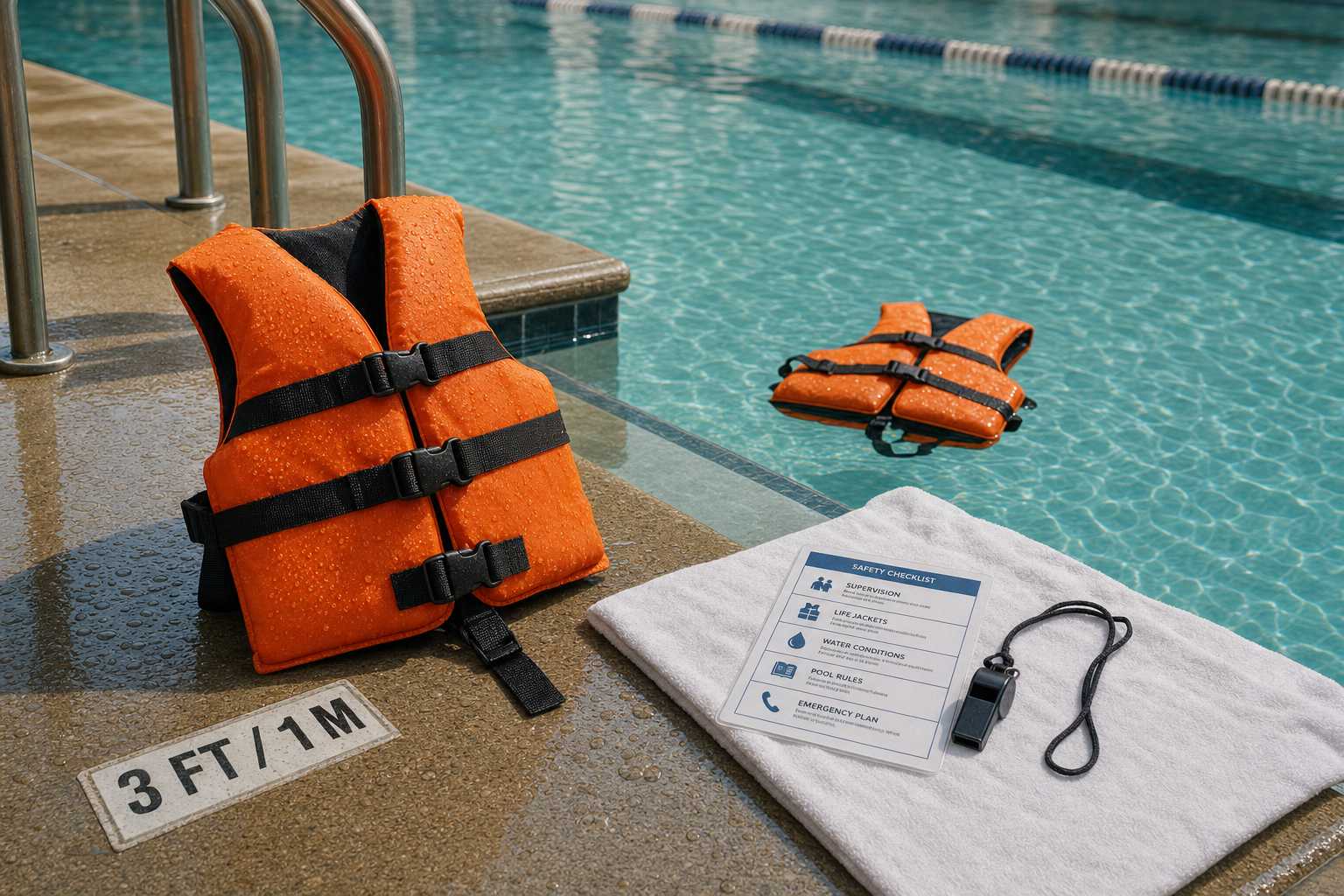
When it comes to keeping children ages 3-12 safe around water, nothing beats practising with a properly fitted life jacket (PFD) in a shallow pool under supervision. Forget the idea that life jackets are just for boats—using them in pool settings helps kids build muscle memory, learn real skills like entries, floats, rolling to back, and safe exits.
How Should a Child Life Jacket Fit
The fit of a life jacket is crucial. A US Coast Guard-approved child PFD must be snug, certified, and correctly sized. Check the label for the child’s current weight range—don’t buy bigger to “grow into”—because a jacket too large rides up and fails to keep airways clear. When fastened properly, let your child raise both arms. Then lift the jacket by the shoulder straps. If it slips over the ears or chin, the fit is too loose. That simple lift test is a standard USCG guidance.(dco.uscg.mil)
Other fit checks: all zippers, buckles, and crotch straps (for small children) should be secured, straps adjusted from bottom up, and the shoreline or pool test in shallow water should confirm that chin stays above water. Inflatable float toys or puddle jumpers often look safe but are NOT substitutes for USCG or CE‐approved life jackets, and have different safety limits.(waterwisekids.com)
PFD Drills for Kids: Pool Practice That Builds Confidence
Entries, Floats, and Safe Exits
Begin practising with safe entries: always feet first, from the poolside or a step, with adult supervision. Once in the water wearing a properly fitted PFD, teach a back float: child leans back, lets the life jacket support the head, relaxes and breathes calmly. Encourage rolling from front to back and then rest float. Practice exits: approaching the pool wall, using handles, ladders, or steps. No rough play. Keep sessions short and reward calm movements.
Rolling-to-float and Short Swims with PFDs
A core drill is roll-to-float: child starts frontside, rolls onto back, rests, then returns to front or grabs the wall. With a life jacket on, this gives tangible feedback showing the child how flotation works. Once floats feel safe, children can swim short distances while wearing the life jacket—perhaps four to six feet across the shallow end—alternating strokes with rest intervals. These drills teach breath control, comfort in the water, and how to trust the PFD.
If you want a structured way to help your child progress at home, the 10-Week Plan guides you step by step.
Practices like these are often part of structured plans. For example the “10-Week Plan” of swimy.org introduces floating, entries, exits, and sighting drills in shallow water before open water transition.(swimy.org)
Parents’ Role: Fit Checks, Labels, and Automatic Habits
[[ctakid]]
Parents are the lifeline in safety routines. Before every pool day, check the life jacket’s label to ensure it’s USCG or CE approved, the weight range matches your child, and all closures are properly fastened. Do a lift-test (lift by shoulders) and ensure chin and ears do not slip through. Teach children to feel when straps are tight enough but comfortable—hoodies or thick swimwear can change fit. Rinse the life jacket with fresh water after each use, air dry in shade, avoid mildew. Let kids practise putting it on themselves so it becomes second nature.
Why Practise in Pool Helps with Real-World Confidence
Learning in a shallow, supervised pool is low pressure, so kids feel safe experimenting with floating, rolling, and moving short distances in a PFD. That builds confidence they’ll carry to open water. Kids get familiar with the feel of a life jacket in motion—turning, buoyancy, resistance—and learn how it responds. They sense how to enter, exit, float, swim a bit, all while supported. This develops instinctive habits: checking fit, fastening all straps, staying calm in water, choosing safe entries and exits.
Parents too learn the ebb and flow: seeing which drills the child responds to, adjusting fit, recognizing discomfort or fear. You discover what materials irritate, which closures are harder for kids, and which life jacket styles let your child roll freely.
Safety Tips & Common Pitfalls to Avoid
Pools are safer than open water, but only if rules are followed.
Loose straps are the most common mistake. A life jacket with slack shoulder or side straps rides up easily. Always tighten straps evenly from bottom to top. Inflatable pool toys or floaties—water wings, swim rings—look fun but are not safety devices and can deflate or slip off unexpectedly. Do not rely on them.(waterwisekids.com)
Another pitfall is skipping comfort practice before taking children to open water. If they haven’t rolled to float, practised breathing with a PFD, made entries safely, open water surprises feel harder and more frightening.
Never replace supervision with a vest. Even with a perfect fit, parents must stay close. Use pools shallow enough that you can stand. Limit rough play. Take breaks for rest, hydration, and comfort.
Putting It All Together
Start your child’s life-jacket practice session by ensuring correct fit. Then run through simple drills: a safe entry, roll to back float, swim short distance with support, calm exit. Do these in short bursts over several sessions rather than long, exhausting training. Complement these with skill-building swim lessons.
When your child masters these pool skills wearing a properly fitted life jacket, then confidence transfers to lakes, streams, and beaches. The life jacket stops being just gear for boats—it becomes a tool for real safety. Practice builds habit. And habits protect lives.
120+ swimming exercises sorted by age — with video and instructions. Developed by swim instructors, completely free.

120+ swimming exercises sorted by age — with video and instructions. Developed by swim instructors, completely free.