Runny Poop? Skip Baby Swim (Wait 48 Hours After Diarrhea)
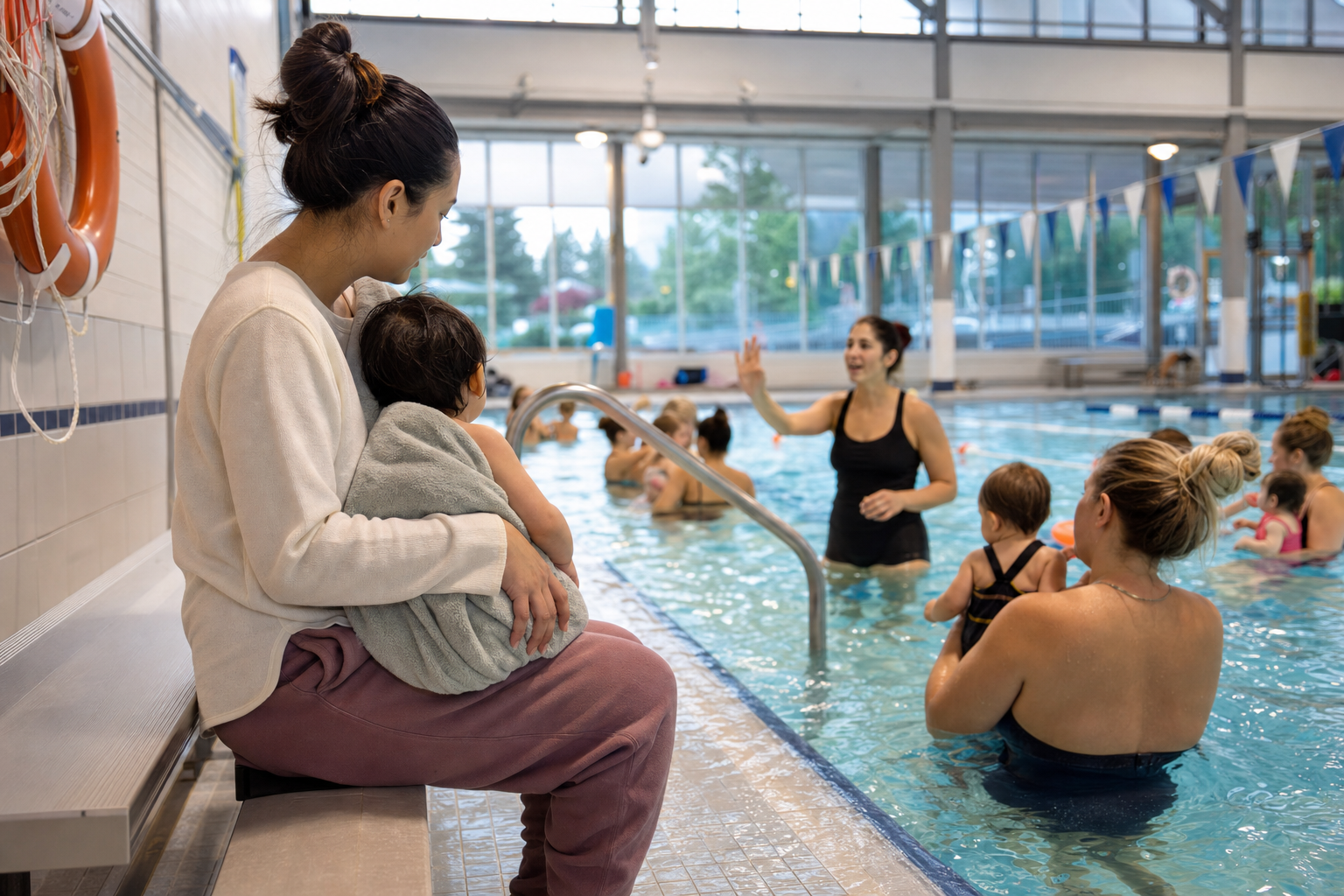
If you’re wondering, can baby swim with runny poop—the short, firm answer is no. When a child has diarrhea, it’s best to stay out of the pool until at least 48 hours after symptoms stop. Even the best swim diaper diarrhea doesn’t guarantee protection: these diapers may hold some solid poop, but they are not leak-proof and definitely don’t replace hygiene and public health rules. The Centers for Disease Control and Prevention (CDC) clearly states that swim diapers and swim pants “may help hold in solid poop (not diarrhea), but they are not leak-proof”.(cdc.gov)
Why Diarrhea Means No Pool
When infants or toddlers have diarrhea, their diarrheal waste contains millions of germs like Cryptosporidium, Shigella, or norovirus. These germs can enter the water and make other people sick. Swim diapers are designed to delay germs—not stop them entirely. Even a few minutes from a runny, watery stool can contaminate the pool. The CDC requires swimmers with diarrhea to stay out of the water, whether or not they use swim diapers.(cdc.gov)
Chlorine and pool chemicals aren’t magic fixes either. Some pathogens survive properly chlorinated water for days. For example, Cryptosporidium can survive over a week even in treated pools. So, assuming “chlorine will kill it all” can lead to serious outbreaks.(cdc.gov)
Breastfed-Baby Loose Stools vs. Illness
If your baby is breastfed, expect loose or “runny” stools—light yellow, soft, maybe even seedy—and many times per day. That’s normal.(healthychildren.org) Illness-related diarrhea, however, is different: sudden increases in frequency, watery texture, often accompanied by mucus, blood, or signs your child isn’t feeding or acting normally.(healthychildren.org)
If your breastfed baby’s stools are runny but otherwise healthy and behaving normally, swimming lessons may still be possible—as long as they aren’t truly diarrheal and haven’t had a tummy bug. If in doubt, wait until things go back to usual. Or check with your pediatrician.
What Do Swim Diapers Actually Do?
Swim diapers (both disposable and reusable) are made to contain solid stool, not urine or runny diarrhea. They rely on snug elastic seals at the waist and legs—not absorption. Materials used are water-resistant, letting water flow in and out. A solid stool might be held in long enough for you to get out of the water, but anything more liquid can seep through.(scienceinsights.org)
If you want a structured way to build water confidence at home, the 10-Week Plan guides you step by step.
Putting a regular diaper underneath a swim diaper or stacking two diapers (a “double diaper”) is not helpful. Regular diapers absorb water, swell, and fail quickly, which means more leaks—not less. Public pools usually require one well-fitted swim diaper or swim pants with tight elastic, possibly with a snug swim bottom over it—but not a regular diaper underneath.(swimoutlet.com)
[[ctababy]]
Changing swim diapers thousands of times poolside isn’t great either. It spreads germs into decking, splash zones, and onto your hands. The CDC recommends changing any swim diaper every 60 minutes or immediately after a bowel movement and doing so away from the pool edge.(cdc.gov)
Skipping One Class Helps Everyone
When your little one is sick with diarrhea, skipping that swim class isn’t just about your household. It’s about protecting other children, caregivers, and pool staff from potentially serious illness. Germs from diarrheal stool can spread quickly—swallow just a tiny amount of contaminated water, and you could get sick.(cdc.gov)
Pools can’t instantly kill every pathogen. Cryptosporidium, for example, can linger after treatment and spread illness for days. A single child swimming while contagious can shut down an entire facility or cause outbreaks at daycare during holiday illness waves or summer swim programs. Waiting until 48 hours after symptoms stop—plus keeping swim diapers only when warranted—can prevent those scenarios.
What Is Safe? Tips for Smart Swim Planning
If all that sounds a bit overwhelming, here’s what parents can do to balance fun and safety, especially for diapered swimmers ages 0–36 months:
Take a plan like swimy.org’s 10-Week Plan if you’re signing up for weekly baby swim lessons. That helps you anticipate when swim classes happen (often during daycare illness peaks or holidays) and build in buffer weeks in case of illness. Use those weeks to let baby heal, avoid spreading disease, and show up ready when class resumes.
Always dress your baby in a properly sized swim diaper or pants with tight leg and waist seals. Check it every hour. Change immediately after any poop. Change away from the pool deck. Keep a clean regular diaper on standby for after swim, and dry off quickly to prevent irritation.
Understand your child’s baseline: if they’re breastfed and stool is loose but otherwise healthy, swimming may be fine. If there’s a sudden onset of watery stool, mucus or blood, or behavior changes—without swimming.
Why One Missed Class Is Worth It
Missing a class feels frustrating—especially if your little swimmer is pumped, or you’ve just committed to summer lessons. But skipping one class when baby isn’t well often prevents weeks of pool closures, illness ceasing to spread in a playgroup, and the stress of cleaning and recovery. For 0–36-month-olds, flexible scheduling, rest days, and open communication with your swim school can save you more time and hassle than pushing through while sick.
When things are normal again—baby is eating well, having typical stools, and no fever—you can dip back in. Until then, keep swim diapers ready, regular diapers clean, and water time off-limits.
Swimming should be fun, not a source of stress or sickness. Your patience now protects everyone’s health and helps keep the pool open for more swim lessons, more smiles, and more joy.
120+ swimming exercises sorted by age — with video and instructions. Developed by swim instructors, completely free.

120+ swimming exercises sorted by age — with video and instructions. Developed by swim instructors, completely free.