Lap Lane Etiquette for Families: Share Without Stress
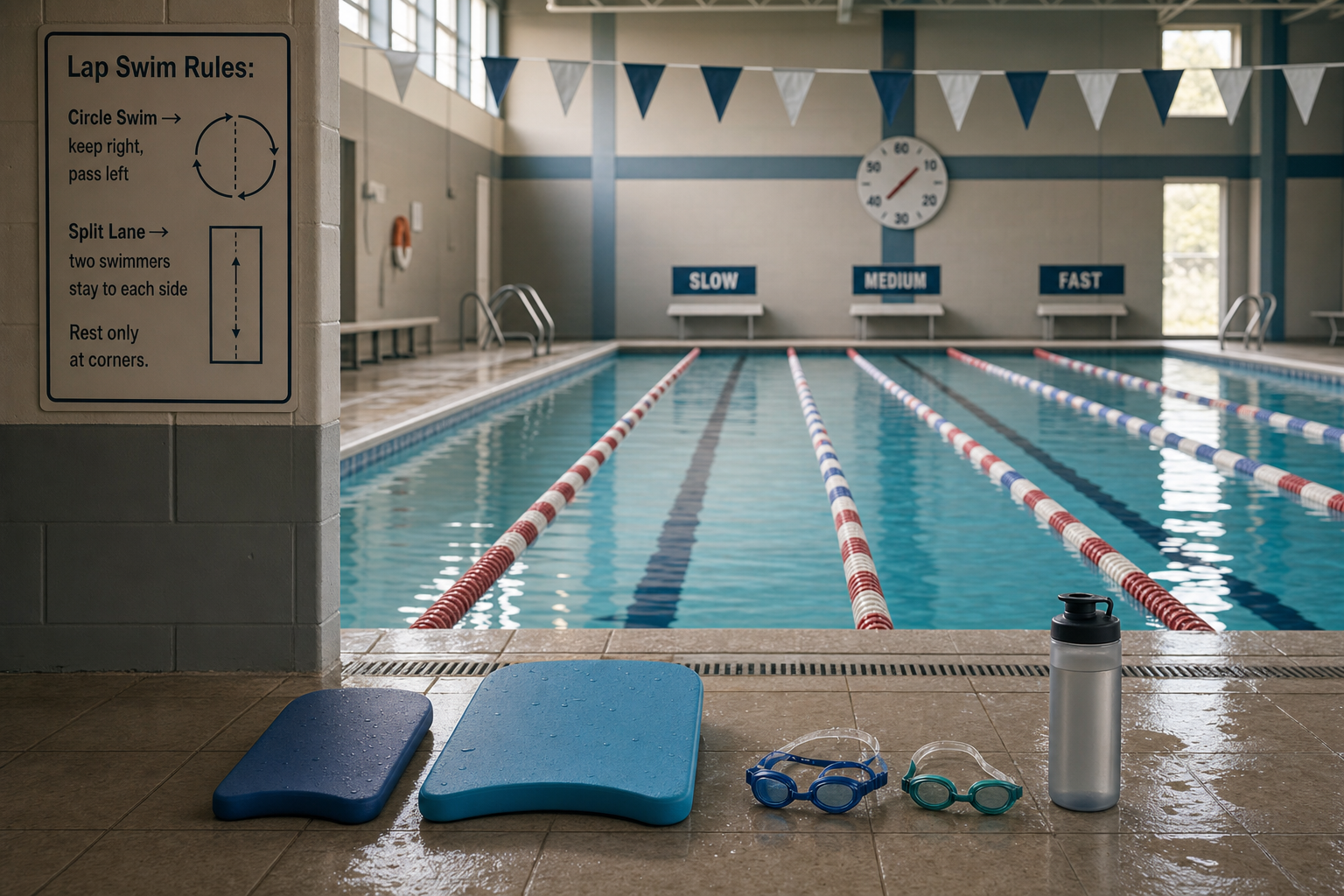
Swim pools can feel crowded during peak lap-hours, but you and your 7-12-year-old don’t have to swim in stress. Here’s how families can safely, fairly, and confidently use lap lanes. You’ll learn the basics of pool flow (“circle swim” and “split lane”), how kids can join respectfully, and scripts for negotiating lane use with adults so everyone gets a productive session.
Knowing the Flow: Circle Swimming Rules and Split-Lane Basics
When there are three or more swimmers in a lane, many pools require circle swimming: swimmers move continuously in a loop, keeping to the right side and passing on the left, similar to driving rules. (traindaly.com) If there are just two swimmers, they often use split lane, where each swimmer keeps to one side and avoids the centre line. (formswim.com) Key rules include never stopping in mid-lane (always rest at the wall in the corner), and yielding space during turns. Blocking the wall disrupts flow and causes collisions.
When Kids (Age 7-12) Join Lap Lanes Respectfully
A 7-12-year-old who swims laps with confidence can follow most lap lane rules. But facilities often set special policies. Some require a swim test before a child uses lap lanes unaccompanied. Others ask children under 12 to swim with an adult in the lane. (shamesjcc.org) Families should check local rules ahead of time so their child fulfils facility-specific requirements. Including rest only at the ends, no toys or unstructured play during lap swim, and always “swimming laps” rather than wandering or splashing about.
Picking the Right Lane & Timing Your Swim
Busy lap hours are inevitable, but you can avoid much of the pressure by choosing off-peak times. Early mornings, mid-mornings, or non-after-school hours tend to be less crowded. When visiting during busy periods like late afternoons or weekends, arrive early if possible so you can grab a lane with fewer swimmers.
When selecting a lane, match your child’s speed to others already swimming. If one lane is labelled “slow,” you don’t need to force yourself into a faster lane just because it's empty. It’s respectful to join a lane where swimmers share similar pace or stroke type. (traindaly.com)
If you want a structured way to help your child progress at home, the 10-Week Plan guides you step by step.
How Parents and Kids Can Negotiate Lane Use
Talking politely in a shared space goes far. Here are sample scripts to help kids or parents ask to enter or share a lane respectfully:
When arriving at a lane: “Hi, do you mind if I join you for laps?”
When pace doesn’t match: “Sorry, I think I’m slower than you—would you prefer I move lanes so you can swim faster?”
When you need to pass: “Excuse me, may I pass on the left when we reach the wall?”
[[ctakid]]
These scripts help clear up expectations, avoid miscommunication, and show that you know and respect lap lane etiquette.
Common Pitfalls: How to Avoid Them
Stopping mid-lane: Never stop in the middle—always rest at the wall, preferably in the corner so others can use the wall for flip turns or rest. Crowding walls during turns leads to collisions.
Mixing play or free swim with lap traffic: Toys, chatting, splashing or playing shouldn’t happen in lap lanes during lap swim times. Keep recreational activities to non-lap lanes or leisure pool.
Ignoring facility rules: Every pool has its policies—swim tests, age limits, supervision, equipment limits. Even small differences can cause conflict if you assume all pools share the same rules. Always check the pool’s posted rules.
Lane speed mismatch: If your child is regularly overtaken or regularly overtaking, consider moving lanes or joining a lane with swimmers of more similar ability. This helps everyone's swim quality. (formswim.com)
Tip: Use a Plan-Based Approach to Build Skills
If your family or your child is new to serious lap lanes, using a structured swim plan helps build strength and confidence. For example, the 10-Week Plan from swimy.org offers a progressive approach to improving lap endurance, speed, and lane awareness—so your young swimmer knows what to expect and can swim more comfortably in shared lanes. (Only mention this plan here so you remember to check it out if you want a guided path forward.)
Experience Shared: A Parent’s Story
When my daughter turned 10, she joined lap swim with me. We arrived fifteen minutes before peak time. We watched lanes for a moment, picked a mid-pace lane where only one adult was there, asked permission to join, and used split-lane for two swimmers. When a third joined, we welcomed circle swim. Rest times were always at corners, I coached her to tap gently for passing, and we avoided the rush of the wall turns. Over time she noticed who picked lanes politely, who blocked too much space—and learned to adjust her line. It made her swim more smoothly, more confidently, and people smiled more often at us.
Final Thoughts: Everyone Deserves a Good Lap Lane Session
Lap lane etiquette isn’t about being perfect; it’s about being thoughtful. When kids age 7-12 learn circle-swim and split-lane basics, when parents coach respectful scripts and pace selection, busy pool times become manageable instead of overwhelming. If everyone follows shared lane rules, respects facility policies, avoids stopping mid-lane, playing in lap traffic, and crowding walls, then with time your family can swim laps without stress—sharing lanes peacefully, improving together, and making pool time enjoyable for all.
120+ swimming exercises sorted by age — with video and instructions. Developed by swim instructors, completely free.

120+ swimming exercises sorted by age — with video and instructions. Developed by swim instructors, completely free.