Night Swims With Kids: The Make-the-Call Safety Checklist
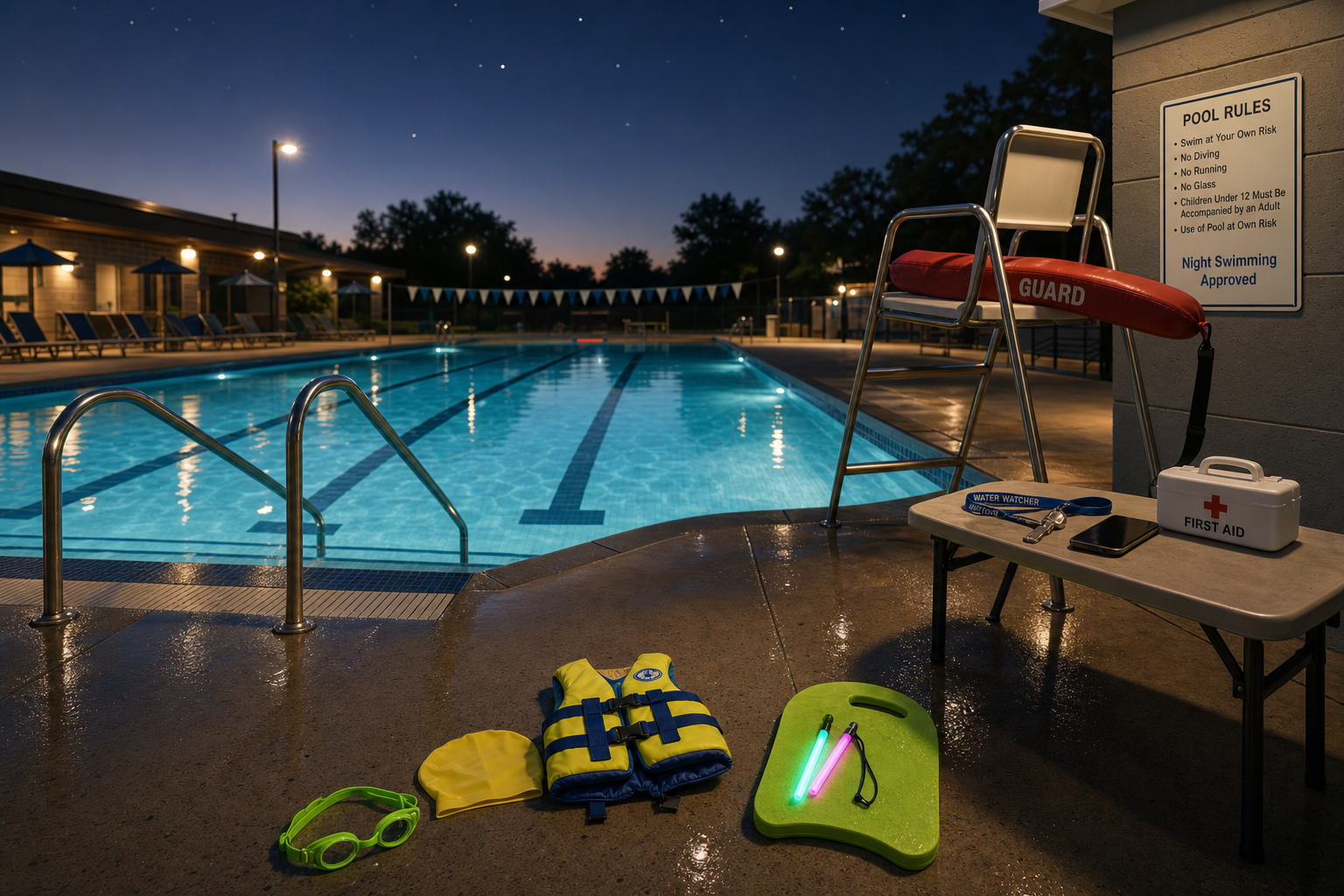
Deciding whether it’s safe for school-age kids (6-12) to swim at dusk or night takes more than just checking the clock. Begin with visibility, supervision, and weather, not mood or convenience. This checklist helps parents make a clear go or no-go decision and follow strict “swim at night rules” to protect kids.
When Night Swimming Can Be Safe
Night swimming is only appropriate under these conditions: the pool is guarded, well-lit, and only for children who swim during programmed hours. No open water swims after dusk. Choose a facility where lifeguards are officially on duty and properly using zone supervision. Confirm lighting both underwater and around the deck meets local regulations. In Florida, for example, public pools are not allowed to remain open at night unless approved lighting above and below water is in place, and the facility is noted as “night swimming approved” on their permit. (floridahealth.gov)
Make sure children understand basic swim skills and wear well-fitting gear. The American Red Cross emphasizes that even confident swimmers need close, constant attention from a sober guardian designated as a watermark watcher. Distractions like phones or alcohol must be eliminated. (poolsafely.gov)
The Make-the-Call Checklist
Check visibility gear and lighting
Bright swimwear matters: neon, fluorescent, or light-colored suits will help kids pop against dark water. Avoid dark suits that blend into shadows. Visual gear such as glow sticks, waterproof lights on flotation devices or swim caps can boost visibility dramatically. A pool is only safe after dark if you can clearly see the main drain at the deep end from the deck, and underwater lighting plus deck lighting reveal steps, edges and trip hazards. If any lights fail, end the session immediately. (waterwisekids.com)
Supervision roles firmly assigned
If you want a structured way to help your child progress at home, the 10-Week Plan guides you step by step.
Assign one sober adult-Water Watcher whose only job is watching. Rotate every 15-30 minutes so alertness stays high. Count heads and keep swimmers in view at all times. Lifeguards should still be on station and qualified, not just passively present. Don’t assume lifeguards are on after hours unless confirmed. If lifeguards leave or staffing drops, the swim must stop. According to U.S. model health codes, lifeguards should be rotated regularly to avoid fatigue so their scanning remains sharp. (legalclarity.org)
[[ctakid]]
Know weather and lightning rules
As soon as you hear thunder or see lightning, stop swimming. Apply the 30-30 rule: if thunder follows lightning within 30 seconds, get everyone out of the water, and delay return by at least 30 minutes after the last clap. That applies to outdoor and indoor pools. Even indoor pools carry risk due to plumbing, wiring and metal fixtures conducting electricity. (waterwisekids.com)
What to Postpone
Avoid swimming at night under these circumstances:
If lighting is poor or underwater lights fail; steps and edges are hard to see. If supervision is unreliable—no lifeguard on duty, adults distracted, or someone under the influence. If weather turns dark, cloudy, lightning visible, or thunder heard. If children are tired or not used to night swimming. If you're considering open water (lake, ocean) at dusk or night—always postpone unless daylight returns. Open water after hours increases dangers with boats, currents and wildlife. (tampa.gov)
Safety Beyond the Swim
Always bring essentials: dry clothes, towels, warm layers for after swimming—wet skin loses heat fast at night. Make sure emergency gear is close: phones charged, whistles handy, first aid kits visible. Review pool rules with kids ahead of time: no swimming alone, obey Water Watcher immediately, stay within agreed boundaries. For young or weaker swimmers, life jackets may be useful even in indoor, guarded pools. (cdc.gov)
If you want a structured way to practice swimming safely, building up confidence and skills in day and dusk settings, consider following the 10-Week Plan from swimy.org to gradually acclimate children to new conditions. This kind of preparation reduces anxiety, improves skill, and helps parents better assess readiness. (Learn more at the 10-Week Plan.)
Final Word: Always Be Ready to Say No
Kids ages 6-12 can enjoy safe night swims at guardian-supervised, well-lit pools. But transparency is key: you must confirm that policies, staff, weather, and lighting meet strict standards. When lightning strikes, lights go out, or supervision slips, swim no longer, no matter how eager your child—or you—may be. It’s a simple, conservative framework that helps parents say yes with confidence or no without compromise. Remember: being cautious isn’t being strict—it’s being responsible.
120+ swimming exercises sorted by age — with video and instructions. Developed by swim instructors, completely free.

120+ swimming exercises sorted by age — with video and instructions. Developed by swim instructors, completely free.