Indoor vs. Outdoor Baby Swim Lessons: Which Setting Fits Your Family Best?
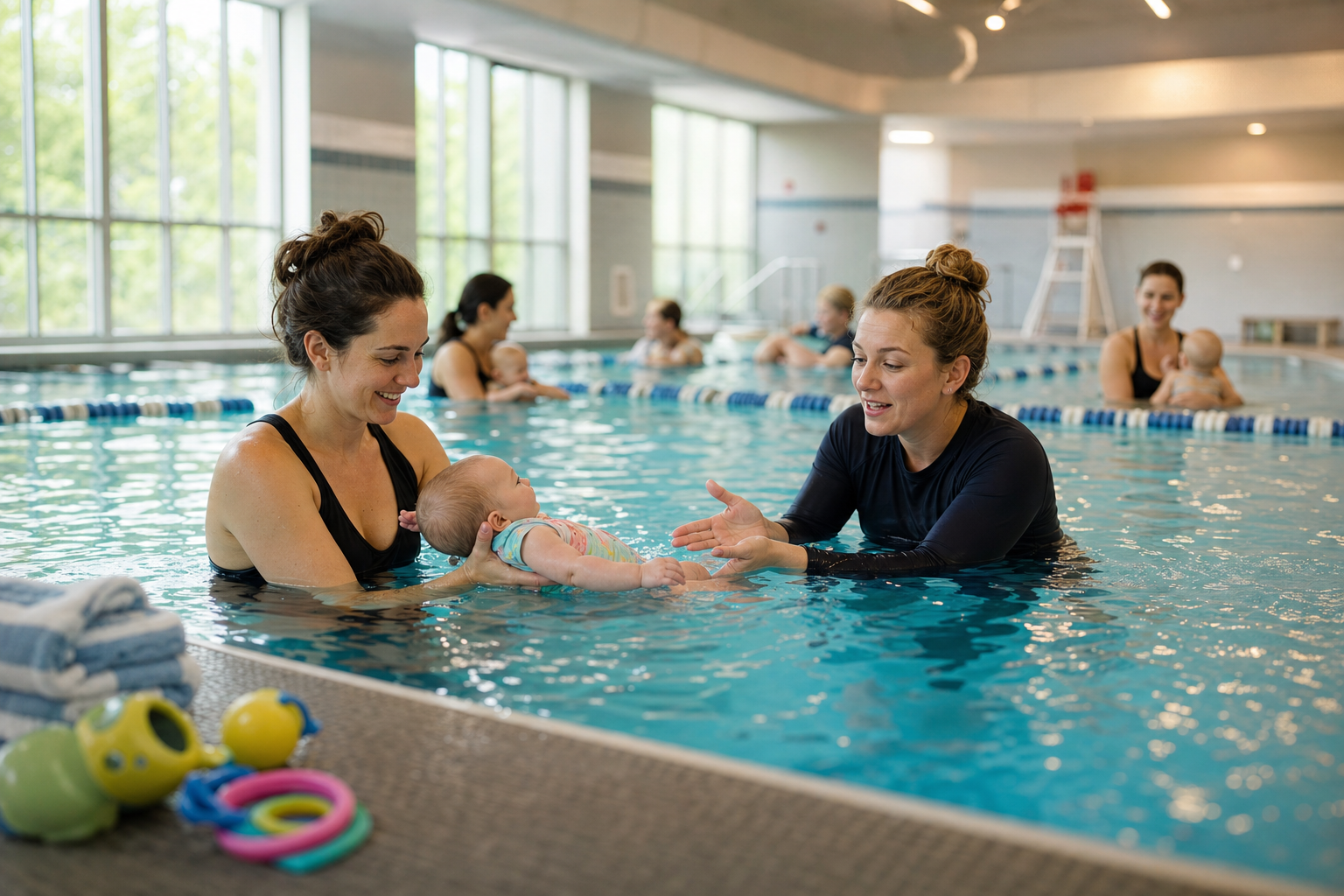
Dipping your 3- or 6-month-old into a pool can be magical—but choosing between indoor baby swim lessons and an outdoor baby swim class matters more than you might think. For babies aged 0-36 months, comfort, routine, temperature, air and sun exposure, noise levels, and weather consistency all play vital roles. Below, you’ll get clear comparisons and expert tips that help protect your baby’s comfort, consistency, and safety when picking the best pool for infant swim lessons.
Warmth & Water Temperatures
Babies lose body heat fast. Water that might feel okay for you—around 78-82 °F (25-28 °C)—can be chilly for a baby. Experts recommend water between 89-92 °F (32-33 °C) for infant and toddler classes. Any lower, and your baby risks cold stress or hypothermia; higher than that and movement, breath control, and endurance suffer. Indoor pools are generally better at maintaining consistent warmth. With outdoor pools, temperature swings—especially early mornings or shady areas—can make outings uncomfortable or risky. Indoor pools also offer warm air in changing areas, which helps avoid a sudden chill when stepping out of the water. (cmahc.org)
Air Quality and Noise Level
Indoor venues need strong ventilation and air handling systems to keep air fresh and safe. Chloramines—formed when chlorine reacts with sweat, oils, or dirt—can build up without proper air exchange. When facilities maintain good ventilation (4-6 changes per hour) and manage humidity between 50-60%, babies breathe easier and irritation drops. Outdoor pools naturally dissipate these by-products faster due to wind and open air. However, outdoor noise—traffic, wind rustle, birds—can be overstimulating for a young toddler. Indoor pools, meanwhile, can echo; asking whether your swim school has soft walls or sound-dampening features is wise. (handbook.ashrae.org)
Sun Exposure & Weather Factors
Outdoor baby swim classes bring sunlight, which means bonus vitamin D—but also risks. The sun reflects off the water, magnifying UV exposure. For babies under 6 months, shade and protective clothing are essential; from 6-months onward, water-resistant broad-spectrum SPF 30-50 sunscreen helps protect exposed skin. Scheduling classes in shaded areas, using UPF swimwear, hats, and avoiding peak UV hours (usually between 10 am-4 pm) are recommended. Indoor lessons sidestep these concerns entirely. (sunsmart.com.au)
If you want a structured way to build water confidence at home, the 10-Week Plan guides you step by step.
Weather cancellations also factor heavily outdoors: rain, lightning, extreme cold, or overheating can force classes to be rescheduled—something many parents say disrupts routine. Indoor facilities shield you from most weather, though sometimes ventilation issues or cooling needs can make an indoor pool feel too cold—especially if the air temperature lags behind the water. (support.sunsationalswimschool.com)
[[ctababy]]
Routine, Noise & Overstimulation
Routine matters more than things like cost in the early years. Babies thrive when they can predict what comes next. If your swim class week after week is at roughly the same time, same pool, same instructor, your baby begins to associate swim time with comfort rather than anxiety. Overstimulating settings—bright sun glare, loud splashes, strong smells—can derail a lesson before it begins. Indoor lessons tend toward sensory consistency; outdoor ones vary with weather, light, and sounds. (waterwisekids.com)
One powerful tool is planning your swim lesson schedule around naps, feeds, and energy peaks. For example, aiming for morning classes after a nap and feed tends to result in more smiles and fewer meltdowns. Weekly classes work well for maintaining progress without overwhelming baby. For help building such a schedule, the 10-Week Plan from swimy.org offers a framework to align lessons, water play, and rest. (swimy.org)
How to Choose the Best Pool for Infant Swim Lessons
Putting all this together—and from personal experience with my own six-month-old—I found that the best setting hits these few key marks:
- Water temperature maintained high and stable (ideally 89-92 °F) so baby stays warm throughout.
- Indoor pool with strong ventilation and minimal sun glare for consistent comfort and gentle sensory exposure.
- Outdoor class only if shaded, early or late in the day, with sun protection layered, and lessons kept short to avoid UV risks and cooling.
- Routine schedule that works with naps and feeds, so both baby and parent arrive calm and leave feeling positive.
Also compare class lengths—many infant classes are just 20-30 minutes. Shorter outdoors may be necessary, longer indoors is usually okay if other conditions are well controlled. And check instructor qualifications: are they trained for water safety, dealing with infants, keeping classes calm and responsive to babies’ signals? (boystownpediatrics.org)
Final Takeaway
If you want the safest, most reliable environment for baby swim lessons in the 0-36 month range, indoor baby swim lessons are usually the safer bet. They excel at protecting warmth, air quality, shielding from sun and weather, and maintaining quiet sensory routines. But outdoor baby swim classes can work beautifully—if you pick times when sun is softer, ensure shade, use strong sun protection, and keep everything consistent.
Don’t let convenience alone choose your pool setting. Instead, match it to your baby’s tolerance for cold, glare, overstimulation, and schedule disruption. That way, whether you go indoor or outdoor, your little one stays comfortable, safe, and excited to splash.
120+ swimming exercises sorted by age — with video and instructions. Developed by swim instructors, completely free.

120+ swimming exercises sorted by age — with video and instructions. Developed by swim instructors, completely free.