Electric Shock Drowning: Keep Kids Away from Docks
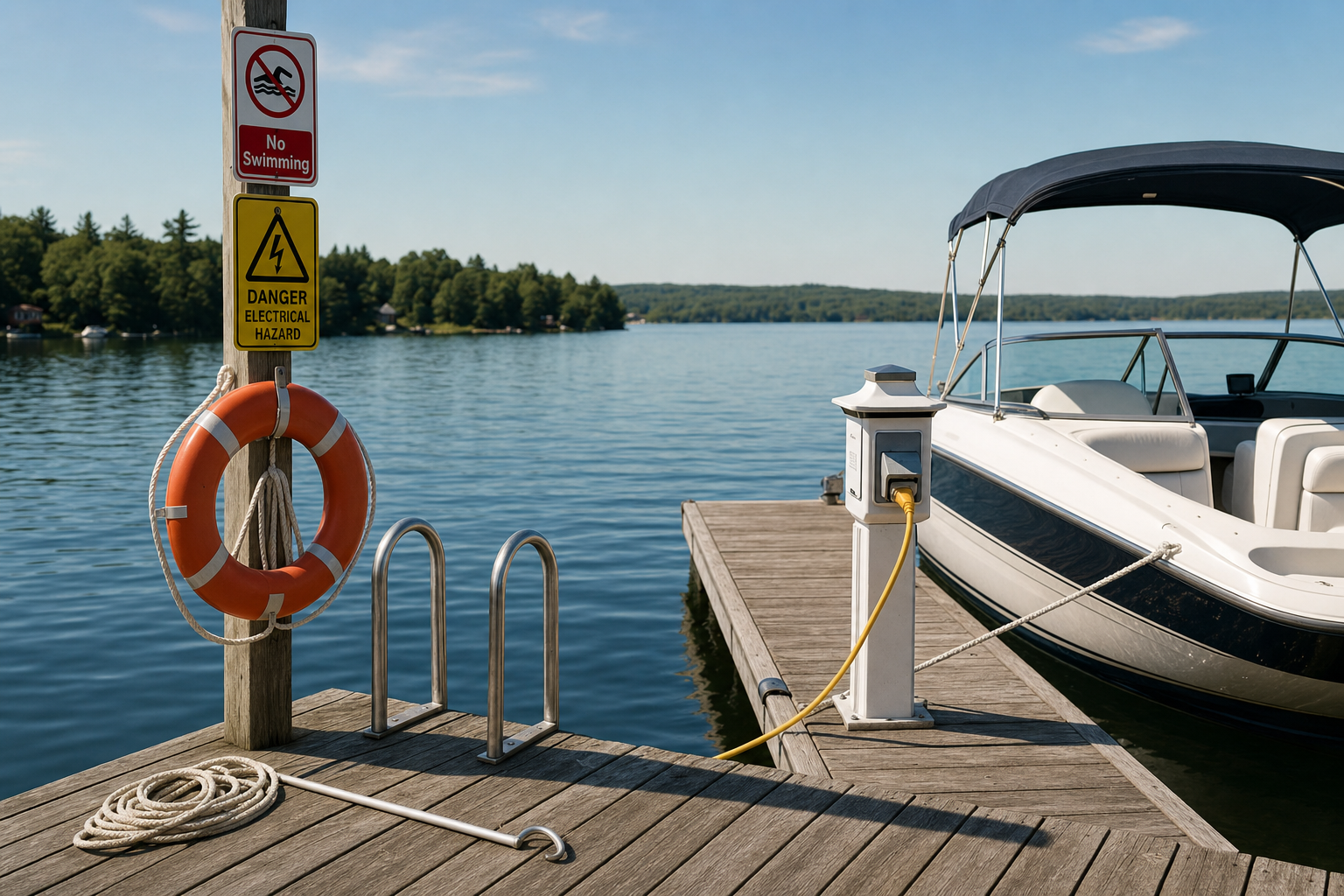
Electric Shock Drowning (ESD) is a suddenly serious risk, especially on warm summer days when children ages 3–12 want nothing more than to take a swim off the dock or near a boat. When stray electrical current leaks into water around marinas, docks, or shore-powered boats, even tiny currents of just 10–15 milliamps can cause paralysis, stopping a child from swimming or calling for help.(maselaw.com) From that point, drowning can happen fast and silently.
Learning strict rules like “no swimming near boats or powered docks” and knowing what to do if someone feels a tingle are life-savers. Read on to understand where danger lurks, how to teach kids good habits, and what to do in emergencies.
What Happens When Water Becomes Electrified
A wire with a broken insulation, a power pedestal that’s gone out of date, or poor grounding on boat wiring can leak electrical current into the surrounding water. Freshwater, unlike saltwater, does not disperse current well, so even low levels of alternating current (AC) flow cause serious harm.(pmc.ncbi.nlm.nih.gov) That current passes through the body, forcing muscles to seize or the respiratory system to shut down, causing paralysis. The child goes under. You may never see an electric injury on the skin. It often looks like regular drowning.(ecmweb.com)
Rules to Teach Your Children Now
Make these rules clear and non-negotiable. Practice them often so kids remember.
Always Stay Away from Powered Docks, Shore Power Boats, Marinas
Swimming in marinas or near any dock where boats are plugged into shore power is unsafe. Many marinas have signs, rules, and prohibitions for a reason: they are required to bar swimming near docks where AC shore-power is supplied.(content.nfpa.org) Teach kids to respect “No Swimming” signs and to never assume water is safe just because it looks calm.
No Jumping from Docks, Using Metal Rescue Poles, or Touching Metal Ladders
Jumping from docks or using metal ladders connected to dock structures is risky: metal conducts electricity, so even if the current is leaking elsewhere, touching something metallic can complete a current path through the body. Rescue poles made of metal are also dangerous. Always use non-metal (wood or plastic) materials if rescue is necessary.(extension.illinois.edu)
Rule of the Tingle
Any shock or tingling sensation in the water is a WARNING. Tell your kids: if you ever feel like pins and needles or a zap around your feet, hands, or whole body, swim away quickly from docks or boats and get out of the water. Let an adult shut off the power before trying to return.(maselaw.com)
Swimming lessons are a great way to build confidence, awareness, and skills for kids aged 3-12. Programs like the 10-Week Plan from swimy.org offer structured progress in water safety, awareness of the risks around docks, and solid swimming skills that reduce panic in emergencies. Such training lets a child respond better if they feel anything unsafe while in the water. (Check out the 10-Week Plan here: https://www.swimy.org/10-week-plan)
[[ctakid]]
What Parents Should Do in a Drowning Emergency Related to ESD
If a child is in trouble near electrified water, your actions must be quick and safe. Do not make the rescue worse.
Turn off the power before anything else. Find the power source—shore power pedestal, dock outlet, breaker—and shut it off safely. Do not jump in to rescue someone if you believe electricity is in the water.(extension.illinois.edu) Call 911 immediately. Use a life preserver or throw non-metal object attached to a line to help the swimmer. Then when they are out, if they are not breathing or have no pulse, begin CPR while waiting for professionals.(maselaw.com)
Prevention and Maintenance: Making Your Waterfront Safer
Parents should inspect docks and boats every season. Hire a marine electrician to check wiring, grounding, and devices that detect current leakages, like GFCIs (Ground Fault Circuit Interrupters), or even newer safety devices made to detect stray current.(ecmweb.com) Signage matters too—though kids might ignore signs, seeing “Danger: Electrical Hazard” on ladders, on boat shores, helps reinforce rules.(content.nfpa.org)
Expert Insights You May Not Know
Electrical engineers studying ESD note how surprisingly little current it takes. Just 10–20 milliamps of AC current flowing through muscles causes tetanic contractions—where muscles lock up. That’s enough to freeze a swimmer’s limbs. More current can disturb heart rhythm or stop breathing.(ecmweb.com) Also, since ESD often looks exactly like regular drowning, many ESD deaths are never correctly diagnosed.(maselaw.com)
Another key point: children often instinctively swim toward dock ladders or structures to climb out. But if those are connected to energized metal, touching them can worsen the situation. Teach kids: swim away from docks, not toward metallic structures, especially when they feel tingling.(ecmweb.com)
Putting It All Together: Your Summer Safety Plan
Walk the docks before letting your children swim. Look for loose wires, frayed cords, flickering dock lights, buzzing sounds, or wet power boxes. Show your kids how to identify warning signs and place rescue equipment—and non-metal tools—nearby.
On swim days, set strict rules: no swimming near docks, no touching ladders or boats plugged in. If someone feels a tingle, stop everything, get to safety, and turn off power. Keep a phone close, know where the breakers are, be ready to call 911.
By teaching your children these rules, doing regular inspections, and planning safe rescues—if needed—you protect those most vulnerable from electric shock drowning this summer. Swimming should be fun, not dangerous. With care and respect for what lurks beneath the water near docks, you can keep the joy—and the safety—in every swim.
120+ swimming exercises sorted by age — with video and instructions. Developed by swim instructors, completely free.

120+ swimming exercises sorted by age — with video and instructions. Developed by swim instructors, completely free.