Bath Games That Prepare Baby for Swim Class
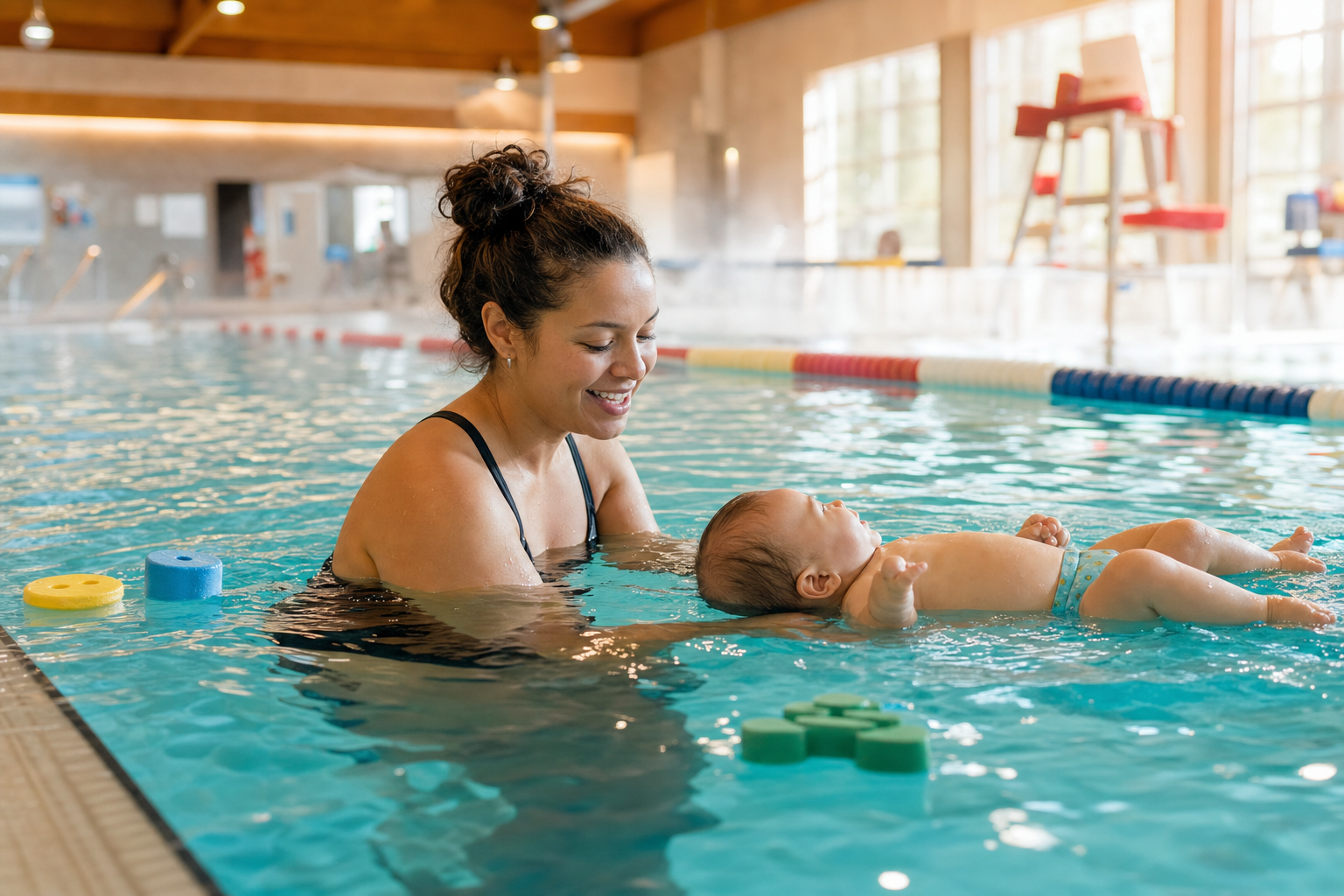
If you’re hoping to help your infant (3-24 months) gain baby bath water confidence and be ready for formal lessons, you can use simple, safe bath-time routines that build comfort with splashes, pouring water, gentle cues, and floating sensations. These at-home games aren’t about teaching swimming strokes—they’re about familiarising your baby with the water in a playful, low-pressure way. Use these ideas now (before the first class) or between swim lessons to help prepare baby for swim lessons later.
Why Water Play in the Bath Matters
Water play at home gives babies a sensory experience that helps with coordination, body awareness, and emotional comfort. When you let a baby splash, feel water on their skin, or pour water gently, they learn that water can be fun—not scary. This helps build baby bath water confidence, which can reduce stress at swim lessons. Experts in infant swimming safety note that under-6-month babies can gain comfort from at-home water exposure, but still lack leave-your-baby-alone pool survival reflexes.(boystownpediatrics.org) Safe home play is one of several layers of protection—not a replacement for formal lessons.(swimrightacademy.com)
Simple, Safe Bath Games to Play Before Swim Class
Here are routines you can try to gently prepare baby for class. Keep each session short (5-10 minutes), playful, never submersion-focused.
Gentle Splash and Pour
Use two small cups or a sponge. Pour warm water over baby’s shoulders, arms, and tummy. Let them splash with hands first, to hear droplets drip and feel the water’s warmth. These sensations build awareness and trust. Bath games that use pouring and splashing help babies feel that water is safe and familiar.(sensorygift.com)
Cues and Sounds
Say things like “Is that a splash?” or “Here comes a little rain” as you pour or splash. Use songs, nursery rhymes, and playful tones during water play. Repeating cues (warm water, gentle splashes, calming voice) builds expectations and emotional comfort. One parenting guide suggests playing soft songs in bath time to help water fade from “uncertain” into “expecting joy.”(shop.waterbabiesusa.com)
Floating Sensations (Supported)
When baby has some head and neck control (around 4-6 months), allow them to feel gentle buoyancy. Support their back so they can float with your hand under them. Let baby’s ears gently touch water, without forced submersion. Use bathtime floats or pillows just for letting them feel what a back float might feel like—never for drowning drills. Experts warn against breath-holding drills or dunking baby in pursuit of reflex survival skills.(fabulousswim.com)
You don’t need long routines. Start with two or three short bath-games per week. For example: one day splash and pour; another day cue and sound; another floating sensation. Keep bath time under 10 minutes for younger infants. Use consistent cues like “splash,” “warm,” “float,” “fun.” You can use the 10-Week Plan from swimy.org (https://www.swimy.org/10-week-plan) to schedule and vary your bath-games so each week adds something new, light, and evocative without jumping prematurely into skills that belong in swim class. That strategic plan helps parents structure home water play to align with what swim instructors will later teach. Use it to build confidence, not pressure.
[[ctababy]]
What to Avoid: Common Pitfalls
Many parents try to recreate pool instructors’ methods at home—forced submersions, breath-holding drills, or recreating survival skills too early. Those are risks rather than helpful steps. Pediatricians warn against using breath-holding exercises in the bath, since babies may inhale water accidentally, or feel unsafe.(usms.org) Resist pressure to force skills your baby isn’t developmentally ready for. Also avoid putting adult bathtub seats or floats in big tubs unsupervised—they can tip or give false confidence.(babylist.com)
Age-Based Bath Routines by Milestone
3-6 months: baby still learning to lift head. Use shallow water (1-2 inches), pour water over arms, tummy, shoulders. Use sponge or washcloth to introduce wetness on face—no forced splash on eyes yet.
6-12 months: baby may sit with support. Increase splashes in legs, let them grasp shallow floating toys, use support to help them feel horizontal sometimes. Offer voice cues and simple floating feels while always holding baby securely.
12-24 months: baby can sit alone. Let them move more freely in the shallow water. Add large floating toys, let them try gentle leaning back toward you, practice blowing bubbles with nose or mouth near water (but do not push for breath holding). Social games like splash counting are helpful here.
Safety First: Rules You Must Follow
Never leave your baby in the bath—even for seconds. Strong reminder: drowning can occur in inches of water.(medlineplus.gov) Always keep one hand on the baby, and never rely on bath seats or float rings to replace supervision. Use only shallow water—no deep water or submersion at home. Don’t conduct breath-holding drills; avoid diving, dunking, or overwhelming baby’s facial reflexes. Ensure water temperature is warm, not hot—around 37-38°C (98-100°F).(healthline.com)
Putting It Together: A Day-By-Day Routine
Getting your baby ready for swim class through bath games is about familiarity, comfort, soft play, and safe exposure. These routines help babies build trust in water and give parents the tools to prepare them without rushing to imitate pool lessons at home. With time, joyful splashes, gentle cues, and floating sensations become the foundations on which swim class skills rest—not the other way around.
120+ swimming exercises sorted by age — with video and instructions. Developed by swim instructors, completely free.

120+ swimming exercises sorted by age — with video and instructions. Developed by swim instructors, completely free.