Community Pool or Swim School? Making the Right Choice for Babies and Toddlers (4–36 Months)
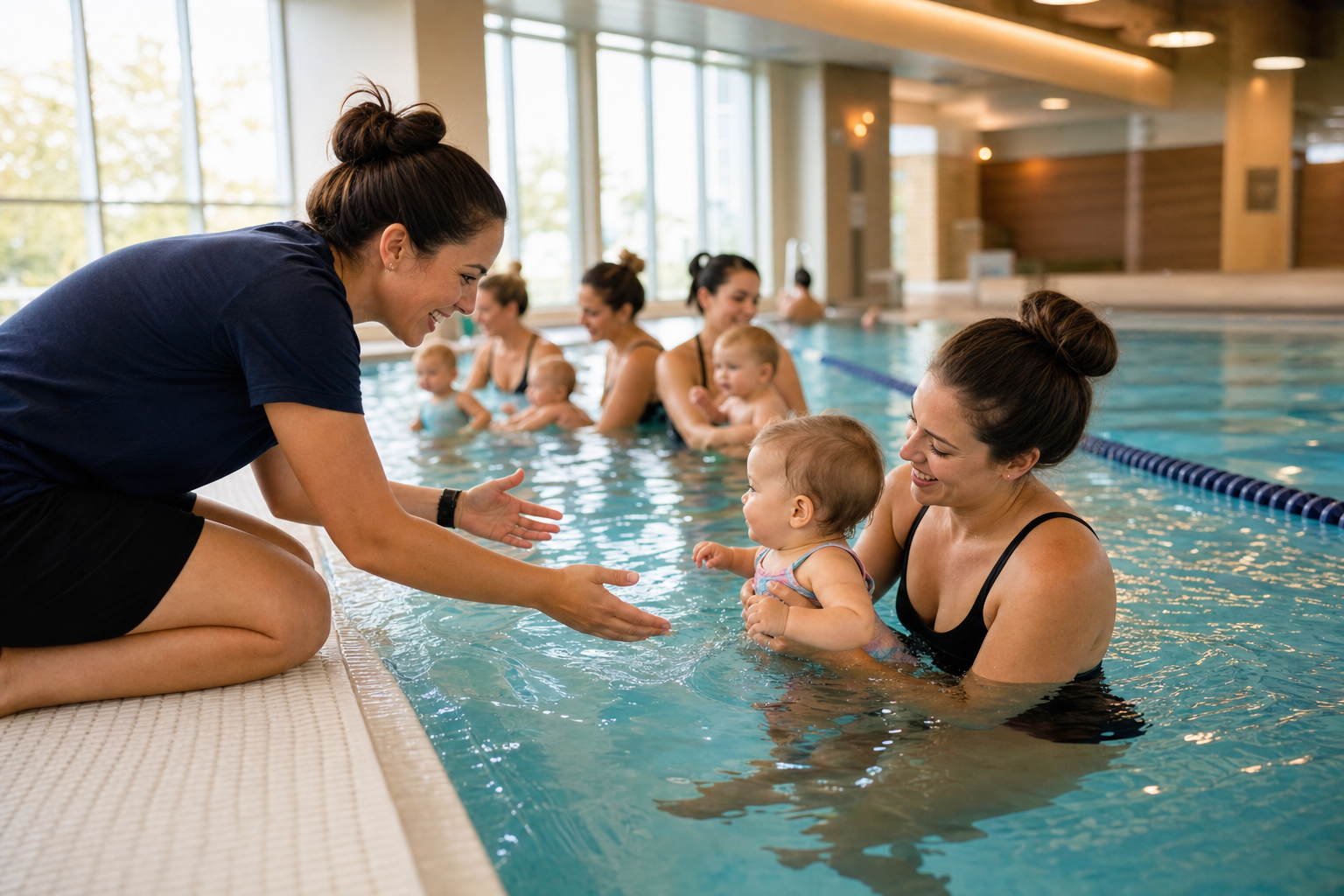
Choosing between a community pool program—like a YMCA or local rec center—and a dedicated swim school for your baby or toddler (4–36 months) comes down to matching the setting with your child’s temperament and your family’s priorities. The best decision depends on how much hands-on involvement you want, how warm the water should be, how qualified the instructors are, how small or large the class is, and how flexible the schedule and facilities are. Here’s what to weigh first so you get swim lessons that feel right, not just “good enough.”
How Cost, Class Size & Water Warmth Shape the Experience
Community pool swim lessons for babies—especially through YMCA or Red Cross programs—are usually less expensive. For example, YMCA group lessons often fall between $15-$30 per session for members; non-members pay slightly more. Dedicated swim schools charge more: group classes often run $35-$55, private lessons $65-$100+ per session. Those price differences, however, reflect differences in water temperature control, facility design, instructor attention, and curriculum pacing. (waterwisekids.com)
Baby bodies lose heat quickly in cooler water. Dedicated swim schools are more likely to have warm teaching pools (around 87-94°F / 30-34°C), which matter a lot for infants and toddlers. In many YMCA or community programs water temperature can vary depending on the facility, which might leave sensitive little ones shivering. (waterwisekids.com)
Also, class size counts. In community settings, instructor-to-child ratios are often higher—maybe 1 instructor for 6 or even 8 toddlers—while swim schools and private lessons often keep ratios lower (1:3-1:5), allowing more individual attention. If your toddler is shy, anxious, or easily overstimulated, smaller class sizes are a big plus. (swimy.org)
Instructor Training, Safety, & Hygiene: Must-Ask Questions
Regardless of where you enroll, always check on instructor credentials and safety rules. For babies under 3, what really matters is that the teacher has experience with this age group and certification through a recognized program like the American Red Cross’s Learn-to-Swim. Red Cross programs explicitly involve parent or guardian participation up to age 3, which supports bonding, safety, and comfort. (redcross.org)
Emergency plans are non-negotiable. Ask whether there are lifeguards on duty, where the first aid kit is, what the drowning-rescue protocols are, and how quickly staff can call for help. Check hygiene policies: clean changing rooms, pool deck rules (shower before entering), swim diapers for toddlers. These practices both reduce germs and help prevent slip-and-fall or waterborne incidents. (nchpad.org)
If you want a structured way to build water confidence at home, the 10-Week Plan guides you step by step.
Changing Facilities, Schedules, & Make-up Policies
If you live in a cooler climate or your child gets cold easily, you’ll want clean, warm changing rooms close to the pool, ideally with showers, accessible bathrooms, and somewhere for caregivers too. Swim schools tend to invest more in amenities; community pools may be more variable. (nchpad.org)
[[ctababy]]
Schedules matter. Community programs often run in short seasonal blocks (6-8 weeks, once or twice a week), while swim schools sometimes offer year-round or monthly enrollments so you don’t lose continuity. Also check their make-up policy for missed classes—many community pools don’t offer make-ups unless the class is canceled, whereas swim schools may allow rescheduling or private catch-ups. (recreation.uic.edu)
Temperament, Progress, & Matching to Your Child
Some children thrive in a lively, social setting—community pool classes can offer stimulation, peer modeling, and chances to observe other toddlers. Others tend to shut down with noise, lots of children, or slow progress. If your child needs more comfort, slower pacing, or individual reassurance, private or small swim school classes could be a better fit. (swimy.org)
Also, consider how consistent you can be. Progress in baby swim lessons often depends on frequent exposure—missing weeks can slow gains. Many swim schools promote continuity. Programs like the 10-Week Plan from swimy.org offer structured commitment over time, helping skills build reliably week-by-week and giving you a clear roadmap. (swimy.org)
Swim School vs YMCA Baby: Quick Comparison
If you’re comparing swim school vs YMCA baby swim lessons, here are some trade-offs:
If your priority is cost savings, broader hours, community ethos, and inclusive access, the YMCA or a public pool is often better. If instead your child needs a warm, customized experience, lots of individual attention, and faster progress — especially between 4-24 months — a dedicated swim school tends to deliver more.
Safety Caveat: Always Ask These Four
No matter which option you choose, ask about parent participation (especially for under-3s), emergency plans (how they respond if a child is distressed), hygiene rules (swim diapers, water quality, deck cleanliness), and how much experience instructors have working with children under age 3. These are the baseline things that separate safe, high-quality programs from ones that simply look nice but may not support baby development or safety.
Which Should I Try First?
If you’re unsure where to start, try sampling both. Visit your local community pool, watch a class, check facilities, and see how calm or engaging toddlers seem. Compare that with a swim school tour. Ask if they’ll let you try a single class in your child’s expected group. That way you’ll see whether your toddler warms up faster with peer energy or prefers quieter, more personal care.
Choosing between a community pool swim lesson or a swim school for babies and toddlers is about more than price. It’s about matching to your child’s temperament, physical comfort (warmth), safety priorities, and your ability to stick with it. Whatever path you pick, those first few sessions can set a foundation: trust, confidence, and water skills that last. And if you ask the right questions up front, you’ll feel good about where you’re starting.
120+ swimming exercises sorted by age — with video and instructions. Developed by swim instructors, completely free.
120+ swimming exercises sorted by age — with video and instructions. Developed by swim instructors, completely free.